
Field hockey mouthguards: protection starts with fit and regular use
A well-fitted mouthguard can reduce dental injury risk, but it cannot make hockey impact-free or replace concussion assessment.
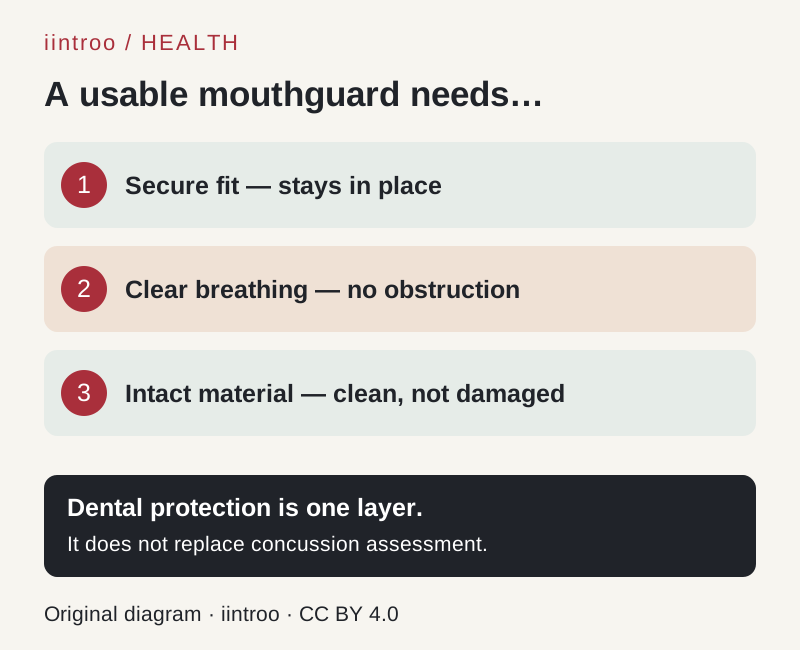
Key points
- A mouthguard needs to stay securely in place and allow normal breathing.
- Evidence is stronger for reducing dental and orofacial injury than for preventing concussion.
- A damaged, poorly fitting or outgrown mouthguard should be reviewed or replaced.
Why this matters in field hockey
The ball, stick and close play around the circle create a real risk of injury to teeth and the surrounding tissues. A field-hockey-specific systematic review identified dentofacial injury across junior, senior and elite samples, although the included studies used different definitions and methods. Those prevalence estimates describe groups; they cannot predict one player's personal risk.
The FIH includes mouthguards among field-player protective equipment. Rules and competition requirements can differ by country and level, so players and teams should also check the current regulations that apply to them.
Fit affects whether protection is usable
FIH guidance says a mouthguard should fit snugly without being excessively tight or loose, use durable tear-resistant material, permit easy breathing and not obstruct airflow. Stock, boil-and-bite and custom-fitted products differ in retention, comfort and cost. The ADA describes a securely retained, properly fitted guard as the practical goal rather than treating price alone as proof of protection.
A dentist can advise on fit, especially for braces, changing dentition, previous dental injury or persistent discomfort. Follow the manufacturer's fitting and cleaning instructions. A device that has split, become distorted or no longer stays in place deserves review rather than being held in the mouth during play.
Use it in training as well as matches
Protective equipment only helps when it is worn. The field-hockey review found that regular use had increased over time but was not universal, and discomfort was a common complaint. Teams can reduce that barrier by checking fit before the season and making mouthguard use part of ordinary training routines, not a match-day exception.
Coaches can include a quick equipment check without pretending to assess dental fitness. Players should know whom to tell when a mouthguard no longer fits, breathing feels restricted or an impact damages the device.
Do not confuse dental protection with concussion prevention
The evidence that mouthguards reduce dental and orofacial injuries is more consistent than the evidence that they prevent concussion. Wearing one must not be used to dismiss symptoms after a head impact or to clear a player to continue.
A player with possible concussion needs removal and assessment under the applicable medical and competition protocol. New confusion, worsening headache, repeated vomiting, seizure, increasing drowsiness, weakness or loss of consciousness require urgent medical help. A mouthguard is one layer of protection, not a substitute for rules, safe technique or clinical care.
After a dental impact
Stop play and seek prompt dental or medical assessment for a displaced, broken or knocked-out tooth, uncontrolled bleeding, severe jaw pain or a bite that suddenly feels different. Use the event's emergency arrangements and local professional guidance; this article is not a tooth-reimplantation protocol.
Record how the injury happened and keep the damaged protective equipment for review. The aim is to manage the injury and learn from the incident, not to infer from a single case that every product or fitting method performs the same way.
Sources: 3