
A knocked-out tooth in field hockey: the emergency plan every team needs
A dental injury needs prompt action, not a wait until full time. Learn the permanent-versus-baby-tooth distinction and how teams can prepare for urgent care.
Key points
- A knocked-out baby tooth must not be replanted.
- A knocked-out permanent tooth needs immediate dental care, even after successful first aid.
- A tooth that looks back in place is not proof of healing or clearance to play.
The first decision is bigger than the tooth
This guide is for field hockey players, parents, coaches and team first-aiders preparing for a dental injury. A ball, stick or collision can leave a tooth loose, displaced, broken or completely knocked out. These are different injuries; putting a mouthguard back in and finishing the match is not an adequate response to a displaced or missing tooth.
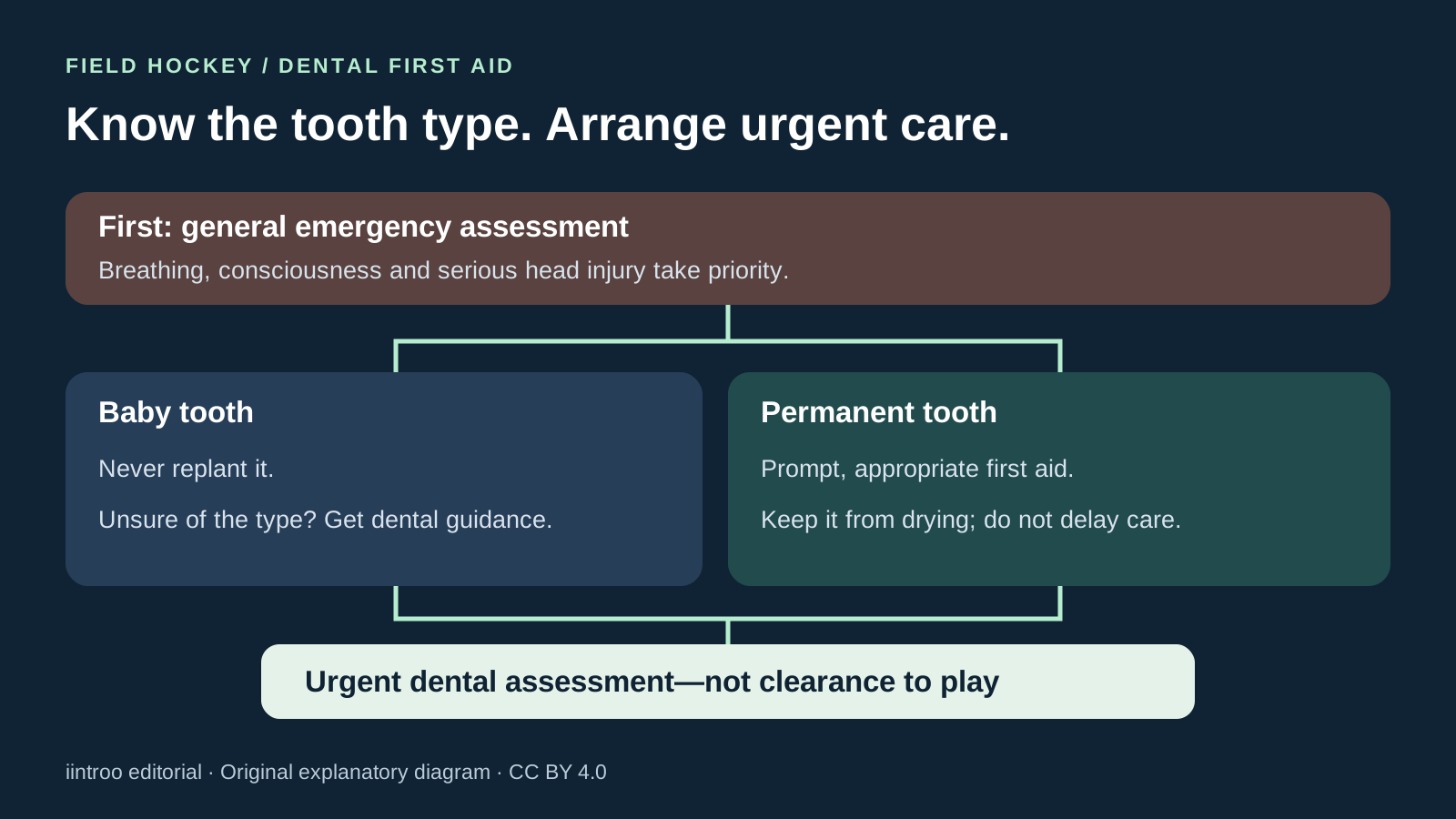
The 2024 IADT and Academy for Sports Dentistry guidance places dental first aid within general first aid. Breathing problems, impaired consciousness or suspected serious head injury take priority and require emergency medical help. Do not attempt to place a loose tooth in the mouth of someone who cannot safely cooperate. A dental problem should not distract from another injury caused by the same impact.
Baby and permanent teeth need different handling
The NHS explicitly advises never replanting a knocked-out baby tooth because doing so can damage the developing permanent tooth underneath. Youth teams therefore need more than the instruction to put any tooth back. If you are unsure which type it is, seek immediate dental guidance rather than guessing; an urgent phone or video consultation can help while care is arranged.
For a permanent tooth in a conscious, cooperative person, handle only the crown—the visible white part—not the root. If dirty, rinse gently with milk, saline or saliva; do not scrub. NHS first aid advises replacing it if it goes back easily, then gently holding it with a clean cloth and going to a dentist immediately. Do not force a difficult replacement.
Keep the tooth safe while arranging care
If a permanent tooth cannot be replaced, put it promptly in a container of milk, or saliva collected in a container, and take it with the injured person. Do not carry it loose inside a child's mouth. Seek an emergency dental appointment even if the tooth cannot be found. First aid is the beginning of care, not a reason to postpone it.
The IADT guideline explains why prompt handling matters: conditions outside the mouth affect the cells involved in healing. Yet it does not guarantee that a replanted tooth will survive. The dentist needs to assess the injury and arrange treatment and follow-up; a tooth appearing to sit correctly is not evidence that the root, supporting tissues or surrounding structures are uninjured.
A loose or broken tooth also needs attention
FIH's dental guidance describes teeth pushed into or out of their usual position, unstable teeth and fractures as situations needing dental assessment. A very loose tooth can create a swallowing or aspiration hazard. Remove the player from participation and arrange care rather than repeatedly testing the bite or treating the injury as routine sporting discomfort.
Collect broken fragments if safely possible and tell the dentist if pieces are missing or a lip is cut; fragments may be embedded in soft tissue. Repositioning, splinting and decisions about further treatment belong with dental professionals. Neither the FIH guidance nor the avulsion guideline establishes a universal number of days after which every injured player can safely return.
Rehearse the response before match day
A 2025 systematic review found only eight eligible case-report studies of sports-related dental trauma, with varied injuries and management. Such reports can illustrate clinical problems but cannot reliably compare treatments or predict an individual player's outcome. They underline a practical gap: clubs need accessible first-aid knowledge and a route to care, not confidence based on a single successful story.
Use the IADT/ASD education guidance to build a club plan: identify the first-aider, keep emergency dental contacts available, and agree who arranges transport and communicates the incident. In Türkiye or elsewhere, confirm the local out-of-hours route before travel or tournaments. This is an organisational application of the guidance, not a country-specific treatment rule. Prevention and a well-fitting mouthguard remain separate from managing an injury already sustained.