
Figure skating concussion: rebuild spins, jumps and ice exposure in stages
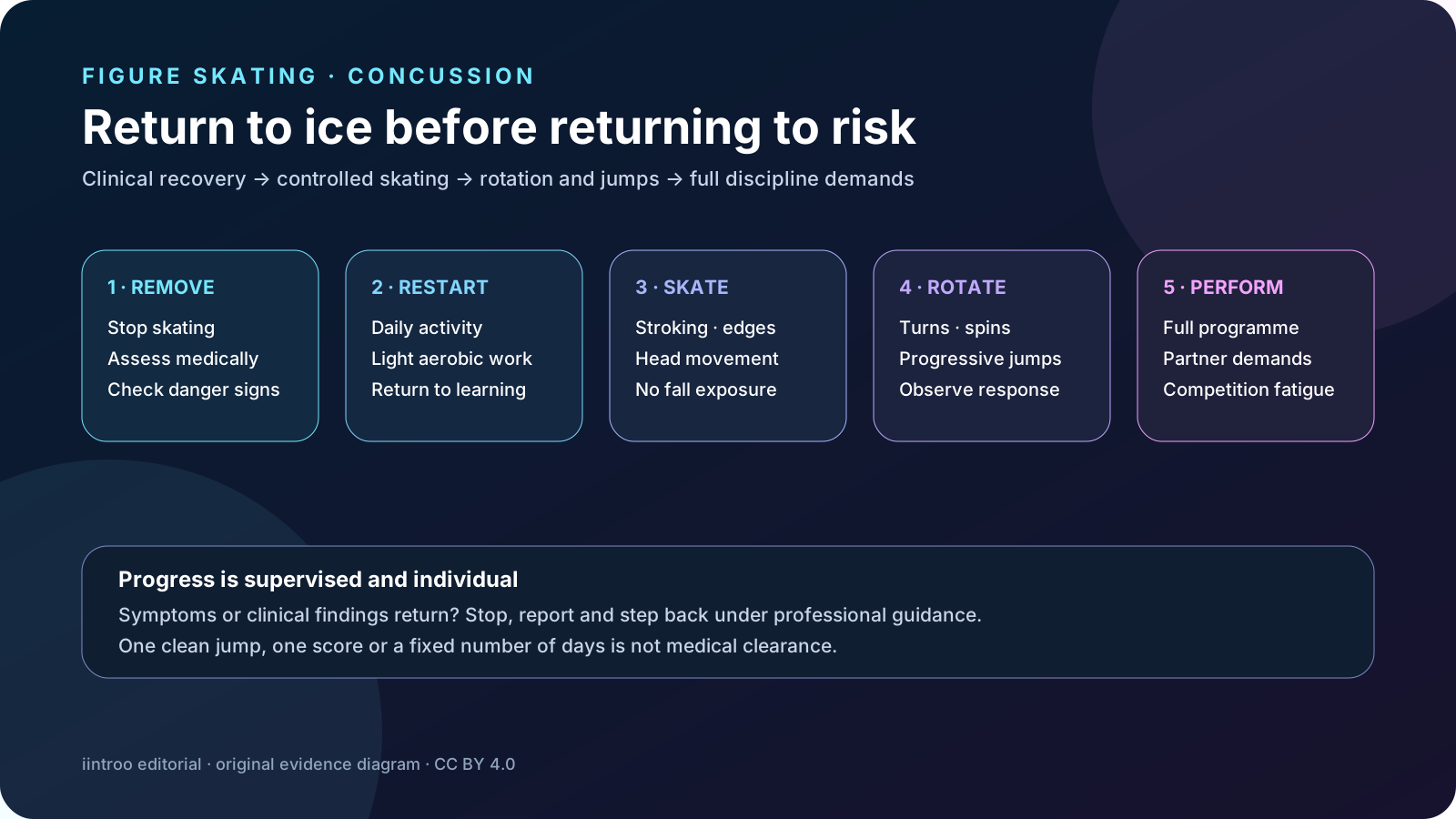
After a suspected concussion, leave the ice and obtain assessment. Return must rebuild skating, rotation, jumps and partner demands under clinical guidance.
Key points
- A suspected concussion means stopping skating and obtaining an appropriate medical assessment; the same session is not a return-to-ice test.
- Figure skating adds balance, visual motion, rotation, jumps, lifts and hard-ice fall risk, so a generic exercise progression needs sport-specific adaptation.
- The published skating progression is a level-5 clinical commentary, not a validated timetable. Clearance remains individual and clinician supervised.
Leave the ice when concussion is suspected
This guide is for skaters, coaches, parents, officials and healthcare teams. A fall, collision, lift error or impact may transmit force to the brain even without loss of consciousness. Headache, dizziness, confusion, memory problems, imbalance, vision change or unusual behaviour after an impact should trigger removal from skating and assessment by an appropriately qualified healthcare professional.
Do not ask the skater to repeat a spin, jump or footwork sequence to prove they are safe. Worsening headache, repeated vomiting, seizure, increasing confusion, weakness, unequal pupils, neck pain with neurological symptoms or difficulty waking requires urgent local emergency care. The ISU Medical Guide directs skaters and physicians to current concussion assessment and return guidance; it is not a substitute for the event emergency plan.
A return strategy begins before difficult elements
The Amsterdam consensus recommends a short period of relative rest, generally 24–48 hours, followed by symptom-limited daily activity and light then moderate aerobic exercise under clinical direction. Prolonged strict rest is not the default. Return to learning and return to sport can progress together, with adjustments for a student when needed.
Later steps that introduce a risk of head impact or fall require healthcare-professional authorisation after concussion-related symptoms, cognitive abnormalities and clinical findings have resolved at rest and with exertion. A minimum interval between stages is not an automatic clearance date. Symptoms, examination, age, health history and response to each exposure affect the decision.
Translate exercise capacity into skating capacity
A 2025 clinical commentary adapts the general return strategy for elite figure skating. It separates off-ice cardiovascular work from basic stroking, edges and turns, then progressively reintroduces visual motion, head movement, rotation, jumps, inversions, lifts and full programmes. This is useful because tolerating a stationary bike does not show readiness for fast rotation or a fall onto hard ice.
The commentary is expert-informed level-5 evidence rather than a trial comparing protocols. Its examples should not be copied as a prescription for every discipline or age. Singles, pairs, ice dance and synchronised skating create different partner, lift, collision and spatial demands; the treating team should select the order and stopping rules for the individual.
Monitor symptoms without turning one score into clearance
Record the element family, speed, duration, rotation direction, visual environment and symptom response during and after a session. Assessment can include symptoms, balance, cognition, eye movement, vestibular function, neck findings and exertional response. Computerised cognitive tests or a single symptom score must not be used alone to diagnose recovery or authorise return.
If symptoms recur, stop the provoking activity and contact the clinician guiding the plan. Coaches can control ice space, remove collision or fall exposure and communicate observations, but they do not diagnose concussion. A helmet may be required in some training settings or chosen for protection, yet no equipment can prevent every concussion or turn symptoms into a safe session.
Full practice must resemble the real discipline
Before competition, the skater should have completed the clinician-guided progression and tolerated the actual demands of their programme: repeated skills, speed, rotation, decision-making, fatigue and—where relevant—partner contact, lifts or synchronised formations. One clean element, a normal scan or a fixed number of days does not establish readiness.
Figure-skating injury literature is limited and spans different levels and disciplines. The skating-specific return commentary explicitly notes that evidence remains scarce. This article therefore explains a decision process, not a diagnosis, rehabilitation schedule or guarantee that another injury will be prevented.