
Figure-skating bone stress: act on focal pain before the next jump block
Figure-skating bone pain can reflect jump load, growth, recovery and low energy availability. Report focal pain early and return by clinical criteria.
Key points
- Figure-skating injury studies are heterogeneous, but recent reviews repeatedly identify the spine and lower limb and describe bone-stress concerns across disciplines.
- Jump and landing repetition, growth, previous bone stress injury, boot fit, recovery and low energy availability can all matter; no single factor diagnoses the problem.
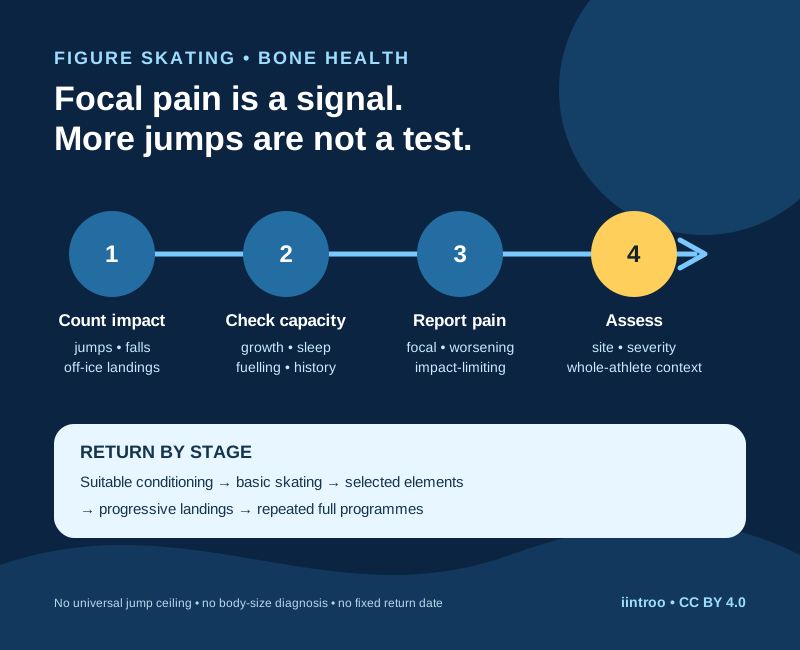
- Focal pain that worsens with impact, changes skating or persists outside training should be assessed before more jump exposure is added.
Recognise a pattern that deserves early review
This guide is for singles, pairs and ice-dance skaters, parents, coaches and support teams. Bone stress injury develops on a continuum when repeated loading outpaces the bone's capacity to adapt and repair. Pain may begin during jumps or off-ice impact and later appear earlier in a session, during walking or at rest.
Recent reviews place the spine and lower limb among important figure-skating problem areas and report stress fractures in selected samples. The 2025 systematic review found inconsistent injury definitions and mostly low-quality risk-factor evidence. A prevalence range from one study group cannot diagnose a skater or show that one jump caused the problem.
Count jumps, attempts and off-ice impact
Record on-ice sessions, jump type and attempts, landings, falls, full-programme run-throughs, off-ice jumps, dance or plyometric work and recent competition or camp changes. Add growth, previous bone stress injury, boot or blade changes, travel, sleep and other training. Session hours alone can hide a sharp rise in high-impact repetitions.
Technique and strength matter, but fatigue, technical difficulty and repetition interact. A coach can reduce or redistribute impact while preserving suitable skating skills and conditioning. There is no validated universal jump-count ceiling, weekly session limit or flexibility screen that guarantees protection.
Include fuelling and recovery without making assumptions
Low energy availability can occur when intake does not cover training and the body's needs for health, daily life and growth. It can affect athletes of any sex and may be intentional or accidental. Menstrual change can be an important sign for some athletes, but normal menstruation, body size or appearance does not rule low energy availability in or out.
Ask about meals around early ice time, school or work, food access, dietary restriction, gastrointestinal symptoms, weight pressure, sleep and recovery. Screening should lead to a confidential assessment by an appropriate clinician and sports dietitian when indicated. Coaches should not diagnose REDs, prescribe weight loss or use a questionnaire as automatic clearance.
Investigate focal pain rather than skating through it
Stop the painful impact task and arrange assessment when pain is focal, worsens with hopping or landing, changes technique, persists after training or recurs with increasing exposure. High-risk sites and symptoms require prompt medical decisions. Early X-rays can be normal in some bone stress injuries, so imaging is selected and interpreted within a clinical assessment.
Sudden severe pain, inability to bear weight, deformity, major swelling, numbness or pain after a substantial fall needs urgent evaluation. Fever, unexplained systemic illness or night pain also warrants medical review. This article cannot distinguish bone stress injury from tendon, joint, muscle or other causes of pain.
Return from capacity to complete programmes
Return depends on the site, severity, healing, symptoms and contributing health factors. A staged plan may move from suitable non-impact conditioning toward basic skating, selected elements, progressively greater jump and landing exposure, and finally repeated full programmes. Pairs and dance tasks such as lifts and throws create different demands from singles jumps.
Progress should consider the response during and after each stage, movement quality, confidence, nutrition and recovery. A fixed calendar or one pain-free session is not clearance. The athlete's clinical team and coach should coordinate the plan, and the current ISU and event medical requirements remain authoritative.