
Forearm 'arm pump' in sport: confirm chronic exertional compartment syndrome before surgery
Repeatable forearm tightness and grip loss need sport-specific assessment; pressure tests and surgical return evidence remain limited and heterogeneous.
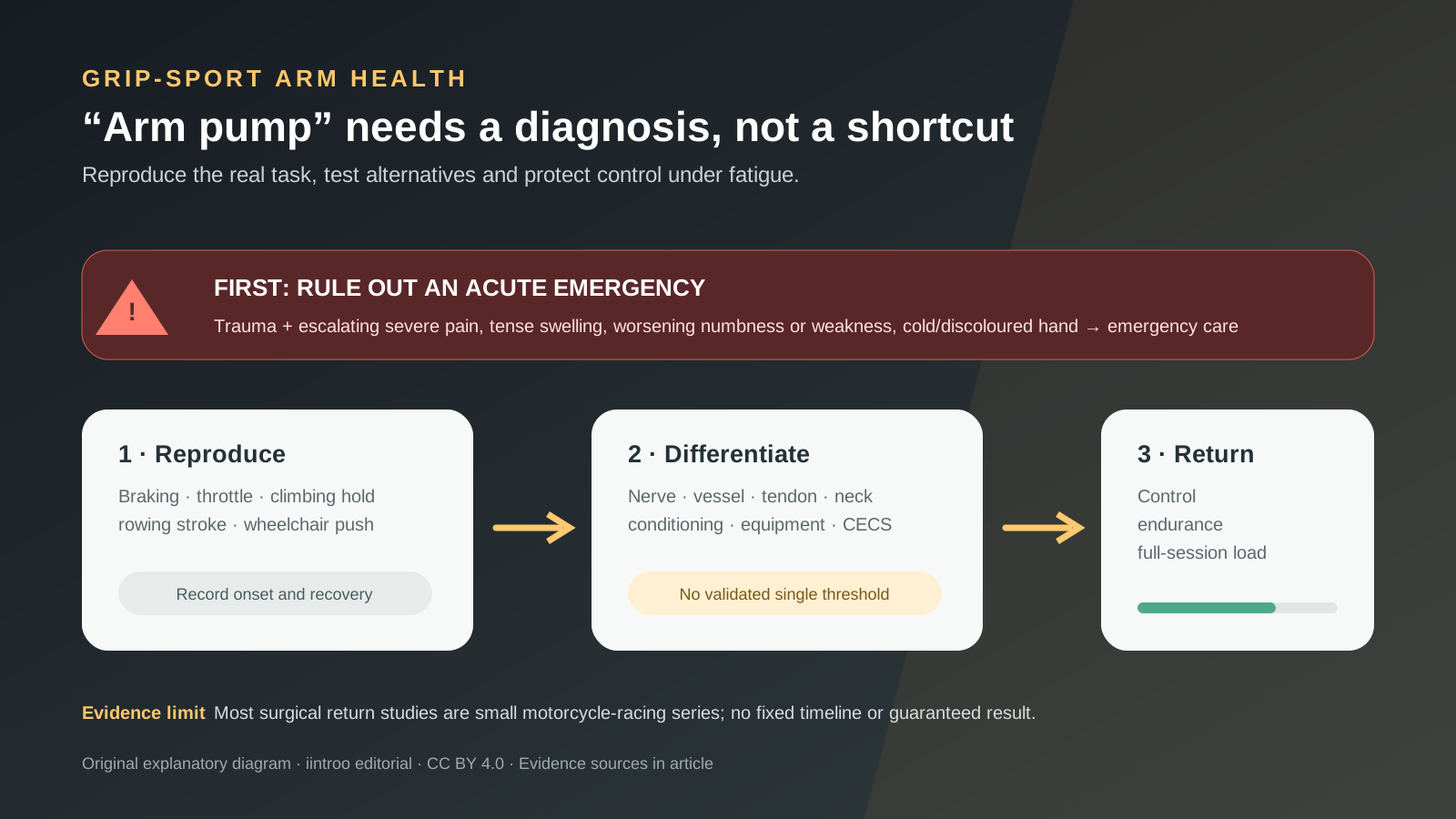
Key points
- Forearm chronic exertional compartment syndrome usually produces repeatable exercise-linked tightness, pain, weakness or altered sensation that eases after stopping, but those symptoms are not diagnostic by themselves.
- Intracompartmental pressure measurement is widely used, yet protocols and thresholds vary and current systematic review evidence has not validated one definitive test standard.
- Fasciotomy may help carefully selected athletes with persistent confirmed disease, but return studies are mainly low-level evidence from male motorcycle racers and cannot supply a guaranteed outcome or fixed timeline.
Distinguish repeatable exertional symptoms from an acute emergency
This guide is for motorcycle racers, motocross riders, climbers, rowers, paddlers, wheelchair athletes and others with forearm tightness, pain, swelling, weak grip or tingling during repeated gripping. Chronic exertional compartment syndrome typically appears at a reproducible workload and settles after stopping. That pattern is sometimes called arm pump in motorsport, but the nickname is not a diagnosis. Technique, equipment, nerve compression, tendon disorder, vascular disease, cervical referral and conditioning can produce overlapping symptoms.
Acute compartment syndrome is different and is a surgical emergency. Severe or escalating pain after trauma, a tense swollen forearm, pain out of proportion, worsening pain with finger movement, progressive numbness or weakness, a cold or discoloured hand or impaired circulation needs emergency assessment. Do not wait for all classic signs or try to ride, row or massage through them. Persistent symptoms at rest, new loss of hand function or rapidly worsening swelling also require urgent evaluation rather than a routine training adjustment.
Reproduce the real task and test competing explanations
A useful clinical history records onset, exact muscles and fingers involved, workload, recovery time, laterality, trauma, neck symptoms, equipment setup and whether symptoms occur in daily life. Examination before and immediately after a sport-relevant provocation may reveal firmness, weakness, sensory change or vascular findings that disappear at rest. A generic handgrip test may fail to reproduce braking, throttle control, handlebar vibration, climbing holds or rowing stroke density, so the provocation should be safe, standardized and close enough to the athlete's demand to be informative.
Clinicians consider nerve entrapment, arterial problems, tendon disorders, stress injury, inflammatory disease and referred symptoms. Imaging, nerve studies, vascular tests or laboratory work answer selected alternatives; none is automatically required for everyone. The 2024 diagnostic systematic review found that intracompartmental pressure was the most common test but methods and cut-offs varied widely, and no alternative method had evidence strong enough to replace it. A single pressure number without compatible symptoms and timing should not drive surgery.
Start with modifiable exposure while protecting control
Early management can examine grip force, forearm conditioning, recovery, bike or boat setup, lever reach, vibration, glove or handle size, climbing hold selection and the density of repeated efforts. Changes should be tested one at a time where practical so the athlete and clinician can see what matters. Simply telling a rider to relax may be unsafe when braking and control demand firm grip; equally, maximal forearm strengthening can add exposure without correcting technique or equipment. Training modification is an experiment, not proof that the condition has disappeared.
When symptoms remain disabling and the diagnosis is well supported, a specialist may discuss fasciotomy. The operation releases the relevant fascia but carries wound, nerve, infection, scar, incomplete release, persistent symptoms and recurrence risks. Surgical studies often use different compartments, techniques and outcome definitions. Most participants in the 2024 return systematic review were motorcycle racers, so results may not transfer to climbers, rowers, para athletes or recreational participants with different loads and consequences.
Return through control, endurance and full-session exposure
After treatment, progress from wound or symptom recovery and ordinary hand use to strength, sustained grip, repeated sport tasks and full-session exposure. A rider needs reliable throttle, clutch and brake control under vibration and fatigue; a climber needs safe grip changes and fall management; a rower needs stroke quality through race density. Compare symptoms, strength and control during the task and afterward, not only at a fresh clinic visit. Return to training and return to competition are separate decisions.
The 2024 systematic review reported generally high return after fasciotomy but included mainly case series and case reports with heterogeneous definitions and follow-up. It cannot promise the same level of performance or set a universal week. Recurring tightness, grip failure, neurological symptoms, wound problems or a changed symptom pattern needs reassessment. This article cannot diagnose CECS, choose pressure thresholds, prescribe equipment or recommend surgery. It supports emergency recognition, sport-specific reproduction, careful exclusion of alternatives and a return decision based on repeatable control rather than the label arm pump alone.