
Friedreich ataxia in sport: combine adaptive training with heart and fall safety
Friedreich ataxia needs more than balance drills. Multidisciplinary rehabilitation, cardiac review, fatigue management and adaptive equipment support participation.
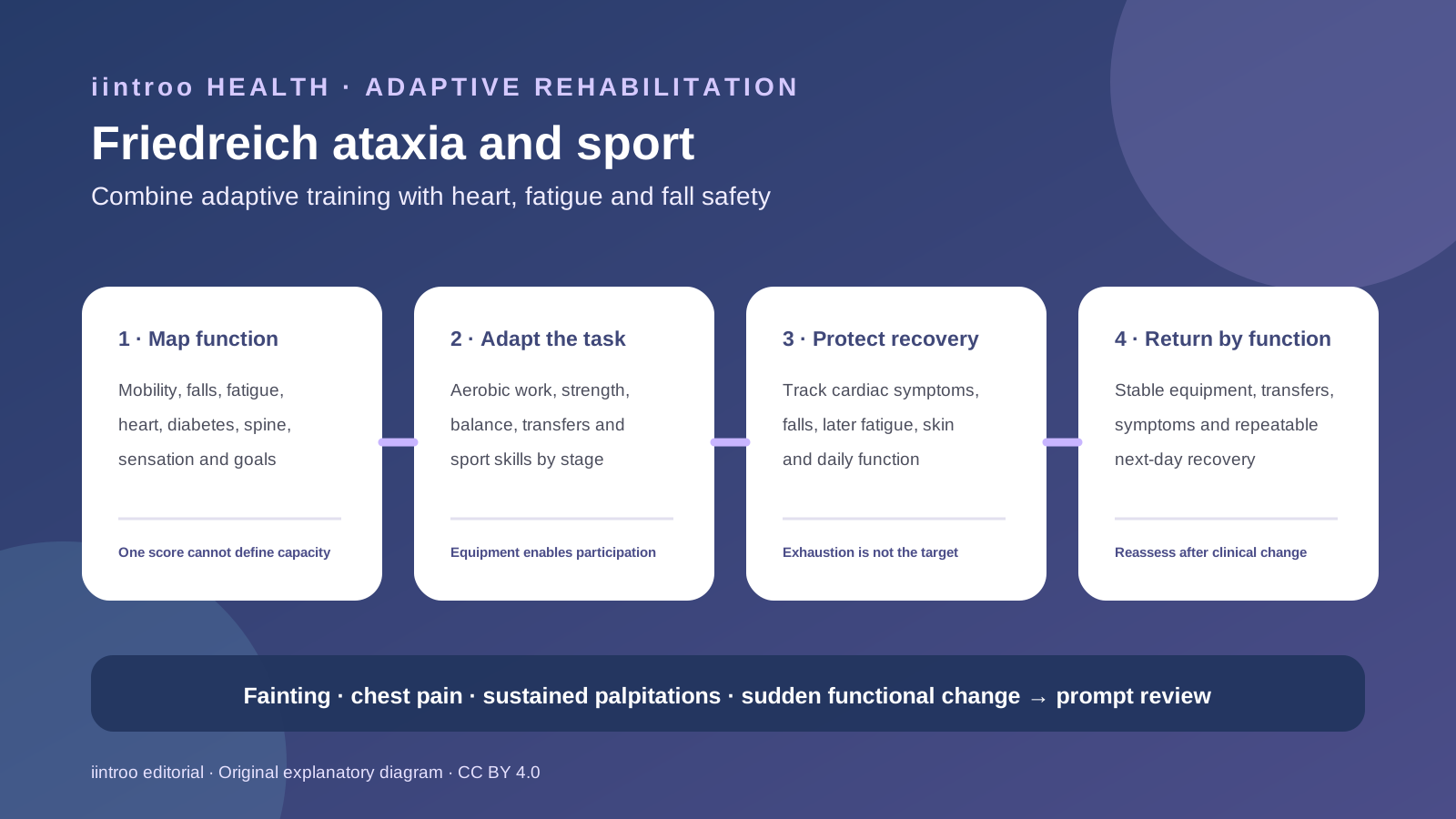
Key points
- Friedreich ataxia is a progressive multisystem condition; mobility, heart, diabetes, scoliosis, feet, hearing and fatigue can each change training needs.
- Guidelines support multifaceted and individually reviewed rehabilitation rather than one exercise for everyone or a promise that training stops progression.
- Fainting, chest pain, sustained palpitations, rapidly worsening breathlessness or a sudden neurological or functional change needs prompt assessment.
Map the whole condition and the athlete's current function
This guide is for people with Friedreich ataxia, families, coaches and rehabilitation teams. FRDA is a genetic, progressive multisystem condition that can affect coordination, sensation, strength, speech, hearing, feet and spine, the heart and glucose regulation. The pattern and rate of change differ between people. A walking test, ataxia score or genetic result alone cannot describe sport capacity, enjoyment, transfer safety or the consequence of a fall.
Begin with the athlete's goals, mobility and transfer method, falls, fatigue, pain, orthoses and wheelchair or cycle fit, then include cardiac surveillance, diabetes, scoliosis and respiratory information from the clinical team. Map the sport's balance, speed, collision, water, heat and rescue demands. Fainting, exertional chest pain, sustained palpitations, rapidly worsening breathlessness, an acute neurological change or a sudden unexplained loss of function needs prompt assessment rather than more balance practice.
Use multifaceted rehabilitation and adapt the task
The international clinical management guideline recommends a multifaceted rehabilitation approach for ambulant people, combining relevant strength, balance, mobility, endurance, stretching and task practice. For non-ambulant people, appropriately adapted cardiopulmonary work, transfer training and upper-limb protection can still support health and participation. The programme should match disease stage, goals, equipment and recovery rather than treating walking as the only valuable outcome.
Adaptive cycling, pool work, supported treadmill or stepping, seated aerobic exercise, strength training and sport-specific skill practice can each be useful when safely fitted. Progress duration, resistance, coordination challenge and environmental complexity separately. Orthoses, walking aids, harnesses or wheelchairs are participation tools, not evidence that rehabilitation failed. Check skin pressure, straps, foot position and transfer technique, and include the athlete in every equipment decision.
Keep cardiac, metabolic and fatigue signals visible
Cardiomyopathy and rhythm problems are important features of FRDA, so the guideline advises cardiovascular assessment and individual advice before exercise. A normal-feeling easy session or consumer heart-rate trace does not replace surveillance. Prescribed cardiac or diabetes treatment should not be changed for performance. Heat, illness, reduced sensation, altered mobility and diabetes can make generic hydration or glucose advice unsafe; use the person's clinical plan.
Fatigue can reflect neurological effort, sleep, heart or respiratory problems, diabetes, treatment, mood, pain, infection or training load. Track when it occurs, its effect on transfers and daily activity, and recovery over the next day instead of using exhaustion as proof of commitment. Plan rest and technique practice before fatigue creates falls. Persistent decline, repeated near-falls or loss of an established skill deserves multidisciplinary review rather than a permanent withdrawal from activity.
Judge evidence carefully and return through repeatable function
A recent single-centre randomised trial tested individualised aerobic exercise in a selected FRDA group, adding useful evidence beyond small rehabilitation studies. It does not establish one competitive programme or show that exercise changes every disease outcome. Earlier rehabilitation evidence is heterogeneous, and guideline recommendations combine trials, rare-disease methods, expert practice and patient priorities. Improvement in fitness or coordination should not be presented as a cure or guaranteed slowing of progression.
Progress toward training or competition when equipment, transfers, cardiac status, symptoms and later recovery are stable and repeatable. Reassess after falls, new arrhythmia symptoms, diabetes change, surgery, a mobility transition or a change in scoliosis or respiratory function. Keep the athlete's own participation priorities visible as mobility needs evolve. There is no universal ataxia score, heart-rate zone, fall-free period or weekly dose that clears every athlete. This page provides education, not genetic counselling, cardiac interpretation, device prescription, glucose management or personal rehabilitation and return-to-sport clearance.