
Spina bifida and sport: protect skin, equipment fit and independent participation
Sport can support people with spina bifida, but skin sensation, equipment fit, shunts, latex exposure and individual mobility need a shared plan.
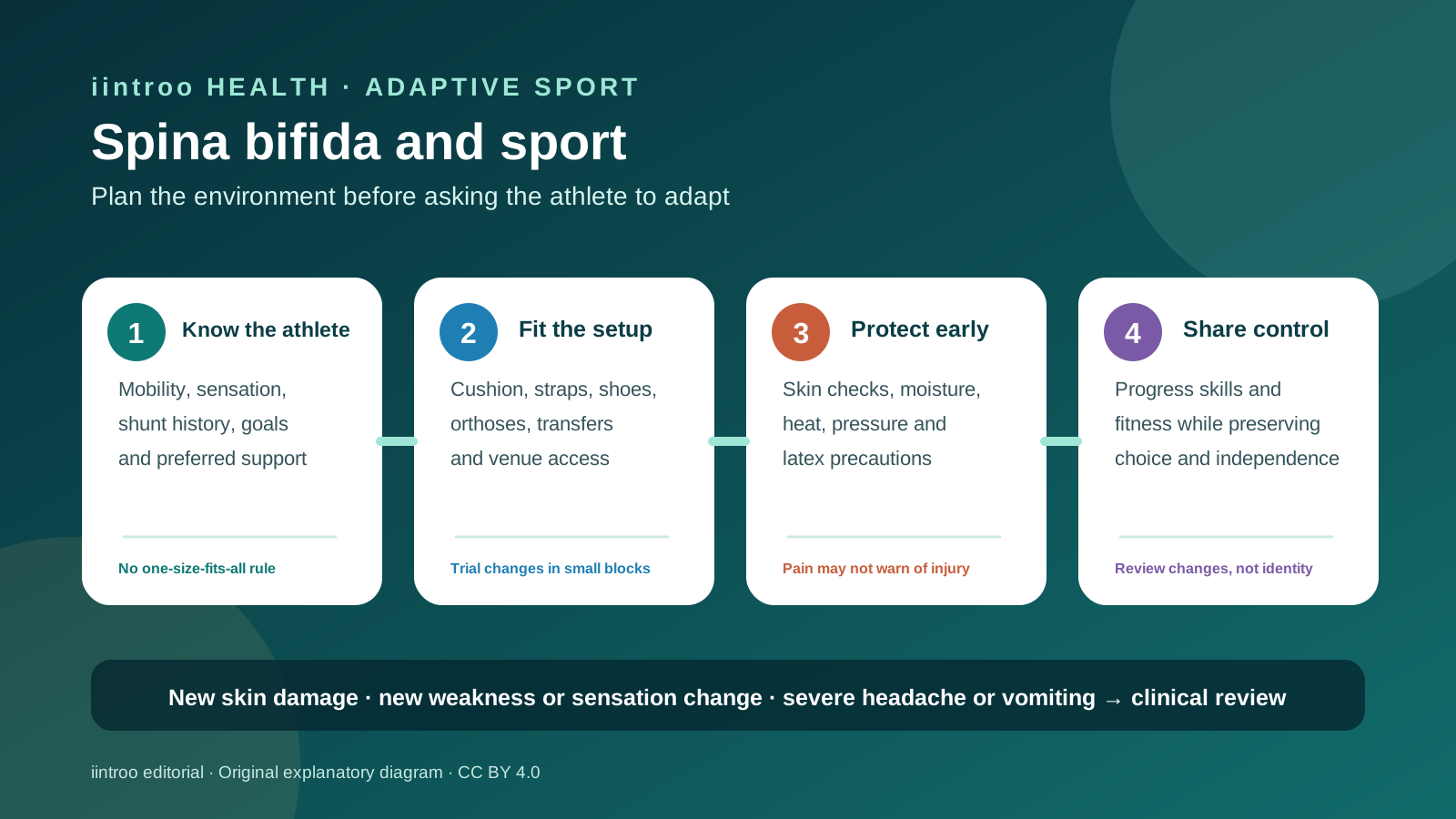
Key points
- Spina bifida does not create one sport rule; mobility, sensation, shunts, continence, bone health and equipment needs differ between people.
- Insensate skin can be injured by pressure, friction, heat or poor equipment fit without producing the pain that would usually warn an athlete.
- New skin damage, a change in strength or sensation, severe headache, vomiting or a shunt concern needs clinical review rather than a tougher session.
Build the plan around the person, not the diagnosis label
This guide is for athletes with spina bifida, families, coaches, teachers and health teams. Spina bifida can affect lower-limb strength, sensation, balance, bladder and bowel function, skin integrity, bone health and mobility in very different combinations. Some athletes walk, some use orthoses or crutches, some use a wheelchair, and many change mobility method according to the task. The athlete's own goals, preferred assistance and independence therefore belong at the centre of the plan.
The Spina Bifida Association recommends discussing sport and physical activity rather than defaulting to inactivity, with a pre-participation review involving the person, family, clinicians, therapists and coaches where appropriate. That review can cover recent surgery, shunt history, seizures, fractures, pain, changes in strength or sensation, continence routines, medicines, equipment and venue access. It is a way to identify useful adaptations, not a test that every participant must pass in the same manner.
Protect skin that may not produce a normal warning signal
Reduced sensation means pressure, rubbing, heat and moisture can damage skin before pain is noticed. The SBA skin guideline recommends regular inspection of weight-bearing and insensate areas and checking the fit of orthoses and other equipment. In sport, extend that logic to wheelchair cushions, straps, seams, gloves, footwear, braces and any new contact point. Inspect before and after activity, and again later when a long session, travel or heat exposure may have changed swelling or moisture.
The National Spina Bifida Patient Registry study linked pressure ulcers with several factors, including lesion level, wheelchair use, urinary incontinence and recent surgery, but those associations do not predict an individual wound. Coaches should not stage or treat a pressure injury. Persistent redness, a blister, broken skin, drainage, unusual warmth or swelling needs prompt assessment and relief from the responsible pressure. Training through damaged insensate skin can turn a small problem into a serious interruption.
Check equipment, heat and latex before the first drill
Plan the route into the facility, changing and toilet access, transfer support, pool entry, emergency access and equipment storage. Check hot surfaces and water temperature because reduced sensation can hide burns. Introduce new seating, orthoses or footwear in short, observable blocks rather than on competition day. A wheelchair sport setup should support propulsion and stability without creating avoidable pressure, while ambulant athletes may need surface, distance or recovery changes. These decisions should preserve choice and participation instead of treating assistance as a reason for exclusion.
Natural-rubber latex is a particular concern in spina bifida. The SBA advises ongoing latex precautions and awareness of products used in medical care and community settings. A club should identify latex-containing gloves, bands, balloons, adhesives or other equipment and provide suitable alternatives according to the person's allergy plan. Do not infer food allergy from latex sensitivity or impose a broad diet. A known allergy or anaphylaxis plan, prescribed adrenaline device and medical identification should remain accessible according to the clinician's instructions.
Progress fitness while watching for changes beyond soreness
Reviews suggest aerobic and strength training can improve aspects of fitness and function in people with spina bifida, but studies are small and heterogeneous and do not establish one ideal dose. Choose a repeatable starting point and progress one variable at a time: propulsion time, swimming distance, resistance, skill complexity or game exposure. Monitor skin, fatigue, pain, recovery, bowel and bladder routines and equipment fit alongside performance. Growth, a new orthosis or a change in mobility can alter the response even when the session appears unchanged.
New or worsening weakness, altered sensation, loss of function, severe headache, repeated vomiting, seizure, confusion, breathing difficulty, a suspected shunt problem or symptoms after a significant fall require medical review. There is no universal skin-check interval, wheelchair setup, heart-rate target or return timeline for every person with spina bifida. This page provides general education, not diagnosis, shunt assessment, wound care, allergy treatment, equipment prescription or personal sport clearance.