
Wheelchair basketball skin health: pressure prevention starts before a wound
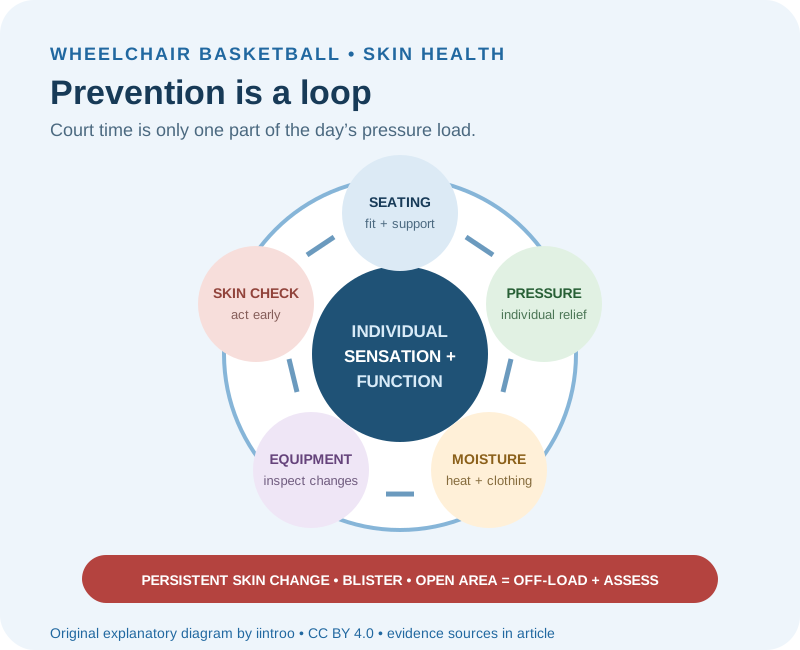
Training, travel, heat, moisture, transfers and seating all change skin load. Prevention needs an individual plan, not a universal cushion or timer.
Key points
- Not every wheelchair athlete has the same sensation, skin or pressure-injury risk.
- Seating, cushion condition, heat, moisture, friction and session duration interact.
- Persistent discolouration, blistering or an open area needs prompt off-loading and assessment.
Who this guide is for
This guide is for wheelchair basketball athletes, coaches, parents, equipment staff and medical teams. Wheelchair use does not describe one diagnosis or one level of sensation. Some athletes can detect early discomfort; others may not feel prolonged pressure, shear, heat or moisture in the same way. Prevention therefore starts with the individual, not with assumptions about classification.
IPC surveillance shows that Para athlete health requires impairment-aware planning and timely symptom reporting. The wheelchair-athlete review includes pressure injury among conditions that can affect safe participation, alongside upper-limb and autonomic concerns. Neither source supports a single prevention schedule for every athlete.
Risk changes across a basketball day
Risk can change with court time, travel, warm venues, damp clothing, repeated transfers, reduced recovery, illness, nutrition and changes in body position or equipment. An umbrella review of 21 reviews identified interacting personal and clinical factors rather than one dominant cause. Much of that evidence concerns wheelchair users broadly, not basketball competition specifically.
A tournament day may extend sitting time well beyond the match. Build skin and seating checks into travel, warm-up, bench periods and recovery. Athletes who need assistance should have a private, agreed process that protects dignity and avoids making teammates responsible for clinical decisions.
Check the whole seating system
Inspect the cushion, cover, fastenings, clothing seams and chair set-up for damage, folds, contamination or changes in position. A cushion is not protective simply because it is marketed for sport. Wheelchair fit, posture, stability, pressure distribution and the athlete’s function must be considered together by an appropriately qualified seating professional.
Introduce equipment changes gradually and monitor the skin response. Do not cut, add improvised layers or copy another player’s set-up without assessment; a change that unloads one area can increase pressure or shear elsewhere. Classification compliance and performance preferences do not replace a health review.
Use an individual pressure and moisture plan
Pressure-relief movement, transfer strategy and skin inspection should match the athlete’s sensation, strength, balance, chair and clinical history. This article does not prescribe an interval or technique. A physiotherapist, occupational therapist, seating specialist or clinician can help establish safe options that remain realistic during training and competition.
Change out of wet clothing, manage heat exposure and keep skin clean and dry without aggressive rubbing. Check after new equipment, unusually long travel or a change in training load. Athletes should know who to contact and how to report a concern early without risking selection pressure or embarrassment.
Act on early skin changes
Persistent redness or discolouration, a change in temperature or firmness, swelling, blistering, broken skin or a dark purple or maroon area requires immediate unloading and qualified assessment. Warning signs can look different across skin tones; touch, temperature and comparison with the surrounding area can add information, but they do not replace clinical evaluation.
Drainage, spreading redness, worsening pain, fever or feeling systemically unwell needs prompt medical advice. Do not return to sitting or competition simply because the surface looks small. Tissue damage can be deeper than it appears, and return depends on the site, severity, cause, equipment and healing—not a universal timetable.