
Futsal lower-limb injuries: make the warm-up specific and manage the week around it
Futsal asks for repeated accelerations, stops and changes of direction on a hard court. A structured warm-up may help, but it cannot replace load planning, early symptom reporting or proper rehabilitation.
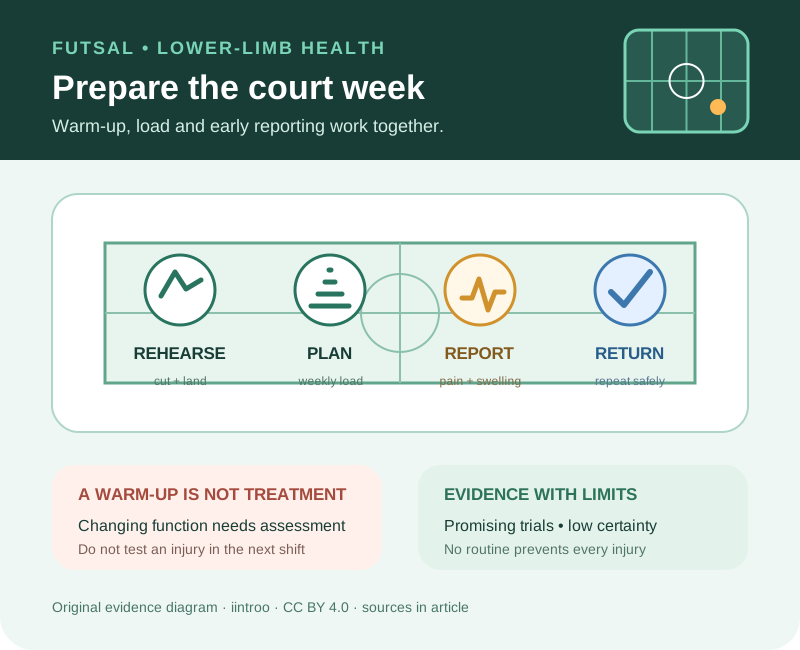
Key points
- Recent futsal surveillance and reviews repeatedly identify lower-limb problems, but injury rates vary with level, sex, exposure definition and surveillance method.
- One small randomised trial in male amateur players found fewer overall, acute and lower-limb injuries with FIFA 11+, while the wider futsal evidence remains limited and low certainty.
- A warm-up should rehearse futsal movement regularly; pain, swelling, instability or loss of function still requires load adjustment and appropriate assessment.
Prepare for futsal, not a smaller version of outdoor football
This guide is for futsal players, coaches, families and medical teams. Five-a-side play on a firm indoor court compresses accelerations, decelerations, pivots, shots, tackles and substitutions into a small space. Match and training demands differ from outdoor football, so preparation should reflect repeated short efforts, rapid braking, change of direction and ball decisions rather than copying a routine without context.
A 2026 seven-year cohort followed 95 Turkish male national-team players across 38 camps. Match time-loss injury incidence was substantially higher than training incidence, with ankle problems prominent in matches and thigh problems in training. This is valuable elite surveillance from one national programme; it does not predict an individual player's risk or represent women, youth, recreational leagues or every surface.
Use a structured warm-up with honest evidence language
A useful court warm-up can progress from running and mobility to strength, balance, landing, deceleration, change of direction and faster futsal actions with the ball. Players need enough regular exposure to learn the movement rather than performing a token sequence only on match day. Coaches should scale intensity for age, training history, recent absence and the session that follows.
The 2026 meta-analysis found only two futsal trials that reported direct injury outcomes. One randomised study of 71 male amateur players using FIFA 11+ twice weekly reported lower exposure-adjusted overall, acute and lower-limb injury rates than the control warm-up. The other trial did not show a statistically significant between-group difference. Heterogeneous definitions and very-low-certainty injury evidence mean the programme is promising, not a guarantee.
Plan the week, not just the first fifteen minutes
Record matches, training, tournaments, gym work and other sport together. Sudden increases in high-intensity court exposure, congested fixtures and return after illness or time away deserve planned progression. Repeated ankle soreness, thigh or groin tightness, reduced sprinting, altered kicking or a player who cannot decelerate confidently should trigger an early review rather than extra tape and another hard session.
The female-futsal review identified ankle, thigh, knee and groin injuries as recurring sites, but combined only nine studies with different levels and methods. The 2024 prevention review also found a small, uneven evidence base. These patterns support broad lower-limb preparation and surveillance; they do not establish one screening test, workload ratio, shoe or exercise as a universal preventive solution.
Stop when symptoms change function
Stop play after an acute lower-limb injury when the athlete cannot bear weight, develops rapid swelling, visible deformity, severe focal bone pain, a locked knee, repeated giving-way or marked loss of movement. Numbness, a pale or cold foot, severe escalating pain or loss of pulse needs urgent emergency assessment. Do not use another substitution period as a diagnostic test.
Gradual pain also matters when it changes running, kicking, sleep or daily activity, or persists after recovery days. A qualified clinician can distinguish muscle, tendon, joint, bone and nerve problems and decide whether imaging or a specific rehabilitation plan is appropriate. A warm-up is preparation, not treatment for an existing injury.
Return through futsal tasks and repeated efforts
Return should rebuild the diagnosed structure's capacity and then add straight running, braking, planned direction changes, reactive movement, passing, shooting, opponent pressure, repeated bouts and full training. The order and criteria depend on the injury, position, competition demands and the athlete's response during and after each stage. Goalkeepers and outfield players do not need identical final tests.
Pain-free jogging or one good change of direction does not prove readiness for a match. Monitor confidence, swelling, strength, movement quality and next-day response, and preserve a route back to modified training if symptoms recur. This article does not diagnose an injury, prescribe a warm-up dose or provide medical clearance.