
Hamstring injury in sprinters: rebuild high-speed exposure, not just strength
A sprinter's hamstring rehabilitation must reconnect clinical recovery with progressive running mechanics, acceleration and near-maximal speed. Calendar time or a normal scan alone cannot establish readiness.
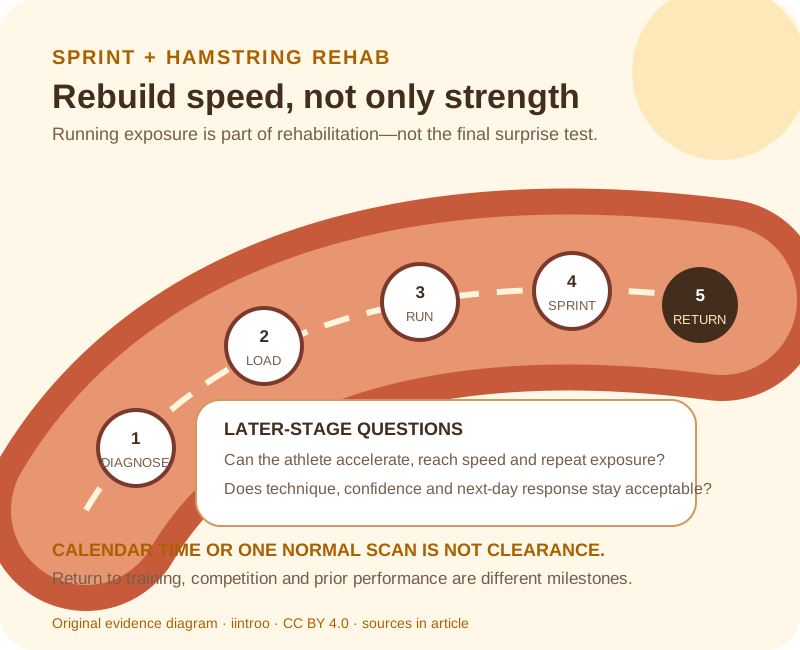
Key points
- Hamstring injuries differ by muscle, location, tissue involvement and mechanism, so a single rehabilitation timeline is unreliable.
- Progressive running and sprint exposure are core parts of rehabilitation because gym strength alone does not reproduce maximal-speed demands.
- Return should combine symptoms, function, strength, high-speed exposure, technical confidence and the athlete's event demands rather than one scan or test.
Classify the injury before copying a programme
This guide is for sprinters, hurdlers, jumpers and relay athletes returning from a hamstring injury. Sudden posterior-thigh pain during acceleration or maximal speed can involve different muscles, regions and connective tissues. A complete rupture, avulsion or injury involving the intramuscular tendon is not equivalent to a small myotendinous strain.
Clinical examination guides diagnosis and initial management; imaging is useful when it can answer a specific question but is not the whole return decision. Severe pain, a palpable defect, extensive bruising, marked weakness, inability to walk normally or pain near the sitting bone after a forceful event warrants prompt sports-medicine assessment.
Restore load across more than one exercise
Rehabilitation usually progresses from tolerable early loading toward greater force, range, speed and sport specificity. Isometric, isotonic and eccentric work can have roles, alongside trunk, hip and lower-limb training. Exercise choice and dose should respond to the injured tissue, symptoms and the athlete's sprint demands rather than a branded protocol.
A 2025 meta-analysis favoured lengthening-focused exercise in some outcomes, but trials and protocols differ. The 2026 scoping review found return criteria were reported in fewer than half of primary rehabilitation studies and often relied on pain resolution. These gaps make a single 'best' exercise or week-by-week template unjustified.
Reintroduce running as a graded exposure
Running is not a final test added after gym work. Progress from appropriate submaximal running to acceleration, upright mechanics and higher-speed exposures while tracking pain, perceived confidence, technical change and the next-day response. Volume, speed, recovery and surface should not all jump together.
Near-maximal sprinting places demands that jogging and strengthening do not reproduce. The London consensus supports running and sprinting within rehabilitation but found no single agreed criterion for when sprinting becomes safe. The clinician and coach should therefore define staged entry criteria and stop rules for the individual athlete.
Test the event, not only the hamstring
A 100-metre sprinter, 400-metre runner, hurdler and long jumper use high-speed running differently. Later rehabilitation should reflect block starts, bend running, hurdle rhythm, take-off preparation or relay exchanges as appropriate. Assess whether the athlete can repeat the required exposures, not just produce one good effort.
Strength and range measures can add information, but symmetry with the other leg is not automatically normal if both sides changed during detraining. Compare with reliable pre-injury data when available. Psychological readiness and fear at high speed also matter and should be discussed without treating understandable caution as weakness.
Return is a shared risk decision
Return to training, return to competition and return to prior performance are different milestones. The athlete may rejoin selected sessions before unrestricted maximal sprinting. Review symptoms, strength, running exposure, technical quality, confidence, event schedule and the consequences of reinjury together.
No test or scan can guarantee that reinjury will not occur. A sudden recurrence of pain, loss of power, altered gait or worsening next-day response should trigger reassessment rather than concealment. Individual clinical care is especially important for youth and Para athletes, previous recurrent injuries and suspected tendon or avulsion involvement.