
Golf after total hip replacement: rebuilding the round, not racing the calendar
Returning to golf after hip replacement involves more than a swing. Explore rehabilitation, walking demands and evidence limits without a universal return date.
Key points
- Retrospective return-to-golf rates cannot guarantee one person's recovery.
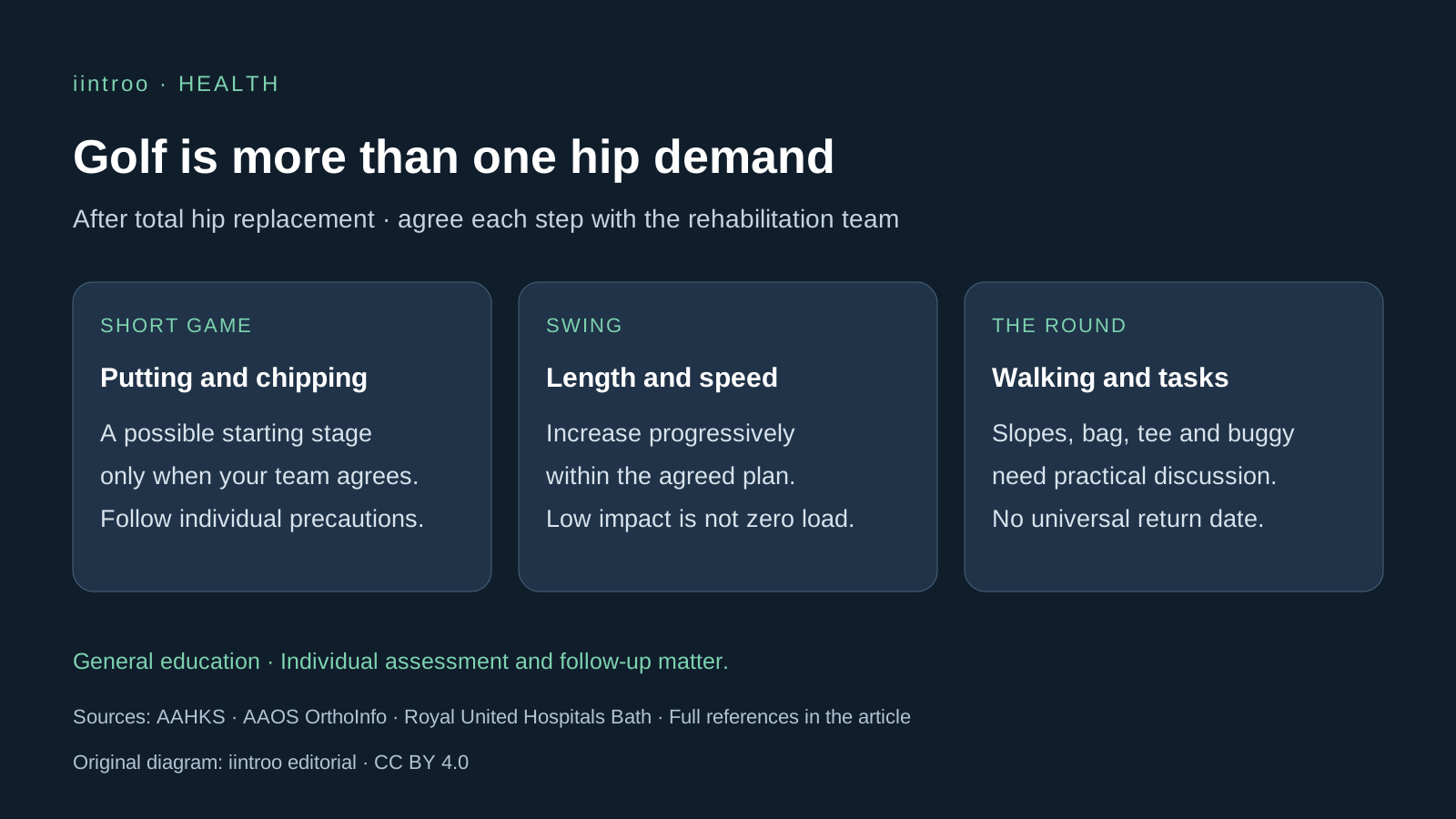
- Short-game practice, a driver swing and walking a round are distinct rehabilitation demands.
- Small laboratory studies do not establish long-term implant safety or universal clearance.
Encouraging results are not a personal guarantee
For an older golfer considering a return after total hip replacement, the useful question is not simply when to book a tee time. It is how to rebuild the movements, walking and confidence that a round requires while following an individual rehabilitation plan.
A systematic review estimated a 90% return-to-golf rate after hip replacement. However, only four of its 23 studies concerned hips, and every included study was retrospective. Response bias and differences between patients limit what this figure predicts for one person.
A separate French survey included 599 eligible golfers over 40 after a first, one-sided hip replacement. Respondents reported less golfing pain and a modest handicap improvement. These questionnaire findings offer encouragement, not proof that surgery improves performance or guarantees a pain-free return.
Agree what returning actually means
The American Association of Hip and Knee Surgeons generally recommends low-impact sports and realistic activity goals discussed with the surgeon. Returning to a familiar activity is different from starting a more demanding programme than before surgery.
Make the conversation specific: does permission cover putting, longer swings, walking the course or all three? Explain your usual golf. Short-game practice and a hilly competition round are different goals, even though both count as playing.
Keep the operative team's movement and weight-bearing instructions. Restrictions can differ between procedures and patients. Walking is useful, but AAOS cautions that it does not replace prescribed rehabilitation exercises.
Separate short-game practice from a full round
Royal United Hospitals Bath guidance describes starting with putting and short chipping before gradually increasing swing length and speed. This illustrates a progression, not permission to start independently. A local hospital protocol should not override advice from your own surgical team.
Discuss the less obvious tasks too: retrieving a ball, setting a tee, managing a bag, getting into a buggy and negotiating slopes. Ask your physiotherapist to demonstrate options compatible with your restrictions rather than improvising bending or twisting techniques.
Comfort provides feedback, but it is not the only progression criterion. The hospital guidance advises reducing or stopping exercises that significantly increase pain. Report a recurring problem instead of treating it as something every golfer must push through.
Sources: 5
Treat swing research as information, not a safety certificate
A 2023 laboratory study used motion capture and computer modelling in ten people with unilateral hip replacements. It examined hip rotation, contact forces and muscle activity during driver swings, showing why low-impact does not mean an activity places no demand on the joint.
The sample was small, participants swung barefoot without striking a ball, and the study did not measure years of implant wear or injury risk during normal rounds. It cannot certify a universally safe swing. Discuss persistent discomfort with your clinician before forcing extra rotation or distance; coaching changes must fit medical restrictions.
Sources: 6
Know when assessment comes before practice
Increasing pain at rest or during activity, wound drainage, worsening redness or persistent fever warrants prompt contact with the surgical team. New calf pain or marked leg swelling can signal a blood clot. Sudden chest pain or breathlessness requires emergency assessment.
A successful return is an individual progression, not a race to be first back. Continue rehabilitation and reassess difficulties rather than using another golfer's recovery calendar as clearance. This article provides general education, not a personal rehabilitation prescription or permission to play.
Sources: 4