
Golf back pain: review the whole load before blaming the swing
Low-back pain in golfers is not explained by one swing characteristic. Assess symptoms, total load, function and confidence before building a gradual return.
Key points
- Back pain is reported often in golf studies, but diagnoses and methods vary and the data do not predict an individual golfer's cause or recovery.
- A 2024 biomechanics review found limited and conflicting evidence linking particular swing characteristics with low-back pain.
- A 2026 golf return framework is preliminary expert-informed work, not a validated test or universal timetable for clearance.
Use epidemiology to ask questions, not name a cause
This guide is for golfers, coaches and health professionals. A 2024 review found the lower back among the commonly reported injury regions in both professional and amateur golf, but studies used different definitions, populations and surveillance methods. Many reports did not provide a precise diagnosis. A prevalence estimate cannot tell one golfer what structure hurts or why.
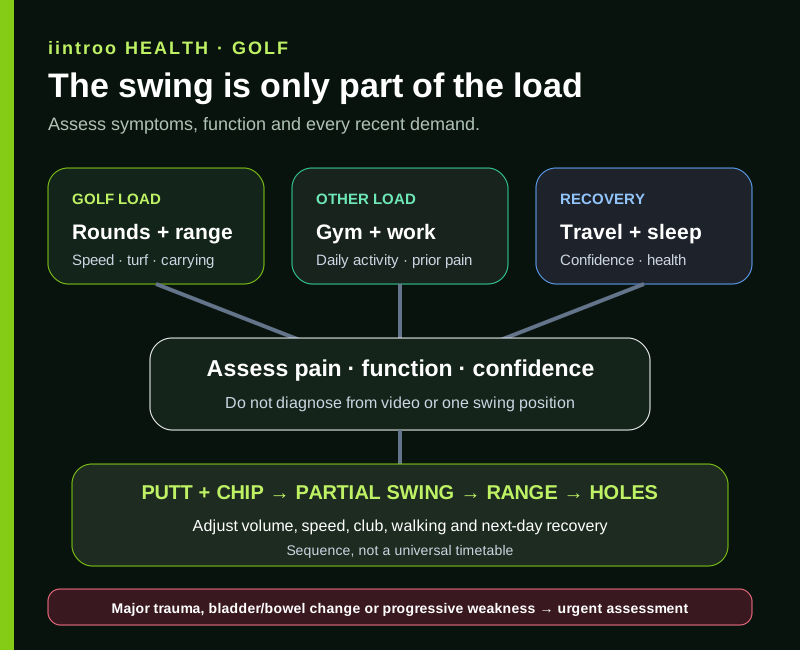
The swing repeatedly loads and rotates the trunk, yet pain is influenced by more than technique. Recent changes in rounds, range volume, gym work, walking or carrying, work demands, travel, sleep, previous episodes and general health can all matter. Treating one swing feature as the cause can miss the rest of the load picture.
Do not promise a biomechanical fix
The 2024 swing review included only nine studies and rated the evidence limited and conflicting. Differences in trunk rotation, side bend, muscle activity or sequencing were not consistent enough to define a harmful swing. Most studies were observational, so an association cannot show that a movement caused the pain.
Video and launch-monitor data may help a qualified coach and clinician understand the golfer's task, but they are not medical imaging and cannot diagnose tissue injury. Technique changes also alter timing and load elsewhere. Test changes gradually and judge them by symptoms, function and the golfer's goals rather than an idealised position.
Sources: 2
Screen the person before progressing the sport
A comprehensive assessment should consider pain pattern, neurological symptoms, function, sleep, mood, beliefs and relevant medical history. Seek urgent care after major trauma or when back pain comes with new bladder or bowel difficulty, saddle numbness, progressive leg weakness, fever or serious systemic illness. New severe night pain or unexplained weight loss also deserves prompt clinical review.
For non-specific or chronic primary low-back pain, WHO supports person-centred care that can combine education, exercise and psychological or other appropriate interventions. The guideline is not golf-specific and does not replace investigation of a suspected fracture, nerve problem or other underlying condition.
Build golf back in layers
The 2026 golf paper proposes a staged framework spanning clinical rehabilitation, physical preparation and golf-specific exposure. It is useful as a set of questions, but it was built from a literature interpretation and only three experts; the authors describe it as a preliminary phase that still needs validation.
A practical progression may move from comfortable daily activity and rehabilitation to putting and chipping, partial swings, controlled range work, then a small number of holes before normal practice and competition density. That is a sequence, not a fixed calendar. Club choice, turf, walking, carrying, shot volume, speed, recovery and next-day response can all be adjusted.
Make readiness broader than pain alone
Return decisions should consider repeatable movement, strength and endurance for the golfer's task, confidence, medication effects and the ability to tolerate planned and unplanned shots. Zero pain is not always required for activity, but rapidly worsening pain, neurological change or declining function is a reason to pause and reassess.
Coordinate the golfer, clinician and coach so rehabilitation and swing changes do not compete. This article provides general education, not a diagnosis, exercise prescription, swing rebuild, injection recommendation or clearance for golf.