
Rowing and low back pain: review the load, not just the stroke
How adult rowers and coaches can discuss back pain, training changes and rehabilitation, with clear limits to the evidence and reasons to seek care.
Key points
- Pain affecting training deserves an open conversation and appropriate assessment.
- Biomechanics research describes associations; it does not prove a single cause.
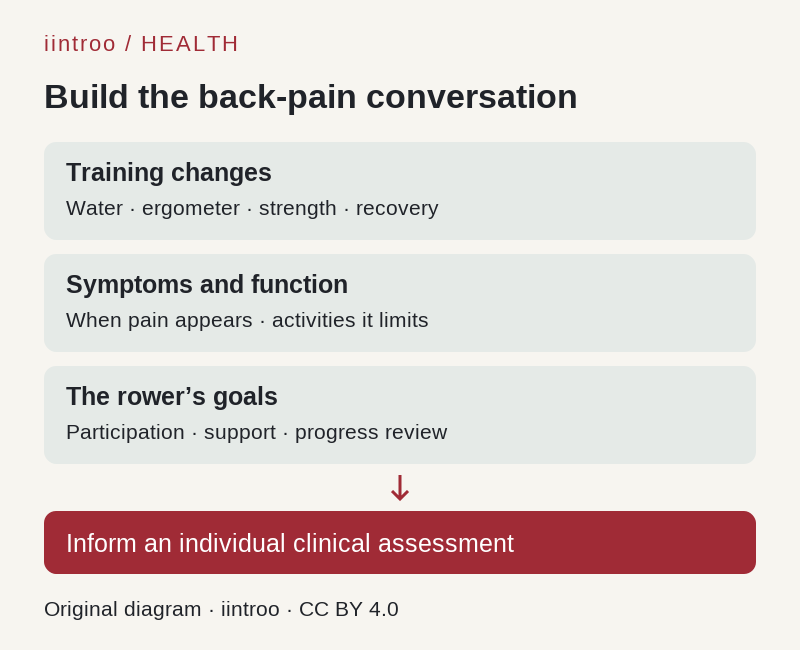
- Rehabilitation and return should respond to the individual rower.
Who this guide is for
Adult club and performance rowers, coaches and support staff can use this guide to prepare a conversation about pain. The 2021 consensus specifically concerns elite and subelite adults. Its recommendations should not automatically become a treatment programme for a child, a Para rower or someone with a different clinical condition.
Back pain that begins during rowing does not, by itself, reveal the cause. A discussion should consider what the athlete can currently do, what has changed and whether medical assessment is needed.
Look across the training week
World Rowing identifies previous back pain and rapid changes in training as relevant considerations. Its guidance also highlights prolonged ergometer exposure. This does not make every long session harmful or establish a safe time limit for every athlete.
Before meeting a clinician, note recent changes in on-water rowing, ergometer work, strength training and recovery. Describe when symptoms appear and which activities they limit. Coaches can make reporting easier by responding supportively, rather than making pain disclosure feel like a threat to selection.
Sources: 2
What biomechanics can and cannot tell us
A systematic review included 22 studies and 429 participants. It found differences in movement and muscle activity between rowers with and without low back pain. Fatigue was associated with increased lower-back flexion at the catch, particularly on an ergometer.
These findings help frame assessment; they do not show that one visible movement caused an individual's pain. Study quality and designs varied. The review found insufficient evidence to favour a fixed or dynamic ergometer specifically to avoid back pain. A different machine is therefore not a proven universal solution.
Sources: 3
Rehabilitation needs a shared plan
The consensus supports education, adjustment of aggravating loads and exercise-based care when indicated. It also emphasises maintaining fitness where appropriate while progressing towards full participation. A qualified clinician should guide those choices with the rower and coach.
Agree how symptoms will be discussed, who can adjust a session and how progress will be reassessed. The next race date should not replace that assessment. This article does not specify exercises, training volumes or a timetable for returning to competition.
When to seek medical help
Seek assessment for pain that disrupts everyday life, persists or worries you. Severe pain that begins suddenly or worsens quickly, or back pain with feeling generally unwell, warrants urgent advice.
Back pain with new bladder or bowel problems, loss of sensation around the genitals or anus, or weakness or numbness in both legs needs emergency care. Serious trauma is another reason for urgent emergency assessment. Use local emergency services; this brief list cannot rule out serious illness.
Sources: 4