
Golf and lightning: stop play early and know the safe shelter
A golf cart, tree or open shelter is not reliable lightning protection. Know the warning signal, evacuation route and substantial building or enclosed hard-topped vehicle before the round.
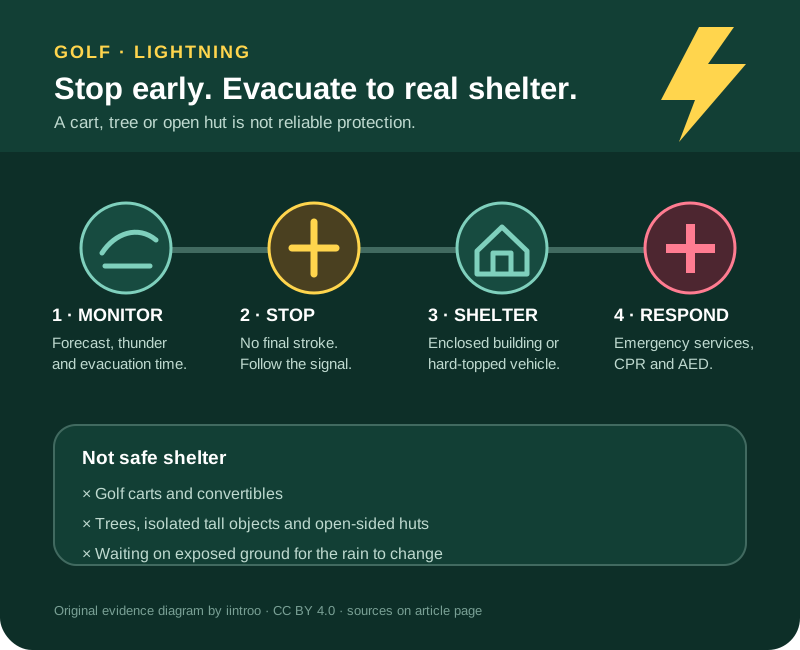
Key points
- Golf's rules allow a player to stop when they reasonably believe lightning is dangerous, and an immediate Committee suspension means no further stroke.
- A substantial enclosed building or fully enclosed hard-topped metal vehicle is safer; golf carts, trees and open-sided shelters are not safe lightning shelters.
- A lightning-strike victim does not retain an electrical charge, so emergency assessment, CPR and AED use should not be delayed when safe to approach.
Decide the plan before the first tee
This guide is for golfers, caddies, families, clubs and event organisers. A lightning plan should identify who monitors forecasts and local observations, who orders a suspension, how the warning is communicated, where each part of the course evacuates and how long that movement takes. Spectators, volunteers, maintenance staff and disabled participants need workable routes too.
Weather apps and detection systems can support decisions but are not a guarantee and should not replace a named decision-maker. A long course requires earlier action because the farthest group may need substantial time to reach shelter. Publish the signals and shelter locations before play rather than trying to explain them during a storm.
Stop on the signal — or when danger is reasonable
Under Rule 5.7, a golfer may stop play when they reasonably believe lightning is dangerous and must report to the Committee as soon as possible. When the Committee declares an immediate suspension for imminent danger, no further stroke is permitted until play is resumed. The R&A clarification recommends taking shelter immediately without further actions.
Do not finish a hole, return for a club or wait for rain. The USGA uses one prolonged horn note for immediate suspension in its championship procedures, but local signals can differ. Every participant should know the event's actual warning and follow staff directions rather than assuming that a familiar sound pattern applies everywhere.
Choose shelter by construction, not convenience
The National Weather Service identifies a substantial enclosed building or a fully enclosed hard-topped metal vehicle with windows closed as appropriate shelter. A golf cart, convertible, tree, small open shelter, covered patio or isolated structure does not provide the same protection. Metal clubs do not attract lightning from a distance, but carrying them keeps a player exposed outdoors.
Move away from open ground, hilltops, water and isolated tall objects while following the evacuation route. Do not shelter under a tree or lie flat. If no safe place is immediately available, the situation is already dangerous; emergency crouching ideas are not a substitute for an early evacuation plan.
Respond immediately after a strike
A person struck by lightning does not retain an electrical charge and can be touched when the scene is safe. Activate emergency services, assess responsiveness and breathing, begin CPR and use an AED when indicated and available according to trained first-aid practice. Multiple casualties are possible, so the venue plan should account for more than one patient.
All lightning-strike victims need medical evaluation even if they appear to recover. Burns may be small while cardiac, neurological, hearing or vision effects are more significant. This article is not a CPR course; clubs should maintain trained responders, working communication and accessible emergency equipment.
Resume only through the organised process
The Committee controls resumption in organised golf. Lightning guidance commonly uses a waiting period after the last thunder, but local weather service advice and event procedures must govern the decision. A clearing sky, lighter rain or another group leaving shelter is not a reliable all-clear.
Most lightning-safety evidence is based on meteorology, case experience, injury surveillance and expert guidance rather than randomised trials. That limitation does not make exposure a reasonable experiment. The useful prevention model is organisational: monitor, decide early, communicate, evacuate to verified shelter, account for people and resume only when the responsible authority declares it safe.