
Sun protection for golf: plan for the whole round, not just the first tee
Golfers and caddies can spend hours in exposed areas. Use the UV index, clothing, shade and sunscreen to prepare for the round, including cool or cloudy days.
Key points
- The UV index describes ultraviolet intensity, not how hot or bright the course feels.
- Use clothing, a protective hat, sunglasses, shade and broad-spectrum sunscreen together when UV protection is needed.
- Personal exposure measurements show that different body sites receive different doses; they do not predict one golfer’s cancer risk.
Read UV separately from the weather
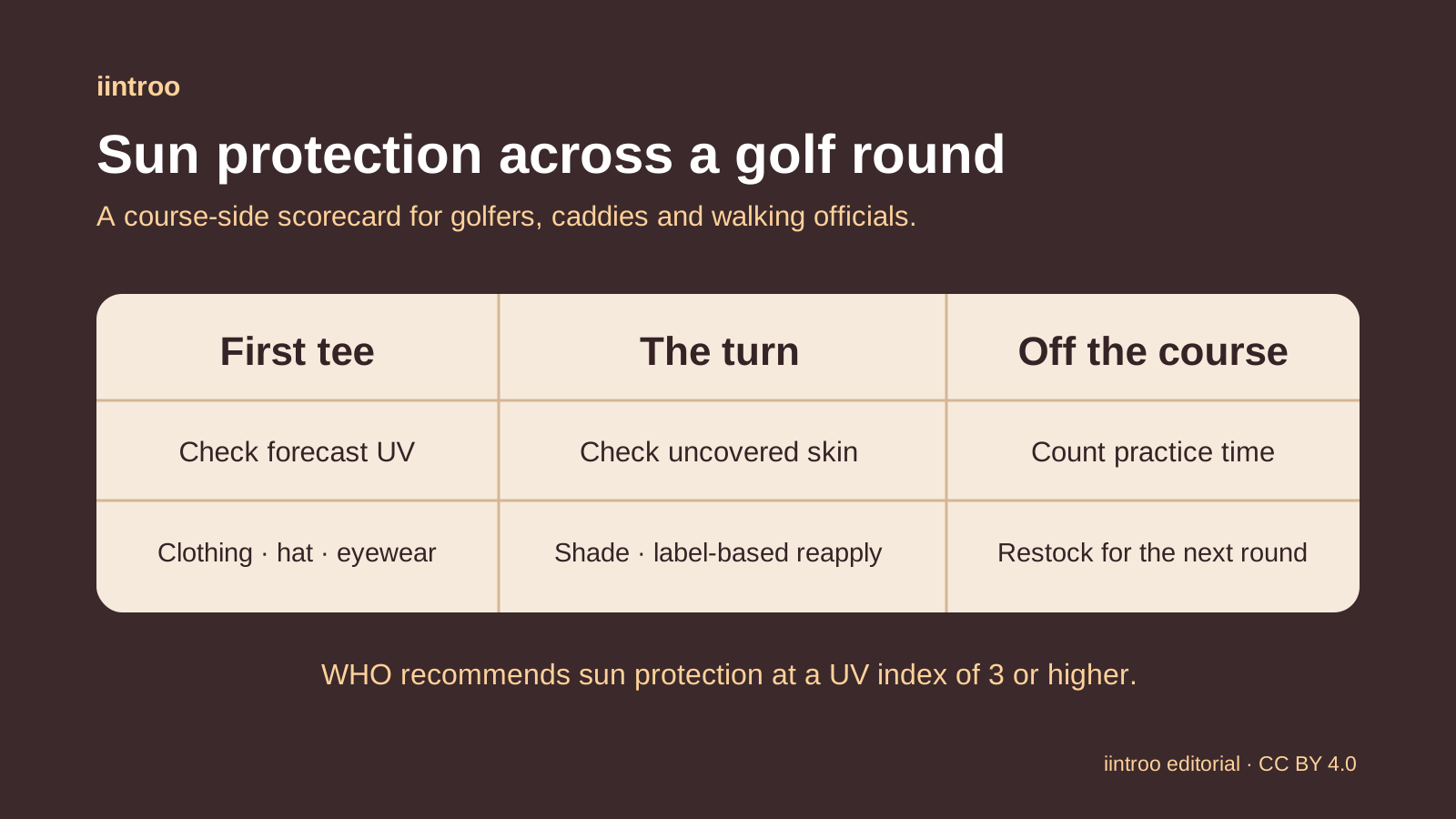
A cool breeze and a long queue on an exposed tee can coexist with substantial ultraviolet exposure. Golfers, caddies, walking officials and volunteers often start warming up well before the first tee, then spend hours moving between shade and open fairways. Plan for that whole shift, including the practice range and the walk back. The World Health Organization recommends sun protection at a UV index of three or higher. Check the forecast for the location and hours you expect to be outside, not simply the number shown when you leave home.
Golf studies have used wearable dosimeters rather than asking players to guess their exposure. A Queensland study published in 2009 measured the forearm, upper back and top of the head over part of a year and found variation across sites and seasons. A smaller field study in Valencia measured exposure during winter golf, showing that the season is not a substitute for assessment. These are local measurements from particular weather and hours of play. They do not measure cancer incidence or establish a safe number of holes.
Set two protection checkpoints on the course
At the first tee, check what is covered while you swing or carry a bag. A lightweight long-sleeve layer, a brim that also shields ears and neck, and UV-protective sunglasses reduce reliance on sunscreen alone. If the club’s dress code or activity constrains equipment, ask in advance what protection is permitted. Apply broad-spectrum sunscreen to uncovered skin according to the label; scan less obvious areas such as the ears, back of the neck and the backs of the hands. Keep the product accessible rather than relying on a tube left in the clubhouse.
Use the turn or another convenient point as a reminder, not a fixed reapplication schedule. Follow the label for reapplication and do not wait for the turn if the interval has elapsed or the product has been removed by sweat or towelling. While waiting for the group ahead, use available shade where it does not delay play or interfere with others. A cart canopy can help with direct exposure but is not complete protection; walking officials and caddies should have access to the same practical breaks and supplies as players.
Notice changes over a season, not just sunburn after a round
Absence of visible sunburn does not confirm that exposure was low. Consider how much time you spend on the course over a week, including coaching, practice and tournament duties. For youth squads, make protection supplies and shaded meeting points normal equipment rather than asking children to judge their own exposure. Skin of any tone can be affected by UV; people advised to avoid sun because of medicines or a medical condition should follow their healthcare team’s advice.
Seek professional assessment for a new or changing mole, a persistent sore that does not heal, or an unexplained skin change. A coach should not identify a lesion from a photograph or clear someone with a history of skin disease. This guide supports preparation for golf; it does not diagnose skin damage or replace individual dermatology or eye care.