
Surfing and UV exposure: build protection into the session
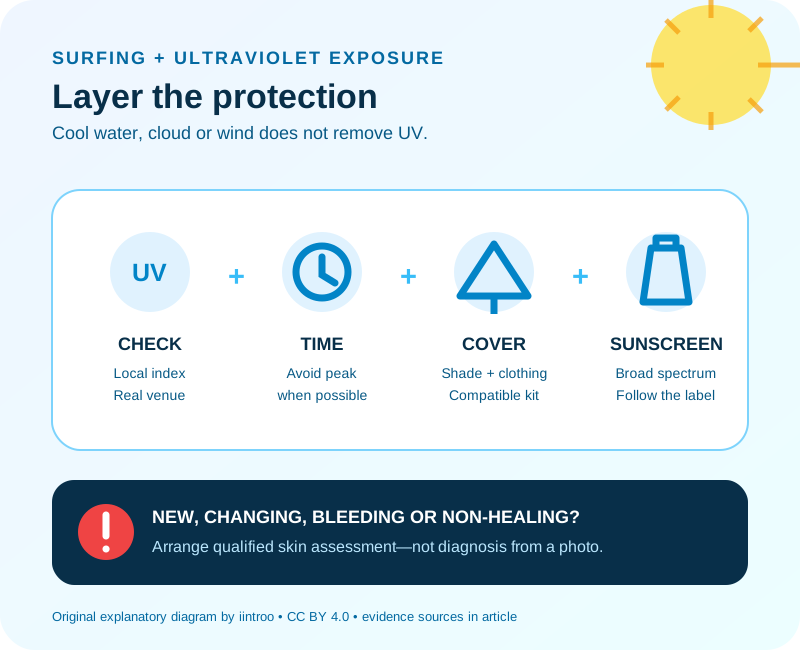
Water, waiting time and long outdoor sessions add exposure. Use the UV index, timing, shade, clothing and sunscreen as one layered plan.
Key points
- Cloud, wind or cool water does not remove ultraviolet exposure.
- Clothing, shade and timing should work with sunscreen rather than be replaced by it.
- A changing, bleeding or non-healing skin lesion needs professional assessment.
Who this guide is for
This guide is for surfers, coaches, parents, officials and volunteers planning time on the water or beach. Ultraviolet radiation reaches athletes during paddling, waiting, judging and setup—not only while standing in direct midday sun. Cool wind, cloud and cold water can reduce the feeling of heat without making UV harmless.
Check the official local UV index and forecast for the actual venue and session. WHO recommends sun protection when the UV index is 3 or higher. Individual risk varies with exposure history, skin characteristics, medicines and health conditions, so a clinician can advise people with particular concerns.
Start with the session design
The Sun Safe Sports statement uses a hierarchy: first consider avoiding or reducing exposure, then timing, shade, policies and protective equipment. Where possible, schedule outside peak UV periods, provide shade for waiting areas and build protection breaks into coaching or event operations.
These controls matter because sunscreen application is imperfect and water, towelling and sweating can reduce coverage. Clubs should provide clear expectations and access rather than leaving sun safety to memory. A single product cannot compensate for an unnecessarily long high-UV session.
Layer clothing and sunscreen
WHO recommends protective clothing, a broad-brimmed hat and wraparound UV-protective eyewear when appropriate, plus broad-spectrum sunscreen on skin that cannot be covered. In surfing, equipment must also be compatible with safe movement, vision and water conditions. Follow the sunscreen label for amount, timing and reapplication after water or towelling.
The IOC consensus supports sun-protective clothing and sunscreen but notes limited athlete-specific research and possible differences between products. Sunscreen should not be used to prolong exposure. Coaches should avoid turning one SPF number into a guarantee of complete protection.
Read the surfing evidence cautiously
A 2022 Australian cross-sectional study screened 116 surfers and 55 swimmers from southeast Queensland and northern New South Wales. Skin cancers or precancerous lesions were common in this selected sample, and surfers had higher observed prevalence than swimmers.
The study was small, regional and cross-sectional, with recruitment and comparison limits. It cannot establish that surfing caused an individual lesion or predict risk in another country. It reinforces the need for prevention and appropriate skin assessment; it does not justify repeating dramatic relative-risk figures without context.
Sources: 4
Notice change and seek assessment
Do not rely on an app or photograph to diagnose a mole or lesion. Seek healthcare advice for a new or changing spot, a sore that does not heal, unexplained bleeding or any skin concern. Screening intervals should be decided with a qualified professional based on individual risk, not copied from another surfer.
Record the venue, session duration, UV index and protection used when reviewing a club plan. Include coaches, judges, lifeguards and volunteers as well as athletes. A useful sun-safety system makes the protected choice practical before the group reaches the water.