
Haemochromatosis in sport: treat iron overload, not fatigue with more iron
Haemochromatosis is iron overload, not iron deficiency. Diagnosis, organ assessment and phlebotomy planning should guide training—not iron supplements.
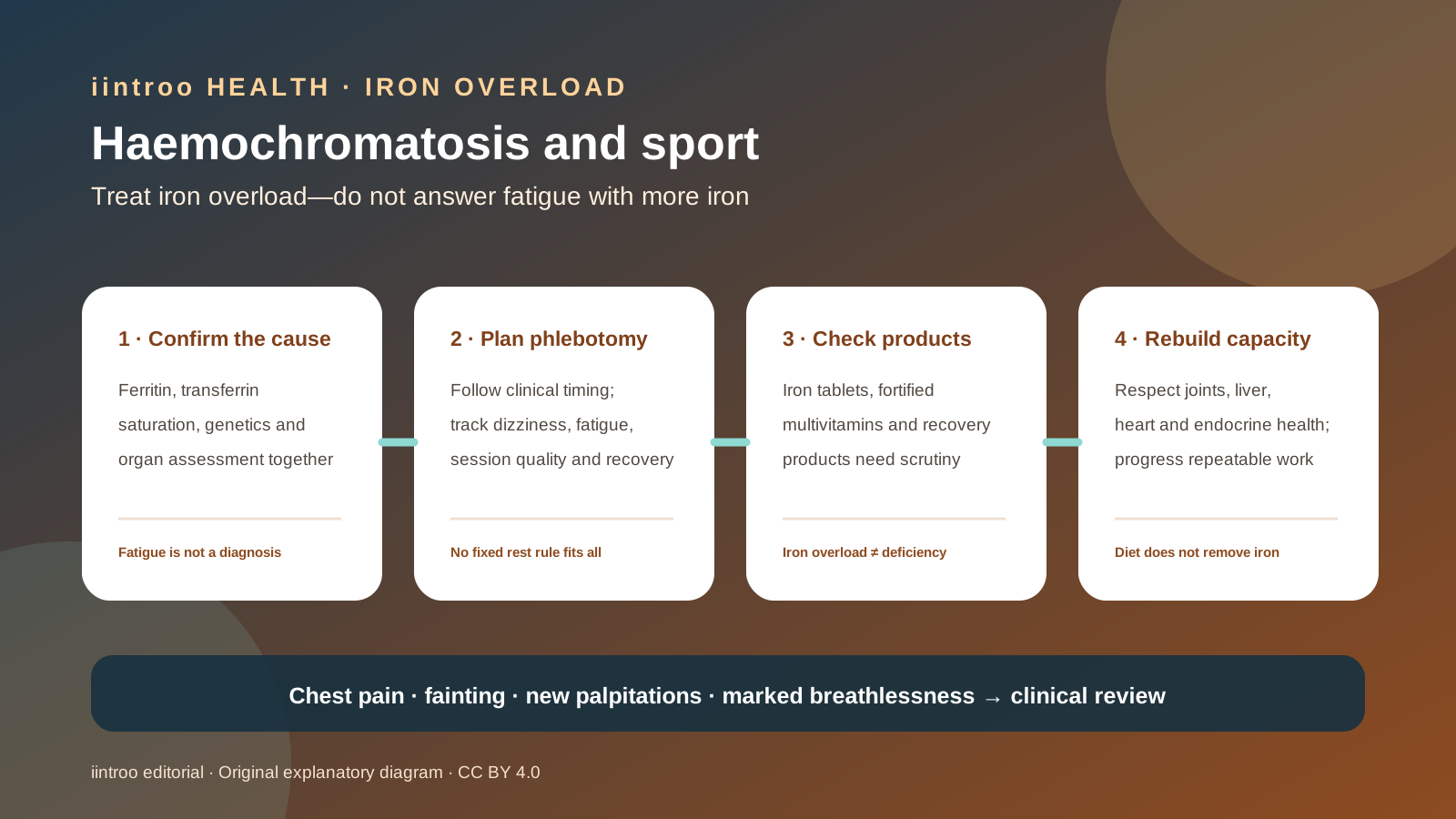
Key points
- Fatigue and a raised ferritin are not specific for haemochromatosis; diagnosis combines appropriate iron studies with genetic and clinical assessment.
- Iron tablets do not treat haemochromatosis and may add unnecessary iron. Therapeutic phlebotomy and organ monitoring belong to the clinical team.
- Training response can change around phlebotomy or when heart, liver, endocrine or joint complications are present; there is no universal ferritin value for sport clearance.
Confirm iron overload before explaining every symptom with it
This guide is for athletes with confirmed or suspected hereditary haemochromatosis and the teams supporting them. Tiredness, joint pain and an elevated ferritin have many possible causes. EASL guidance uses transferrin saturation, ferritin, genetic findings and, when appropriate, imaging or other organ assessment to establish the diagnosis and severity. A high ferritin after illness, inflammation or heavy training is not by itself proof of iron overload, while a genetic result does not show the current effect on organs.
Map the athlete's symptoms and the sport's demands alongside liver, heart, endocrine, bone and joint health. Ask whether fatigue is new, progressive or linked to sleep, energy intake, illness, treatment or training load. Chest pain, fainting, new palpitations, marked unexplained breathlessness, jaundice or an acute neurological change requires medical assessment. Coaches should not order serial iron panels or use a wearable readiness score to decide whether iron overload is controlled.
Keep therapeutic phlebotomy and training in one coordinated plan
Phlebotomy is first-line treatment for many people with HFE-related haemochromatosis because it removes iron-containing red cells. The treating service sets the amount, frequency, haemoglobin checks and maintenance target. Training can be arranged around the person's established response, but there is no universal rule that everyone must rest for the same number of hours. Record dizziness, unusual fatigue, session quality and recovery after treatment and share a repeatable pattern with the clinical team.
On a treatment day, follow the service's advice about fluids, food, driving and strenuous activity. Progress back through low-consequence work before maximal intervals, heavy lifting, remote cycling or heat when the athlete has symptoms. Do not add extra blood donation, manipulate hydration or delay prescribed treatment to fit a race. If recovery is repeatedly poor, the answer is coordinated review of haemoglobin, treatment schedule, nutrition, illness and training—not an improvised iron supplement.
Separate sports nutrition iron from treatment of iron overload
Iron deficiency is common in some athletic populations, but haemochromatosis is the opposite problem. An athlete can have complex or changing blood results, so neither diagnosis should be inferred from fatigue alone. Avoid iron tablets and high-dose iron products unless a clinician who knows the haemochromatosis has identified a separate indication. Check multivitamins, recovery products and fortified supplements; the label matters more than whether the product is marketed as natural or performance-focused.
Ordinary balanced eating supports training, but restrictive diets are not a substitute for iron-removal treatment. EASL notes that diet alone has a limited effect compared with phlebotomy. Avoiding raw shellfish is commonly advised because iron overload can increase vulnerability to severe Vibrio infection, and alcohol decisions should reflect liver status and clinical advice. Coaches and dietitians should not promise that tea, coffee, fasting or a special food pattern will detoxify iron or reverse organ damage.
Adapt load to joints and organs, then judge repeatable function
Hand, ankle, knee or hip arthropathy may persist even when iron stores improve. Use task-specific strength, technique changes, cycling or pool alternatives and gradual impact rather than permanent rest or repeated painful testing. Liver disease, diabetes, hormonal complications or cardiac involvement can change recovery and safe intensity; those conditions need their own clinical plan. New swelling, locking, loss of function or a clear performance decline deserves assessment rather than being dismissed as ageing.
Return toward competition when ordinary sessions are repeatable, symptoms are stable and the athlete can follow the treatment and monitoring plan. Reassess after treatment changes, new organ findings, an unexplained fall in capacity or a move to remote or high-consequence sport. Evidence on sport-specific training in haemochromatosis is sparse, so recommendations largely combine disease guidelines with general exercise principles. There is no universal ferritin, transferrin-saturation, haemoglobin or post-phlebotomy interval that clears every athlete. This page is education, not diagnosis, supplement advice, phlebotomy scheduling or personal clearance.