
Exercise with haemodialysis: coordinate blood pressure, vascular access and recovery
Exercise can support people receiving haemodialysis, but blood pressure, fluid removal, vascular access and symptoms require dialysis-team coordination.
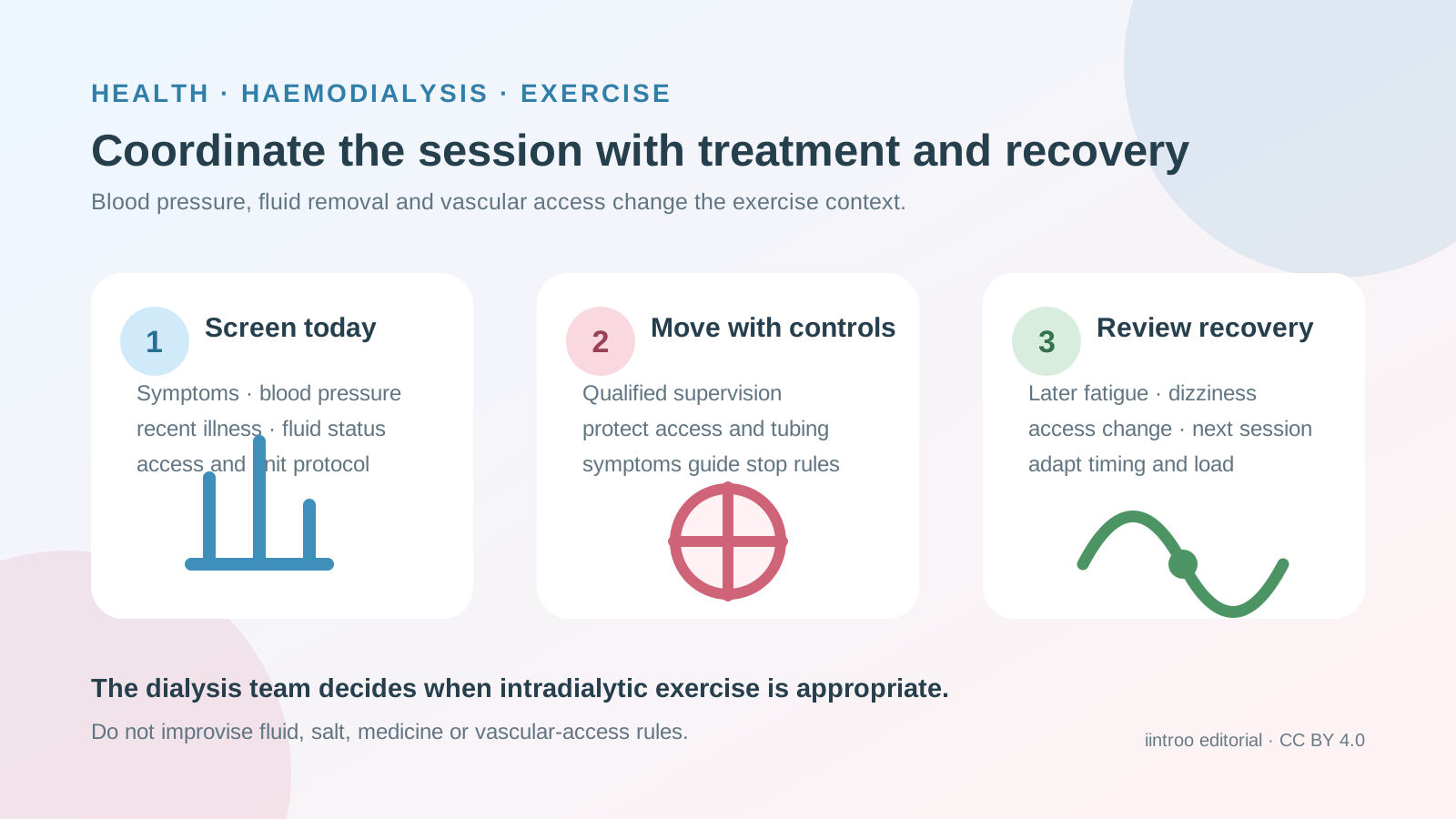
Key points
- Intradialytic and between-session exercise can improve aspects of physical function, but the dialysis unit must decide whether and how it is delivered safely.
- Blood-pressure instability, fluid status, anaemia, heart disease and the vascular access make generic gym or hydration advice unsafe.
- Chest pain, fainting, severe breathlessness, confusion, access bleeding or a sudden access change requires immediate clinical attention.
Treat haemodialysis as its own exercise context
This guide is for people receiving haemodialysis who want to be active and for dialysis and sport teams working together. It complements, rather than extends, the general chronic kidney disease guide. Dialysis schedules, fluid removal, blood-pressure changes, anaemia, cardiovascular disease, neuropathy, diabetes, bone health, fatigue and medicines can alter exercise response. The type and site of vascular access also changes what equipment, pressure and movement are appropriate.
The UK Kidney Association recommends encouraging activity where there are no contraindications and supports a mixture of exercise during and between dialysis sessions. Those population recommendations do not make every treatment session a training opportunity. Current symptoms, pre-session assessment, recent illness, access condition, blood pressure and unit protocol matter. The dialysis team should decide when intradialytic exercise is suitable and who supervises it.
Use benefits without overselling the evidence
Guidelines and reviews report that intradialytic or home-based exercise can improve some measures of physical function, fitness, strength, quality of life, blood pressure or dialysis efficiency. Studies use different cycling, aerobic and resistance protocols and often include relatively small, selected groups. Outcomes and adverse-event reporting are not uniform. Evidence from renal rehabilitation is useful, but it does not establish one ideal intensity or prove that a competitive target is safe for an individual.
Start with current function and a clinically agreed plan. The UK guideline recommends programmes led by people qualified to deliver exercise for chronic-disease populations. Perceived effort and symptoms may be more informative than a generic heart-rate target when medicines or autonomic changes affect pulse. Progress duration, resistance and complexity separately, and review whether the person recovers through the rest of the dialysis day and the next session. Record cramping, dizziness, unusual breathlessness, access discomfort and delayed fatigue so the team can adjust timing or load from evidence rather than memory.
Protect blood pressure, fluid status and vascular access
The 2025 UKKA blood-pressure guideline notes that exercise may support blood-pressure control while also recognising intradialytic hypotension. Stop and alert staff for dizziness, nausea, cramping, visual change, unusual weakness, chest pain, severe breathlessness or fainting. Do not improvise extra drinks, salt, compression, medication changes or a higher target weight. Fluid and sodium advice depends on urine output, gains between sessions, ultrafiltration and the person's clinical plan.
A fistula, graft or catheter needs its own protection plan. Avoid compressing, striking, contaminating or loading the access contrary to unit instructions, and make sure tubing is secure during supervised intradialytic movement. New bleeding, redness, warmth, swelling, discharge, fever, loss or change of the usual thrill, hand coldness or severe pain needs immediate dialysis-team assessment. A coach outside the unit should know the emergency plan without manipulating the access.
Fit training around treatment and recovery rather than a fixed template
Some people prefer activity during dialysis; others tolerate a non-dialysis day better. Compare energy, symptoms, blood pressure and recovery across the individual's schedule rather than assuming one timing rule. Infection, hospital admission, access procedure, repeated hypotension, marked weight or fluid change, worsening anaemia or a new cardiac symptom should trigger review. Return carefully through comfortable daily activity and supervised low-load work before long duration, heavy resistance or remote competition.
There is no universal blood-pressure number, fluid allowance, access rule, heart-rate zone or post-dialysis waiting period that clears every person. Children, home dialysis, peritoneal dialysis, transplant and acute kidney injury require different pathways. This page provides general education, not dialysis prescription, fluid or electrolyte advice, access-care instruction, medication advice or personal sport clearance.