
High blood pressure and strength training: check control before chasing load
Strength work can support blood-pressure care, but heavy lifting needs context. Learn about accurate readings, gradual training and symptoms that need help.
Key points
- Feeling fit does not exclude high blood pressure.
- Health-oriented resistance training evidence is not blanket clearance for maximal lifting.
- Keep taking prescribed medicine and discuss the training plan with the treating professional.
A strong lifter can still have high blood pressure
This guide is for adult recreational lifters and strength-sport participants who have high blood pressure or repeatedly elevated readings. Feeling powerful, completing a demanding set or having no symptoms does not establish that blood pressure is controlled. Hypertension often produces no obvious symptoms, while increasing long-term cardiovascular and kidney risk.
Regular activity belongs in blood-pressure care, but it does not replace clinical assessment or prescribed medication. WHO supports aerobic activity and muscle-strengthening work as part of a broader health plan. Someone managing hypertension should discuss their training history, other medical conditions and intended lifting demands with the treating professional. This article does not set a personal blood-pressure target or grant competition clearance.
Resting benefit is not the same as safety under maximal load
The American Heart Association's 2023 scientific statement, published in a 2024 journal issue, supports resistance exercise for cardiovascular health. Much of its trial evidence covers programmes lasting two to six months, rather than long-term follow-up of competitive strength athletes. It describes low- to moderate-intensity resistance work with appropriate breathing for people with controlled hypertension.
A 2023 systematic review pooled 270 randomized trials and 15,827 participants. Several exercise modes lowered resting blood pressure on average. That does not identify the safest maximal lift for an individual. Isometric exercise ranked highly, but comparisons were limited by differing trial numbers and lack of direct comparative isometric data in the network analysis. A wall-sit headline is not permission to substitute prolonged straining for an agreed care plan.
Measure at rest, not immediately after a hard set
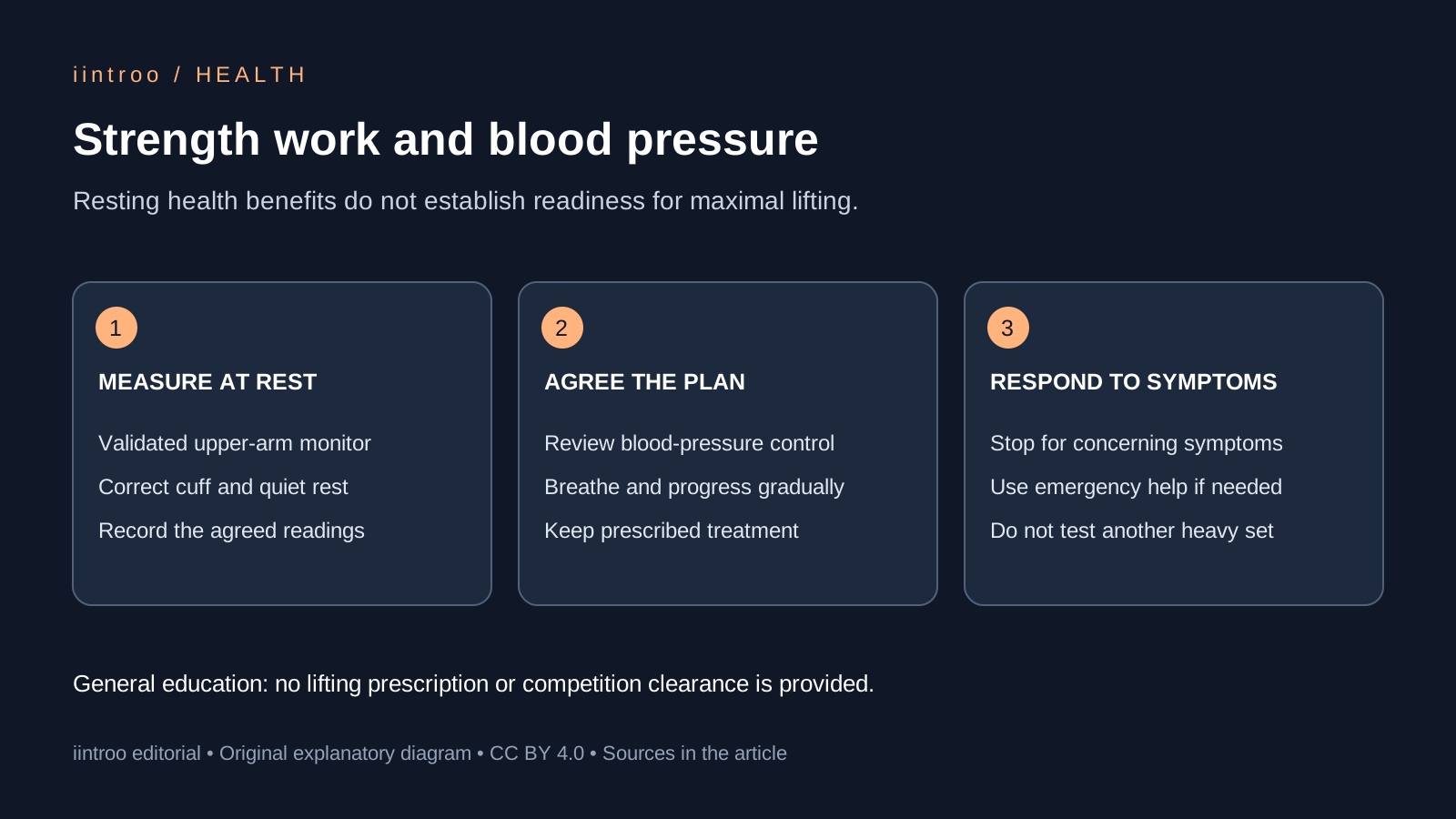
Home monitoring can help the clinician understand patterns and treatment response. Use a validated upper-arm monitor with a cuff that fits, and check your technique with a healthcare professional. A very muscular arm still needs the correct cuff size; a poorly fitting cuff can distort the result. A smartwatch score is not a substitute for this process.
AHA guidance advises avoiding exercise, smoking and caffeinated drinks for 30 minutes beforehand, then sitting quietly for at least five minutes. Support the arm at heart level and take two readings a minute apart. Record them as agreed with your clinician. A reading taken directly after lifting answers a different question from a properly rested measurement; do not use it alone to diagnose yourself or change medication.
Sources: 4
Build the session around control and consistency
Start or resume activity gradually, using a plan that reflects current health and experience. Keep breathing regularly rather than deliberately holding the breath through effort. Warm up and allow a gradual cooldown. A coach can help with movement and progression, but should not decide whether uncontrolled blood pressure or a cardiovascular condition is safe for heavy lifting.
Discuss a change toward very heavy attempts, repeated grinding efforts or competition with the treating clinician. Evidence supporting ordinary health-oriented strength sessions should not be stretched into a universal endorsement of maximal powerlifting or weightlifting. Sustainable participation may include a different mix of aerobic and resistance work while blood pressure is assessed and managed.
Know when to stop and seek help
Stop exercising and seek emergency help for chest pain, severe breathing difficulty or stroke-like symptoms such as new weakness, speech difficulty or vision change. Do not wait for a blood-pressure measurement before responding to a possible emergency. Use the local emergency number; in Türkiye it is 112.
For a non-pregnant adult with a reading above 180 systolic or 120 diastolic, AHA advises repeating the measurement after at least one minute. If it remains very high without symptoms, contact a healthcare professional promptly and do not continue the workout. With concerning symptoms, seek emergency care immediately rather than waiting for a repeat. Pregnancy requires a separate assessment pathway. Never take someone else's tablets or stop prescribed treatment to accommodate a training session.