
Hiking with plantar heel pain: assess the cause before extending the route
Heel pain can change a hiking trip. Learn how assessment, total walking load, footwear and gradual rehabilitation fit together without a fixed return date.
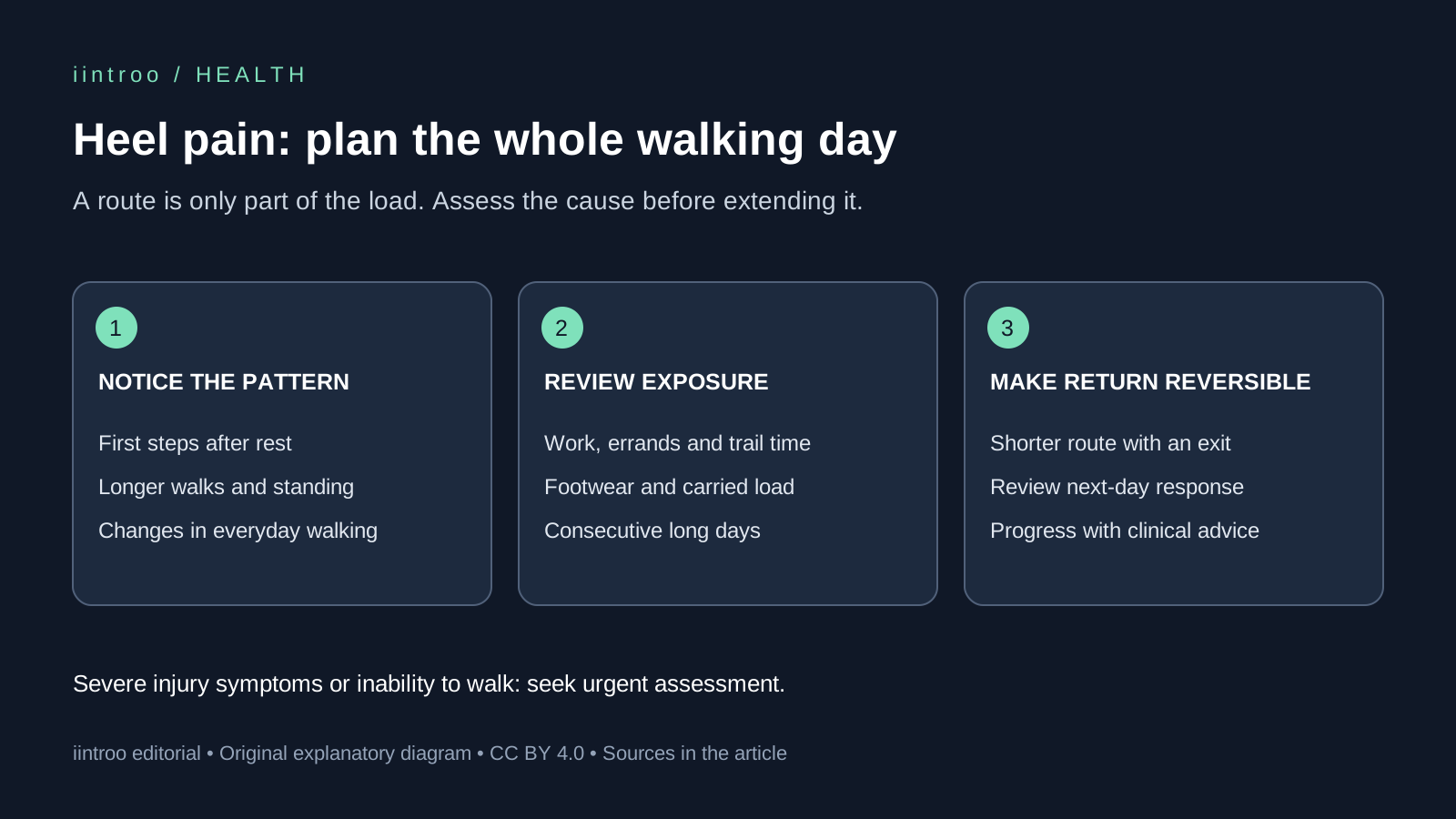
Key points
- First-step pain can suggest plantar heel pain, but does not establish the diagnosis.
- Heel-bone stress injury can resemble plantar fasciopathy.
- Rehabilitation evidence does not provide a universal hiking return date.
A symptom pattern is not a diagnosis
A sore heel can turn a short walk into a difficult return journey. This guide is for adult hikers and long-distance walkers whose pain is becoming a recurring part of their outings. Pain under the heel is often labelled plantar fasciitis, but the label should not be guessed from a photograph, shoe advertisement or one symptom. A changing gait, worsening pain or difficulty with ordinary walking is a reason to reassess the plan before committing to a remote route.
The plantar fascia helps support the foot's arch. Pain associated with this tissue commonly appears with the first steps after sleep or sitting. It can ease initially and return with further activity. That pattern is useful information for a clinician, not a diagnosis by itself.
Separate fascia pain from a bone injury
A heel-bone stress fracture can feel similar to plantar heel pain, particularly after a substantial increase in walking. Localized tenderness, swelling or pain that progressively limits weightbearing deserves clinical assessment rather than repeated attempts to stretch through it. An early X-ray can miss a stress fracture; further imaging depends on the examination and the clinician's level of concern.
Seek urgent care after an injury if the foot is deformed, pain is severe, a snap was heard or walking is impossible. Persistent tingling, loss of sensation, worsening symptoms and heel pain in someone with diabetes also need professional advice. Do not use a companion's diagnosis to choose your treatment.
What rehabilitation evidence supports
The 2023 clinical guideline supports a combination of treatments selected after assessment, including stretching and resistance exercise for the foot and ankle. The 2021 best-practice guide also emphasizes individualized education and short-term taping within a broader approach. Its evidence review included 51 trials, but only nine contributed to its proof-of-efficacy analyses; not every popular treatment has equally persuasive support.
The evidence does not identify a universal exercise prescription for every walker. In a small trial of 48 patients, progressive strengthening produced better self-reported function than stretching at three months, but the groups did not differ at six or twelve months. Both groups received inserts. This supports discussing progressive exercise, not a promise that heavy heel raises will fix an unassessed heel or guarantee an expedition date.
Adjust the whole walking day
Load includes time standing at work, errands and the approach to a trail, not only the recorded hike. Discuss which activities provoke symptoms and which remain manageable. For hikers, applying this principle may mean a shorter route with an easy exit, fewer consecutive long walking days and a review of the carried load. These are practical applications of load-management advice, not a validated hiking-specific formula.
Choose comfortable footwear that suits the route and does not create new pressure. Cushioning or an insert may help some people, but an expensive custom device is not automatically the answer. Equipment should support a wider plan rather than substitute for assessment and rebuilding capacity.
Rebuild distance without a calendar promise
A successful short walk does not establish readiness for a remote, multi-day itinerary. Review symptoms during walking, later that day and on the next morning, alongside changes in everyday function. Agree with the treating professional how to progress distance and terrain, and when a worsening response means stepping back or reassessing the diagnosis.
The main trials studied general adult heel-pain populations, not hikers carrying packs across mountain routes. Recovery therefore cannot be reduced to a fixed number of weeks or a universal percentage increase. This is general education; an individual rehabilitation and return plan requires assessment.