
Hurling and camogie equipment: protect the head without ignoring the hands
Approved, unmodified helmets are mandatory safety equipment, but they do not protect the hand. Inspect every item, report symptoms early and treat protection claims cautiously.
Key points
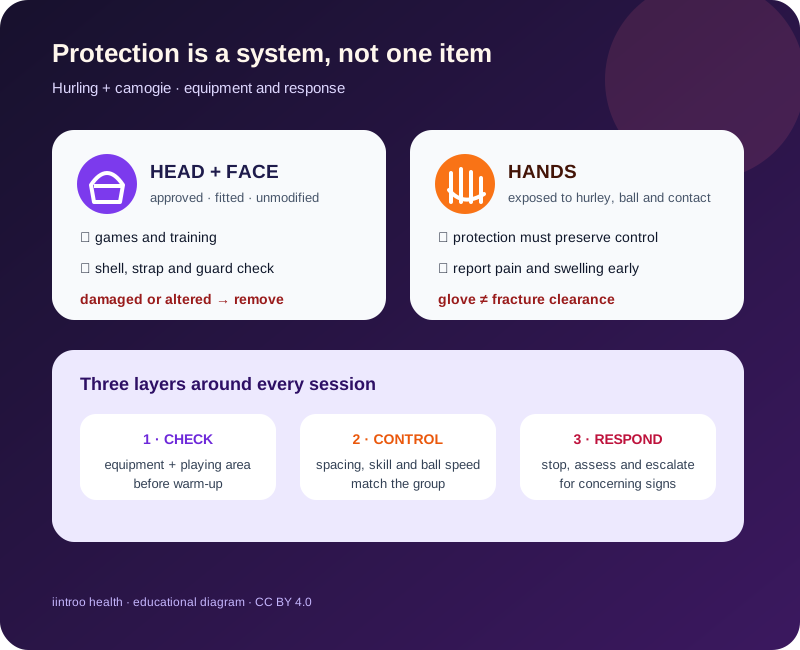
- Current hurling and camogie rules require an approved helmet with facial guard in games and training; modifying the helmet can make it non-compliant and create new hazards.
- Published hand-injury evidence is mostly older hospital and observational research, so it identifies a serious pattern without proving that one glove prevents every fracture.
- A helmet or glove cannot clear pain, deformity, numbness, vision change or possible concussion; stop play and use qualified assessment.
Use the approved helmet every time the hurley is active
This guide is for hurling and camogie players, families, coaches, officials and clubs. Current GAA and Camogie Association guidance requires an approved helmet with facial guard in organised games and training. The requirement applies during practice as well as competition because a warm-up puck, small-sided drill or informal finishing exercise can still involve a fast sliotar and moving hurleys.
Check the current governing-body rule and the approved standard before buying or replacing equipment. Fit, fastening, shell condition and faceguard security should be inspected according to the manufacturer. Paint, drilling, bending, cutting, mixing an unauthorised guard with another helmet or continuing with damaged equipment can undermine compliance and protection.
Modification can turn protection into a hazard
A four-patient case series described penetrating upper-limb wounds caused by helmet faceguards during competitive hurling; each required hospital admission and surgical exploration. Case reports cannot estimate how often this happens, but they show why a broken, protruding or altered guard is not merely a cosmetic problem.
Remove suspect equipment from use and follow the manufacturer or governing body's replacement process. Do not improvise a repair with wire, tape or reshaping immediately before a match. Equipment checks reduce avoidable hazards, but no helmet makes head, face, eye or dental injury impossible and no visible damage is required for concussion.
The hands remain exposed
A hurling emergency-department study interviewed 163 injured players and found the hand was the most frequent injury site in that selected sample; many injuries were fractures. A separate multi-season study of elite men's hurling found upper-limb fractures within its time-loss data. In elite camogie, a small 11-week study recorded mostly lower-limb injuries, illustrating how samples, definitions, competition level and observation periods can produce different patterns.
The hand study was cross-sectional, involved people who attended one hospital and predates current equipment practice. Its association between helmet use and hand injury does not show that helmets cause hand injury. The authors raised possible behaviour and exposure explanations, while glove use was uncommon. The evidence does not validate one universal glove design, thickness or claim of fracture prevention.
Combine equipment with behaviour and reporting
Clubs can inspect the playing area, goals, hurleys, sliotars and protective equipment; teach spacing and control during drills; match contact and ball speed to age and skill; and make hand, head and vision symptoms easy to report. Coaches should not reward a player for hiding pain or continuing with a damaged helmet simply because a replacement is inconvenient.
After a blow, stop for deformity, marked swelling, loss of movement, numbness, colour change, open injury, eye pain, vision change, confusion, imbalance, severe headache or another concerning sign. Remove rings before swelling traps them when this can be done safely. Suspected fracture, dislocation, eye injury or concussion needs the appropriate clinical and emergency pathway, not a sideline equipment test.
Return by diagnosis and playing task
Return should restore the functions relevant to the actual diagnosis: grip, sensation, wrist and finger motion, striking, catching, blocking, contact tolerance, vision and decision-making. A padded glove may change comfort or exposure but cannot substitute for tissue healing or medical clearance. Head injury follows a separate, clinician-guided concussion pathway.
This article provides general education. It does not diagnose an injury, certify equipment, recommend a glove or set a return date. Current GAA, Camogie Association, national standards, event rules, manufacturer instructions and qualified medical advice take priority.