
Ice hockey groin pain: rebuild adductor capacity for skating, not just the gym
Groin pain can follow an acute push-off or build across a dense skating schedule. Clarify the diagnosis, restore adductor and trunk capacity, then progress acceleration, crossovers, contact and fatigue before full return.
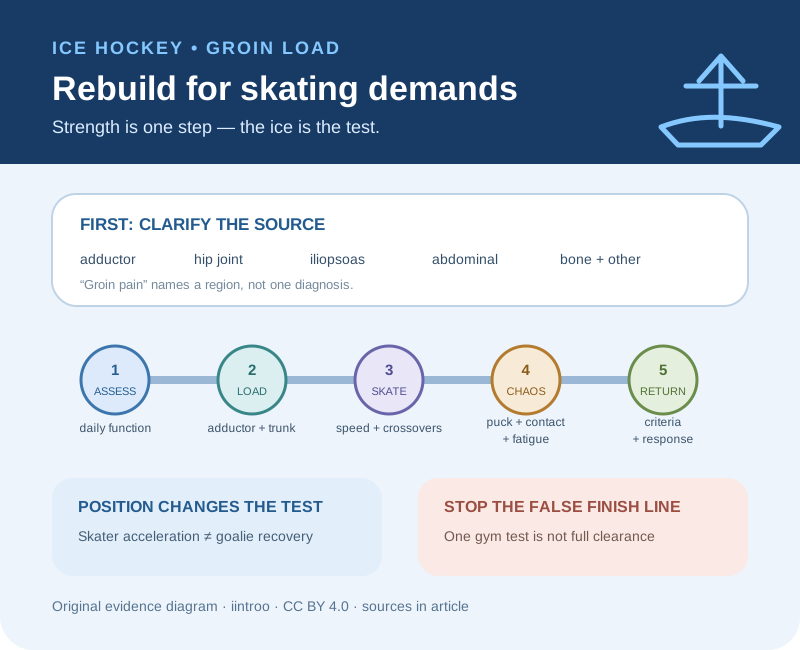
Key points
- Groin pain has several possible causes; pain near the adductors after skating does not by itself confirm an adductor strain.
- Previous groin injury and inadequate sport-specific preparation have been associated with injury in professional hockey, but a screening ratio cannot predict every case.
- Return should restore strength and sport-specific function, then progressively expose the player to acceleration, crossovers, shooting, contact and fatigue.
Start with a diagnosis wider than “pulled groin”
This guide is for ice-hockey players, coaches and health teams managing new or persistent groin pain. An acute pain during acceleration, crossover or wide push-off may involve an adductor, but hip-joint, iliopsoas, abdominal, pubic, nerve, stress-injury and other causes can produce overlapping symptoms. Location alone does not establish the diagnosis.
Stop or modify skating when pain changes stride, power or control. Sudden severe pain with inability to bear weight, major swelling or bruising, a painful groin lump, testicular pain, fever, night pain or systemic illness needs prompt assessment. Trauma with deformity or neurovascular change belongs in an emergency pathway.
Read risk studies without turning them into prophecy
A large NHL cohort associated previous injury and less off-season sport-specific training with greater groin-injury risk during training camp. An older one-team prospective programme reported fewer adductor strains after targeted strengthening. These studies involved male professional players and observational or historical comparisons, so they do not prove a universal screening threshold or programme for youth, women, Para or recreational hockey.
A 2025 cohort of 51 collegiate male players found hip and groin symptom scores worsened over a season, while brief preseason strength and range screens did not predict end-of-season disability. Screening can support conversation and baseline measurement, but it should not label a player as protected or doomed.
Build capacity before chasing a single exercise
Rehabilitation commonly uses progressive adductor, hip and trunk loading, followed by faster and more demanding actions. Exercise selection and dose depend on the diagnosis, irritability, training history and available equipment. A Copenhagen adduction variation may be useful for some athletes, but it is not a diagnostic test, a stand-alone cure or suitable at the same level for everyone.
The 2023 acute-injury systematic review found mostly low-level evidence and heterogeneous treatment. The clinical concepts review supports individual exercise and load management, while the IIHF overuse resource emphasises progressive preparation. Together they favour graded capacity over passive waiting, but they do not supply one programme or guaranteed timeline.
Progress from straight skating to hockey chaos
A staged on-ice progression can move from easy straight-line skating to harder acceleration and stopping, crossovers in both directions, backward skating, transitions, shooting, repeated shifts and fatigue. Position-specific demands matter: a goaltender’s lateral pushes and recovery positions differ from a skater’s change-of-direction and contact tasks.
Add puck work, checking or board contact only when the relevant earlier tasks are controlled and the treating professional agrees. Track pain and function during the session and the following day. A player who compensates, loses push-off power or deteriorates across repeated shifts is not ready merely because one gym test looks symmetrical.
Return by criteria and response, not by a universal week
Readiness may include comfortable daily activity, acceptable range and strength, completion of position-specific skating at expected intensity, repeated efforts under fatigue, and confidence without protective movement. Team selection pressure should not replace the medical and functional assessment.
Persistent, recurrent or poorly localised pain deserves reassessment rather than endless strengthening. Imaging may be useful in selected cases but is not automatically required for every presentation. This article does not diagnose the cause, prescribe an exercise dose or provide a universal return-to-play date.