
Ice hockey neck protection: equipment and emergency planning work together
A correctly worn neck laceration protector is essential, but teams still need skate safety, inspection and a rehearsed bleeding emergency response.
Key points
- Current IIHF rules require a purpose-designed neck laceration protector in all categories.
- A protector reduces exposure but cannot make skate contact harmless.
- Severe neck bleeding is an emergency requiring immediate local emergency response.
Who this guide is for
This guide is for ice hockey players, parents, coaches, equipment staff, officials and rink medical teams. The IIHF’s current 2026–27 rule book requires players in all categories to wear a neck laceration protector designed for that purpose. It should cover as much of the neck as possible, be worn correctly and not be modified.
The rule is the minimum for IIHF competition; domestic leagues can apply their own standards and implementation details. Check the current competition rule and product certification rather than assuming that a collar, base layer or improvised fabric is equivalent. Officials enforce equipment rules, but fit and condition are shared responsibilities.
Rare does not mean negligible
Neck lacerations are uncommon, yet a skate can injure major blood vessels, the airway and other structures in seconds. A 2026 current-concepts review describes potentially fatal consequences and notes that protector materials and designs differ in slash resistance, comfort and range of motion.
A separate 2026 surveillance report reviewed 26 catastrophic hockey lacerations recorded from 1982 to 2025. Twenty-four were caused by skates; the neck was the most frequent site, and five incidents were fatal. Case surveillance cannot calculate the risk for every player or prove the effectiveness of one product, but it clarifies the mechanism and the need for layered prevention.
Fit, coverage and condition matter
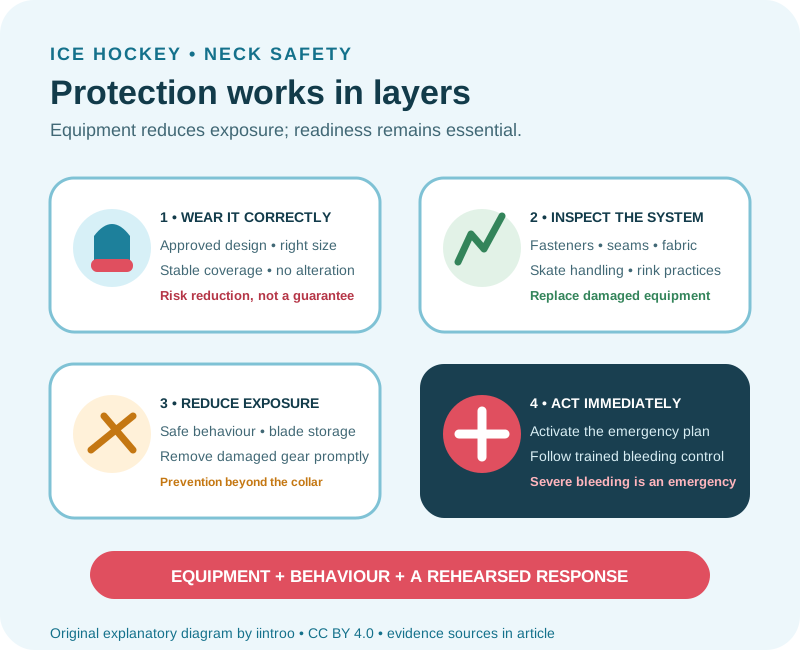
Use a protector that meets the standard accepted by the league, in the correct size and orientation. It should remain in position through skating, checking and head movement without being folded, cut or altered. Inspect fastening, seams and fabric, and replace equipment according to the manufacturer after damage, heavy wear or contamination.
No laboratory result guarantees protection in every angle, speed or impact. A dangling throat guard attached to a goalkeeper mask serves a different function and does not automatically replace a required neck protector. Equipment staff should document checks and keep replacement stock available.
Prevention extends beyond the collar
Teams can reduce exposure through equipment inspection, safe skate storage and handling, appropriate on-ice behaviour and prompt removal of damaged blades or protective gear. The 2026 prevention study uses a Haddon Matrix to show that athlete, skate and rink factors operate before, during and after an event.
Prepare trained responders, accessible bleeding-control supplies, reliable communication and a clear route for emergency personnel onto the ice. Practise roles without turning a drill into medical improvisation. A protector is one control within that system, not a reason to weaken rink-side readiness.
Treat severe bleeding as an emergency
A deep neck cut, rapidly soaking blood, breathing difficulty, collapse or altered consciousness requires immediate activation of local emergency services and the venue emergency plan. Trained responders should follow their bleeding-control protocol while untrained bystanders follow dispatcher instructions. Do not delay care to inspect the protector or record the incident.
After any neck laceration, medical assessment and an individual return decision are required. There is no universal waiting period. Preserve relevant equipment for review, document the mechanism and update the team plan after the emergency without assigning blame to the injured athlete.