
Shooting sports: protect hearing before every shot
Impulse noise can injure hearing immediately or over time. Plan protection, fit and range communication before live fire begins.
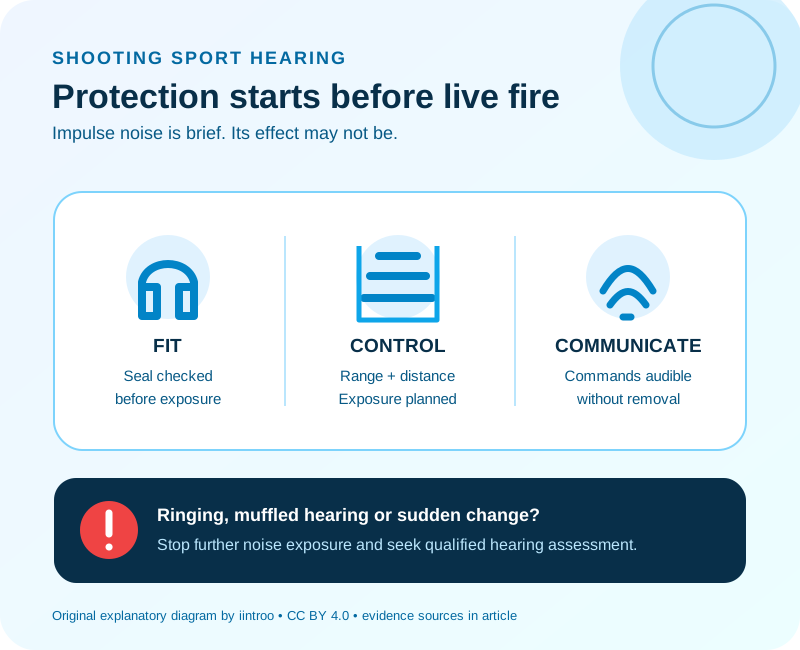
Key points
- A brief firearm impulse can reach levels associated with permanent hearing injury.
- Protection must be fitted before exposure and remain compatible with range commands.
- Persistent tinnitus, muffled hearing or sudden hearing change needs professional assessment.
Who should use this guide
This guide is for shooting-sport athletes, coaches, parents, range staff and officials planning live-fire activity. The ISSF notes that impulse noise varies with the firearm, ammunition, muzzle devices, distance, environment and protection. An outdoor air-rifle session and an enclosed firearm range are not interchangeable exposures.
Hearing protection is part of the plan before the first shot, including sighting and warm-up. The 2026 ISSF rules permit ear plugs, ear muffs or similar protection, while sound-enhancing and communication devices have role-specific rules. Athletes should confirm the current discipline, event and range requirements rather than changing equipment during competition.
Why a short sound can still matter
WHO explains that noise-induced hearing loss can follow a sudden burst or repeated exposure and may be irreversible. The firearm review reports peak sound-pressure levels commonly around 140–175 dB across measured firearms, although actual exposure at the ear varies substantially. A numeric range is not a guarantee for a particular shot or venue.
The evidence base combines laboratory measurements, field studies and observational hearing findings. Equipment and methods differ, so a single published decibel value should not be used as a personal risk calculator. The consistent finding is that live fire is a high-risk impulse source that warrants control at every session.
Protection is a system, not one product
The ISSF health resource describes correctly fitted plugs and muffs, and says combined protection provides the greatest attenuation in high-noise settings. Whether dual protection is appropriate, and how communication will remain safe, should be decided with range procedures and qualified hearing-safety advice. A product label cannot account for a poor seal, glasses, hair, movement or damage.
Range design, acoustic treatment, distance, firing-line organisation and exposure duration also matter. Coaches and organisers should make protection available, check that it is in place before the line becomes hot and use a communication method that does not require removal. Suppressors or barriers do not eliminate the need for exposure assessment and personal protection.
Youth and new participants need visible standards
The ISSF article reports inconsistent protection use in both adults and young shooters and emphasises adult modelling. A newcomer may not know when a range has become hazardous, how to fit a device or whether a command permits adjustment. Make the stop procedure, fit check and replacement process explicit in the induction.
Never ask a young athlete to tolerate pain, excessive loudness or communication failure to complete a series. Equipment must fit the individual without interfering with safe firearm handling. Health protection and firearm safety are complementary responsibilities, not competing priorities.
Sources: 1
Act on hearing symptoms
Ringing, muffled hearing or difficulty understanding speech after exposure should not be dismissed as a normal training effect. Stop further noise exposure and seek advice from an audiologist or healthcare professional. Sudden hearing loss, severe dizziness, ear injury or other acute neurological symptoms require urgent medical assessment according to local services.
Baseline or periodic hearing checks may be considered through an occupational or sports hearing programme when exposure is regular, but a normal test does not make future unprotected shots safe. This article cannot select a protector, diagnose hearing loss or replace a range-specific noise assessment.