
Indoor bouldering falls: protect the landing zone and the ankle
Bouldering mats reduce impact but cannot prevent every injury. Clear fall zones, controlled descents and prompt assessment make landings safer each session.
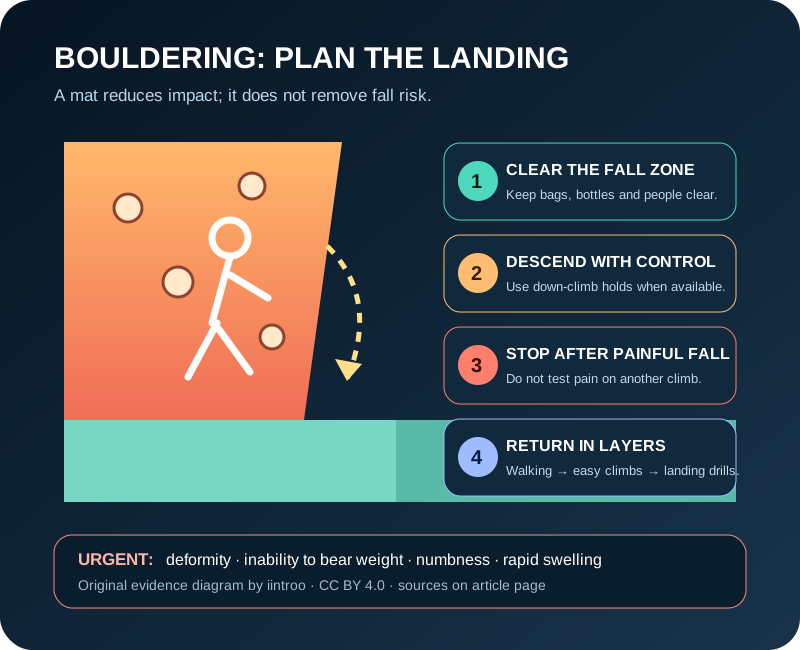
Key points
- Recent fall-scenario research found lower-limb injuries in 67% of surveyed bouldering falls, with ankle sprain the most common injury, but self-reported data cannot estimate every climber's risk.
- Competition-standard mat dimensions and secure installation reduce hazards; a mat does not guarantee a safe landing or make uncontrolled jumping harmless.
- Severe pain, deformity, inability to bear weight, numbness or rapidly increasing swelling after a fall needs prompt medical assessment.
Bouldering changes the injury problem
This guide is for indoor boulderers, coaches, parents, route setters, gym operators and clinicians. Unlike roped climbing, bouldering repeatedly ends on the floor mat. A 507-person prospective study found that lower-limb injuries were less frequent than upper-limb injuries overall but were more often linked to falls or jumping down and more likely to be at least moderate in severity.
A 2025 self-report study of 245 injured adults found lower-limb injuries in 67% of described falls and ankle sprain as the leading injury. Most falls were involuntary, rotation was common and nearly half began near the top. The study recruited injured climbers rather than tracking all gym exposures, so its percentages describe injury scenarios—not the chance that a session will cause injury.
The landing zone is shared safety equipment
World Climbing describes boulder walls with safety mats, while IFSC infrastructure guidance specifies an impact area that extends beyond the wall and adjusts for wall profile and swing. It also calls for stable mat installation. Gyms and event organisers should inspect coverage, joins, wetness, damage and movement rather than assuming any foam surface is adequate.
Climbers should keep bottles, brushes, phones and resting people out of the fall zone, wait until the problem and landing are clear, and follow the facility's briefing. Outdoor crash pads are not interchangeable with a continuous indoor system. Evidence for individual prevention techniques remains limited, so no single cue, pad or spotter can promise injury prevention.
Climb down when the route and rules allow
Repeatedly jumping from the last hold adds avoidable landing exposure. When possible, use down-climb holds or reverse easy moves before a controlled step to the mat. Before starting, identify the likely fall line, nearby wall features and other climbers. Fatigue, unfamiliar dynamic moves and unexpected rotation can change where the body lands.
Landing instruction belongs with a qualified coach who can account for age, skill, wall angle and local rules. A rigid recipe such as always landing on the feet is misleading: rotation, backward falls and off-axis contact may make that impossible. Deliberate practice should progress from low, predictable tasks and must not become repeated high-impact jumping for its own sake.
Know when an ankle injury needs assessment
Stop climbing after a painful fall. Severe pain, obvious deformity, inability to take several steps, loss of sensation, an open wound, head or neck symptoms, or rapidly increasing swelling needs urgent assessment under the facility's emergency plan. Do not pull on a deformed joint or test it by trying another problem.
Less dramatic swelling, bruising, focal bony tenderness, instability or pain that persists also deserves qualified review. Video and the climber's description can help explain the mechanism but cannot distinguish a sprain from a fracture or tendon injury. Ice, tape and pain relief do not provide a diagnosis or clearance.
Return from walking to falling—not straight to the top
Return depends on the diagnosis. A clinician-led plan may restore comfortable daily movement, range, strength and balance before easy climbing, controlled low-height descents, progressively harder movement and finally normal bouldering exposure. The athlete should tolerate the demands of landing as well as the demands of pulling.
Pain, swelling, giving way, guarded movement or fear after progression should trigger reassessment. Tape or an ankle brace may be appropriate for some injuries but cannot replace capacity or a safe fall zone. There is no universal return date, and research has not established one prevention programme that works for every boulderer.