
Indoor pool air and swimmers: a strong smell is a ventilation question
Chloramines can irritate eyes and airways when contaminated air collects above the water. Repeated symptoms need facility action and clinical assessment, not extra fragrance or tougher breathing.
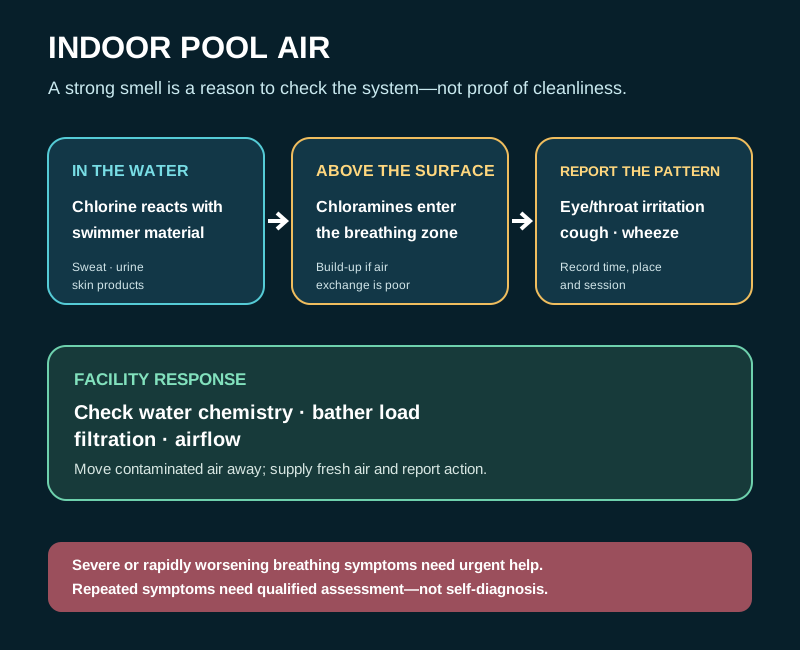
Key points
- Chloramines form when chlorine combines with nitrogen-containing material introduced by swimmers and can accumulate in the air of poorly ventilated indoor pools.
- Cough, wheeze, throat or eye irritation during one session does not prove asthma or identify one chemical cause.
- Swimmers should report recurring symptoms while facility operators investigate ventilation, water chemistry, bather load and hygiene controls.
Think about the air at the water surface
This guide is for competitive swimmers, parents, coaches, lifeguards and facility teams. Chlorine is needed to control infectious risk, but it can react with sweat, urine, skin cells and personal-care products to form chloramines. These compounds can leave the water and collect in indoor air, especially when fresh-air supply and exhaust are inadequate.
Swimmers breathe close to the surface and ventilation rises sharply during hard sets. A sharp chlorine-like smell is not evidence that the pool is extra clean. It is a reason for the operator to check combined chlorine, airflow and bather practices rather than masking the odour.
Report patterns instead of self-diagnosing
Possible exposure symptoms include eye or throat irritation, nasal symptoms, cough, chest tightness and wheeze. They can also reflect asthma, exercise-induced bronchoconstriction, respiratory infection, allergy or another cause. Note when symptoms start, which pool and area were used, the session intensity and whether teammates or staff were affected.
Leave the water and seek prompt medical help for severe breathing difficulty, blue or grey colour, fainting, confusion or rapidly worsening symptoms. Repeated cough or wheeze deserves assessment by an appropriately qualified clinician; a coach should not diagnose asthma from pool smell or change prescribed inhaler use.
Facility controls carry more weight than one swimmer's coping strategy
Operators should investigate water chemistry, filtration, fresh-air delivery, exhaust location and the number and behaviour of bathers. CDC guidance stresses moving contaminated air away from the water surface and replacing it with fresh air. World Aquatics facility resources support certified, sport-appropriate aquatic environments, while local health and building requirements remain controlling.
Swimmers can shower before entering, use toilets rather than the pool, and avoid bringing excess personal-care products into the water. These steps reduce precursors but do not transfer responsibility for a faulty ventilation or treatment system onto the athlete.
The research supports monitoring, not a simple causal slogan
Reviews describe irritation, airway hyper-responsiveness and asthma-like symptoms in susceptible competitive swimmers, but exposure methods and athlete populations vary. Many studies are observational. Training volume, pre-existing asthma and self-selection into swimming complicate causal conclusions.
A 2025 systematic review of early-childhood pool attendance addressed later asthma risk, not the immediate diagnosis of a competitive swimmer. Do not convert a population association into a prediction for one child, and do not advise a medically stable athlete to stop swimming without discussing the evidence and their circumstances with a clinician.
Close the loop after a complaint
A useful incident record includes time, exact pool area, observed air or water problem, symptoms, people affected and the facility response. The operator can compare complaints with water and ventilation data and involve public-health or occupational-health authorities when needed. Teams should communicate findings and corrective actions rather than treating recurring irritation as part of the sport.
Return to training after significant symptoms depends on clinical assessment and whether the suspected facility problem has been controlled. This article cannot provide a personal asthma diagnosis, exposure limit or return date.