
Vomiting at an indoor tournament: activate a norovirus response plan
A courtside vomiting episode is a venue and team-health problem. Plan safe separation, trained cleaning, food duties and medical escalation before the next fixture.
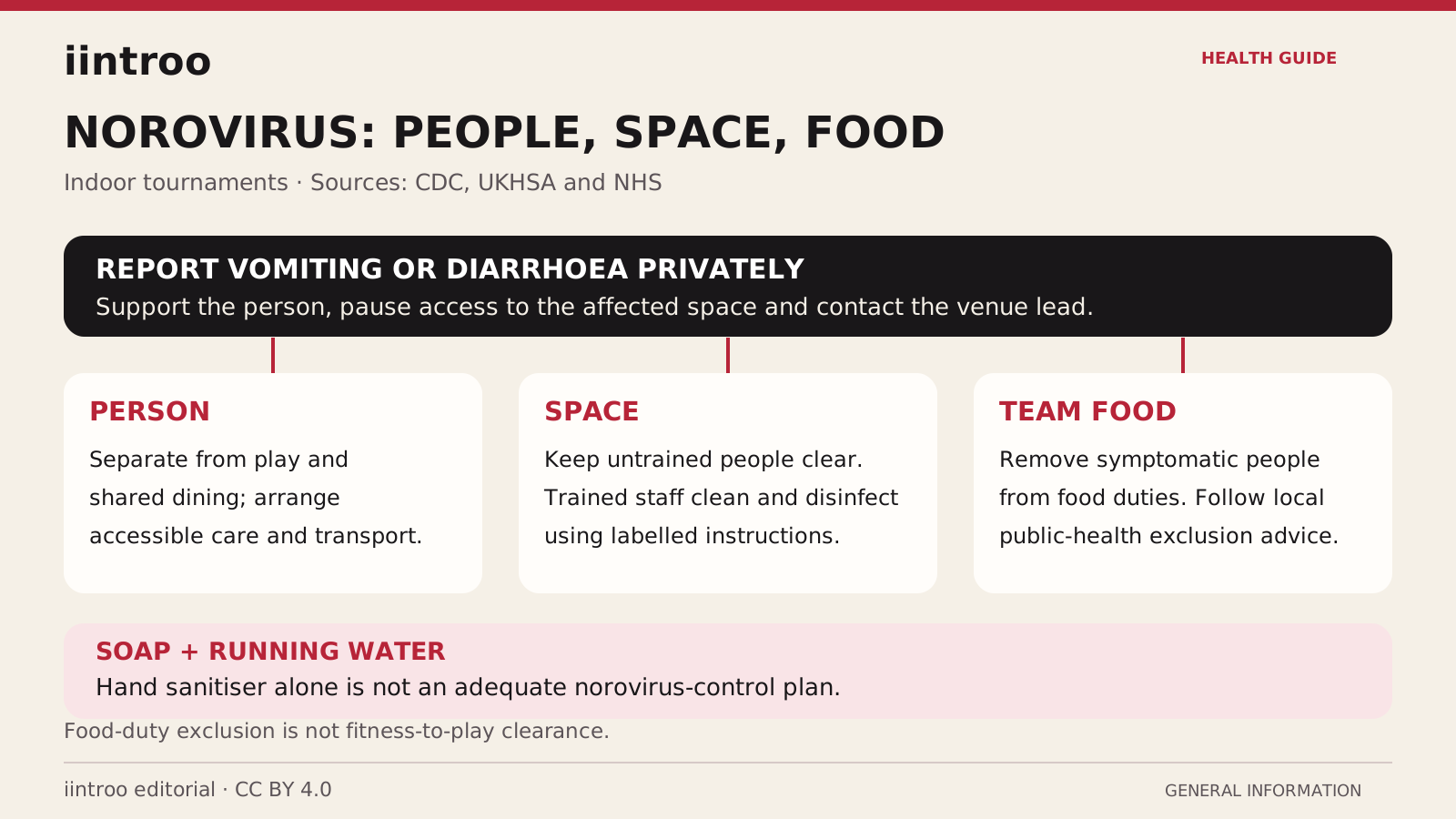
Key points
- Stop access to a contaminated area and activate the venue's trained cleaning and illness procedure; do not simply wipe a court and restart.
- Soap and running water are central: hand sanitiser alone is not an adequate norovirus-control plan.
- A public-health exclusion interval is not proof that an athlete has recovered enough to compete or that all infectiousness has ended.
Who should prepare the plan
This guide is for volleyball and goalball tournament organisers, team managers, coaches and travelling families. The decision is practical: who supports an ill participant, who closes and cleans a contaminated area, and who informs the venue and medical team? Do not wait for a confirmed laboratory diagnosis to activate a vomiting-and-diarrhoea response.
Norovirus can spread through people, food, contaminated surfaces and droplets produced by vomiting. Shared hotels, transport, toilets and eating areas connect teams beyond the court. A stomach illness is not automatically norovirus, but treating a visibly contaminated area as harmless while waiting for certainty creates an avoidable gap.
Before travel: assign roles and make reporting possible
Give athletes and families a private route to report vomiting or diarrhoea before departure. Tell them who will arrange support, transport and any change to accommodation. For youth teams, agree how a parent or guardian will be contacted; for a participant needing personal assistance, preserve accessible toilet and care arrangements when separating illness.
Check that handwashing stations have running water, soap and disposable towels. Identify a quiet space away from shared dining and play, an available toilet route and the venue staff authorised to clean contamination. CDC youth-camp guidance supports advance arrival agreements, illness reporting and separation; it is a useful model for residential sport, not a universal federation competition rule.
Sources: 3
If someone vomits: protect the person and the space
Pause access to the affected space, support the ill person and notify the venue lead promptly. Keep spectators and untrained volunteers away from cleanup. The venue should clean and then disinfect the entire affected area with a product labelled effective against norovirus, following its contact time and surface instructions.
Provide gloves and the correct waste and laundry procedure for trained staff. Handle contaminated towels or clothing without shaking them. Do not improvise chemical mixtures or assume a quick wipe of the visible patch is enough. Wash hands with soap and water after using the toilet, before eating and after cleanup; alcohol gel may supplement but cannot replace this.
Sources: 1
Keep illness away from team food
Move food preparation, serving and bottle-filling duties away from anyone with symptoms. CDC food-worker advice says to stay off those duties while ill and for at least 48 hours after symptoms stop. UKHSA also advises staying home and not preparing food for others for 48 hours after symptoms cease.
These are source-specific public-health recommendations, not a global volleyball or goalball eligibility rule. Follow the responsible local health authority and event medical policy, including any longer exclusion. The clock is not a clearance test: viral shedding can continue after symptoms improve, and safe eating, drinking and training readiness require separate judgement.
What sport evidence can and cannot establish
A CDC investigation of a 2012 Kentucky seventh-grade basketball tournament identified 242 people with acute gastroenteritis; six submitted stool specimens were norovirus-positive. Investigators considered a courtside vomiting episode and subsequent environmental exposure likely contributors. This historical outbreak shows why prompt reporting and cleanup matter; it does not estimate the chance of infection at another tournament or prove one cleanup method's effect. The linked IOC research summary explains surveillance methods; it does not measure norovirus risk at this event.
Sources: 6
Medical help and return are separate decisions
Seek medical advice if an athlete cannot keep fluids down, has signs of dehydration, bloody diarrhoea or a worsening illness. Confusion, severe breathing difficulty or sudden severe abdominal pain require emergency assessment. Children, older adults and people with reduced immunity may need earlier help. Notify the health service before attending when possible to limit spread.
Do not use medicines to conceal symptoms for the next match. A clinician should assess individual illness, hydration and return readiness. Record symptom-onset times and affected teams confidentially, and involve local public health if a cluster is suspected. The organiser's role is communication and exposure control, not diagnosing every affected player.