
Javelin shoulder and elbow pain: stop guessing, rebuild the whole throw
Javelin injuries are not explained by one joint or one video frame. Track throws and symptoms, assess the diagnosis, then restore whole-body throwing capacity by criteria.
Key points
- School surveillance across shot put, discus and javelin found the shoulder was the most frequently reported injured body region, but it could not define one mechanism for every thrower.
- Javelin delivery transfers energy through the approach, legs, trunk, shoulder, elbow and hand; pain at the arm can reflect more than one diagnosis or capacity problem.
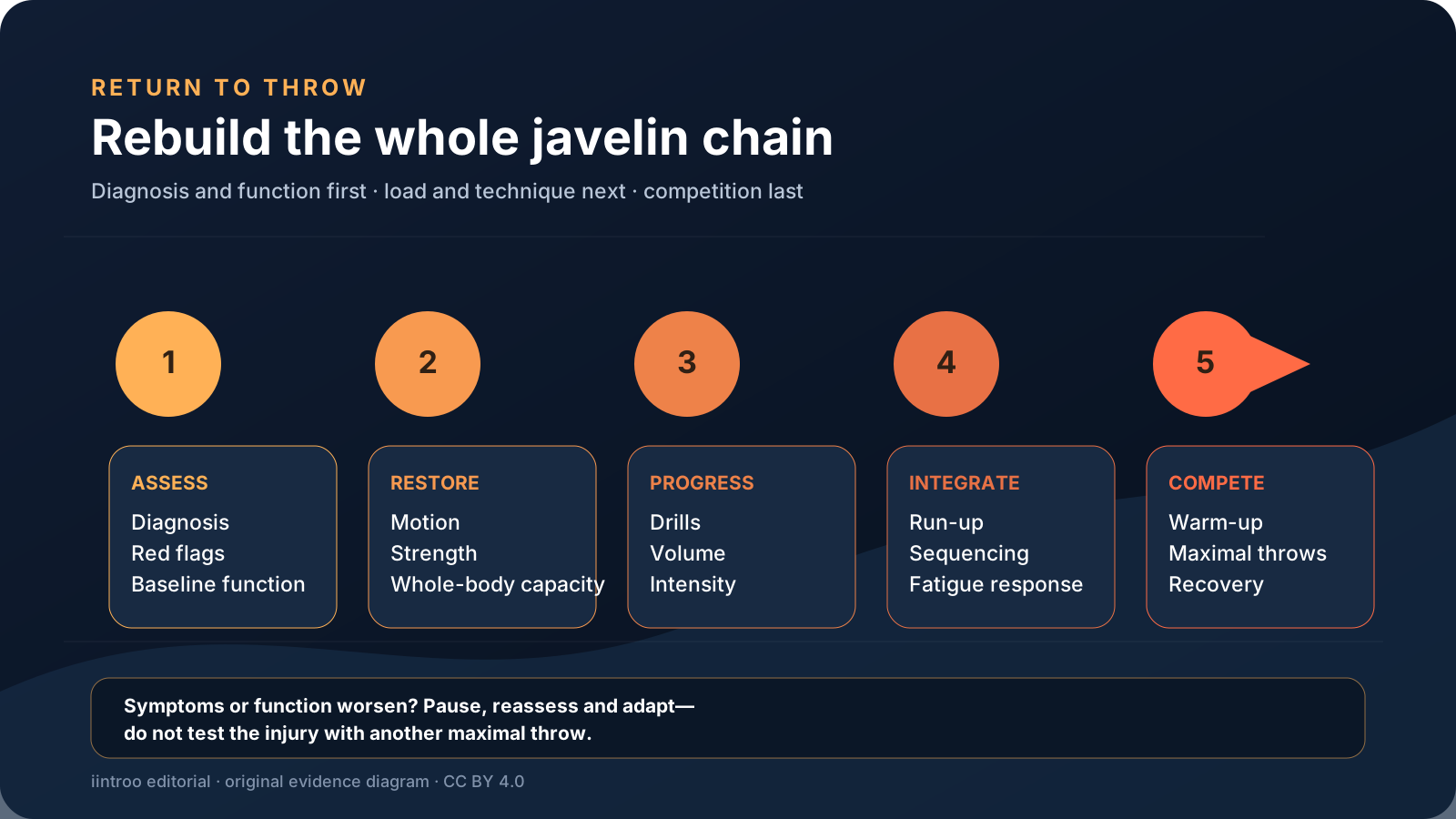
- Return should rebuild strength, motion, throwing volume, intensity and technical control progressively; a fixed rest period or one pain-free throw is not clearance.
Treat the throw as a chain, not an isolated arm action
This guide is for javelin throwers, coaches, families and sports-medicine teams. Competition rules require an over-shoulder or upper-arm delivery, while performance depends on the approach, blocking leg, pelvis, trunk and throwing arm working in sequence. A study of 62 elite throwers documented coordinated motions across the lower and upper body; it did not identify one perfect angle that prevents injury.
Shoulder or medial-elbow pain may reflect tendon, ligament, joint, nerve, bone or referred problems, and more than one tissue can be involved. Sudden deformity, a pop with immediate loss of function, new numbness or weakness, a locked joint, major swelling or severe pain after trauma needs prompt professional assessment rather than another test throw.
Epidemiology gives priorities, not a personal diagnosis
A US high-school surveillance study covering shot put, discus and javelin from 2008 to 2019 reported the shoulder as the most frequent injured body region, followed by ankle and knee. It also found higher injury rates in competition than practice. The database combined three events and recorded time-loss injuries reported by athletic trainers, so it cannot calculate one javelin-specific cause or capture every complaint.
A 2026 clinical review identifies shoulder and elbow injuries as important in javelin, while also describing the broad injury spectrum across track and field. Reviews can organise available evidence but do not replace examination, imaging decisions or a diagnosis for the individual thrower.
Record throwing exposure before memory rewrites it
Log full-approach throws, reduced-approach throws, standing drills, implement weights, strength work, competitions, travel and symptoms. The number of maximal attempts is only one part of load; intensity, run-up, surface, weather, recovery, technique change and accumulated training also matter. No validated universal javelin throw limit exists for every age and level.
A small study of 21 former elite male throwers found long-term shoulder and elbow adaptations and symptoms in some athletes, but its selected retired sample cannot predict an active athlete's future. Persistent loss of motion, strength or throwing tolerance deserves assessment instead of being dismissed as normal adaptation.
Rehabilitation should earn back the demands of the event
The Bern shoulder consensus supports shared decision-making and criteria-based return across sports. For javelin, assessment may include diagnosis-specific healing, pain response, range of motion, strength, kinetic-chain capacity and tolerance of progressively harder throws. The exact tests and thresholds must be selected by qualified clinicians for the athlete and injury.
Progress can move from controlled strength and movement tasks to submaximal drills, selected throws, fuller approaches and competition demands, with recovery observed between exposures. A pain-free clinic test, one good video or a calendar milestone does not demonstrate readiness for repeated maximal throwing under fatigue.
Separate technique coaching from medical clearance
A coach can organise safe space, verify current rules, scale throwing exposure and review whole-body sequencing. A clinician diagnoses and guides rehabilitation. Slow-motion video may support both conversations, but a single frame cannot prove tissue injury, and online technique advice should not override pain, neurological symptoms or medical findings.
Before competition, agree the warm-up progression, maximum planned exposure, stopping signals, emergency cover and follow-up if symptoms return. This article provides general education, not a throwing programme, diagnosis, imaging decision or clearance date.