
Judo warm-ups: useful preparation, not proven injury insurance
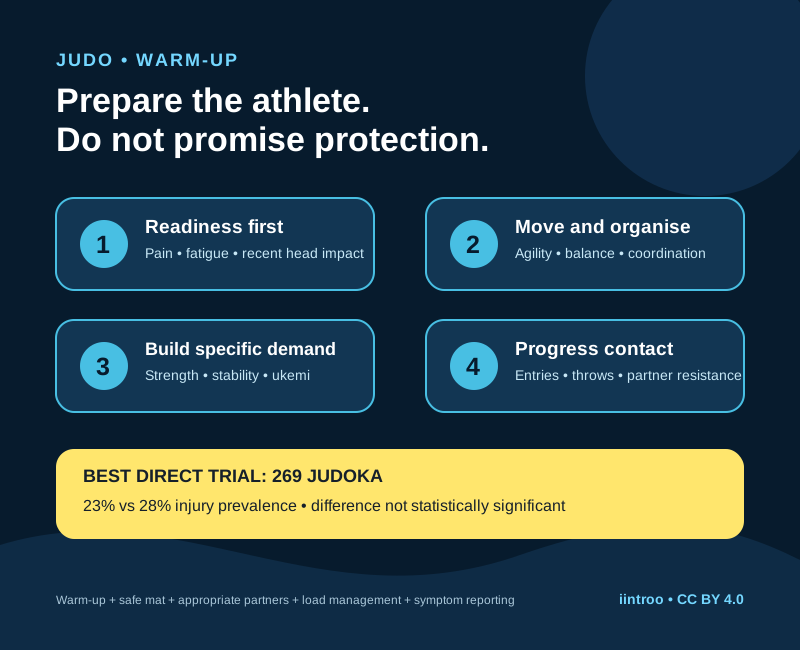
A judo-specific warm-up can organise movement, balance, strength and mat readiness, but the best trial did not show a statistically significant injury reduction. Use it as one part of a wider safety system.
Key points
- The IPPON programme is a structured, trainer-led judo warm-up with flexibility and agility, balance and coordination, and strength and stability exercises.
- In a cluster randomised trial of 269 judoka, overall injury prevalence was lower numerically with IPPON but the difference was not statistically significant.
- Warm-up quality cannot compensate for unsafe mats, excessive training change, poor supervision or continuing through an acute injury.
Use the warm-up to prepare for the session you are actually doing
This guide is for recreational and competitive judoka, coaches and parents. A useful warm-up should move from general temperature and range-of-motion work toward the balance, footwork, gripping, breakfall, direction-change and controlled throwing demands of that session. It should also give the coach an early view of pain, hesitation, fatigue and movement changes.
The IPPON programme was developed as 36 trainer-led exercises in three groups: flexibility and agility, balance and coordination, and strength and stability, with attention to the shoulder, knee and ankle. That structure is a menu rather than a demand to perform every exercise before every class. Age, grade, disability, group size and the technical plan should shape selection and progression.
Read the trial result without turning it into a slogan
The strongest direct test randomised judo schools and followed 269 athletes aged 12 years or older for 16 to 26 weeks. Mean injury prevalence was 23% in the IPPON group and 28% with usual warm-up, but the estimated difference was not statistically significant: odds ratio 0.72, with a wide 95% confidence interval from 0.37 to 1.39. Severe-injury and other secondary outcomes also did not differ significantly.
Coaches and most athletes viewed the programme positively, so it can be a practical alternative to an unstructured warm-up. It should not be advertised as proven protection. The study was disrupted by the COVID-19 period, used a modified analysis and cannot establish which exercises, dose or adherence level might help a particular club.
Connect preparation to throws, falls and weekly load
Later warm-up phases should resemble the session at lower intensity: deliberate ukemi, movement entries, grip exchanges and progressively faster partner work. Confirm that the mat area is clear and suitable, partners are matched appropriately, and the coach controls complexity and resistance. A technically specific warm-up is preparation, not a licence to skip teaching or supervision.
A 2026 descriptive study of elite judo injuries reported many injuries during training and throwing actions, with the knee, shoulder and elbow prominent. It lacked athlete-exposure data, so it cannot calculate risk or prove causation. Its practical value is to prompt accurate club reporting and attention to the real tasks and body regions that interrupt training, not to predict an individual injury.
Treat the warm-up as a daily readiness check
Ask athletes to report new pain, swelling, instability, dizziness or a recent head impact before contact begins. Modify the plan when someone cannot fall, grip, pivot or load a limb normally. A short readiness conversation is more useful than demanding perfect-looking repetitions from an athlete who is concealing symptoms.
Across the week, track abrupt changes in randori volume, strength training, competition, travel and recovery. No single workload ratio or screening score defines safety. Adolescents, returning athletes and Para judoka may need different drill constraints, partner choices and recovery, developed with qualified coaching and clinical input.
Know when warm-up modification is not enough
Stop and seek appropriate assessment after a suspected concussion, a joint deformity, inability to bear weight, marked swelling, sudden weakness or numbness, or severe pain after a throw or fall. Persistent pain, repeated instability or loss of normal training function also deserves review rather than repeated warming-up to make it temporarily tolerable.
Return to throwing, hard randori and competition should reflect the diagnosis, functional recovery, confidence and exposure to judo-specific tasks. This article provides general education. It does not diagnose an injury, prescribe an individual programme or replace the current rules and medical arrangements of the athlete's federation and event.