
Junior fast bowlers: protect the lower back across the whole season
Lower-back bone stress injuries can develop before pain. Use current workload guidance, respond early to symptoms and avoid blaming one movement pattern.
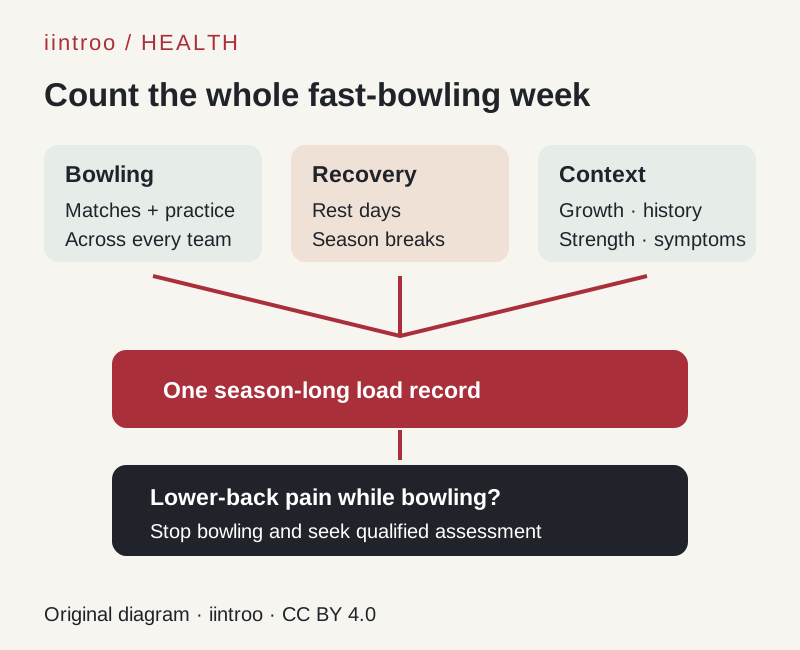
Key points
- Training and match bowling need to be counted together.
- Adolescent growth and bowling frequency can change lower-back load tolerance.
- Lower-back pain while bowling should prompt stopping and qualified assessment.
Who this guide is for
Junior pace bowlers, parents and coaches can use this guide to organise workload information and recognise when assessment is needed. Cricket Australia identifies lumbar bone stress injury as a serious problem for young fast bowlers and highlights the years around the adolescent growth spurt as a vulnerable period.
The goal is not to make a diagnosis from overs bowled. Age, growth, previous injury, strength, technique, recovery and bowling across different teams all shape the context. Girls and boys both need access to the same reporting and clinical pathways.
Sources: 1
Count the whole bowling week
School, club, academy and informal practice can each look modest while adding up to a dense week. Cricket Australia's current community guidance asks under-17 bowlers to avoid consecutive bowling days, limit bowling to three days per week and keep spells to five overs. For ages 17–19 it sets no more than two consecutive days, four days per week and six overs in a spell.
Those numbers belong to that specific Australian guidance and do not replace another federation's current rules or an individual medical plan. The underlying lesson is broader: record match and training deliveries together, build exposure gradually and protect recovery across the season rather than reacting only after a tournament spike.
Pain is a reason to stop and assess
Cricket Australia advises a junior bowler with lower-back pain while bowling to stop and see a sports doctor or physiotherapist experienced with these injuries before bowling again. Pain location or severity alone cannot confirm or exclude bone stress injury, and attempting a few more overs is not a diagnostic test.
Seek urgent medical advice for severe pain after trauma, new weakness or numbness, bladder or bowel changes, or feeling systemically unwell. Use local emergency services for an emergency. Return to bowling should follow the clinician's assessment and a progressive plan; this article does not provide a universal recovery timetable.
Sources: 1
What imaging research adds
A prospective study followed 65 elite junior fast bowlers for one eight-month season. Fifteen developed a lumbar bone stress injury, and all 15 had bone marrow oedema on at least one earlier research MRI. Bowling on a higher percentage of days and having a shorter bowling break were associated with imaging abnormalities or injury.
This was a small elite cohort, and the scheduled research scans were withheld from athletes and clinicians. The findings do not support routine self-requested MRI for every pain-free bowler. Imaging decisions belong with a qualified clinician who can interpret symptoms, examination and the wider situation.
Sources: 3
Do not reduce the problem to one technique
A 2023 systematic review included 25 studies of intrinsic variables. Only two were judged at moderate risk of bias and 23 at high risk; findings about movement, anatomy, age and neuromuscular factors conflicted. The review did not establish a single faulty action that explains these injuries.
Video can support coaching, but a visible bowling feature should not be treated as a diagnosis or a complete prevention programme. A better conversation combines season-long load records, symptoms, growth and recovery with professional assessment. Coaches can help most by making early reporting safe and coordinating schedules across teams.
Sources: 2