
Lacrosse chest impact: certified protection still needs CPR and an AED plan
Commotio cordis is rare but can cause cardiac arrest after a chest impact. Pair a fitted ND200-certified protector with rehearsed CPR and rapid AED access.
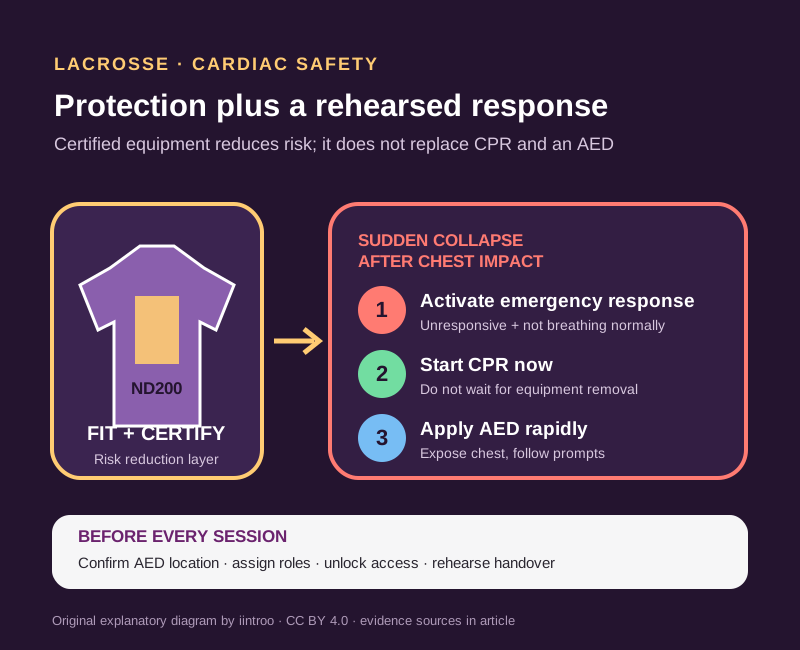
Key points
- Commotio cordis is a rare sudden cardiac arrest triggered when a blunt chest impact occurs during a vulnerable moment in the heart rhythm; a player may collapse immediately or after a few seconds.
- A correctly fitted protector certified to the current NOCSAE ND200 standard can reduce risk but cannot eliminate it or substitute for safer play and ball-awareness skills.
- Any unresponsive player who is not breathing normally needs immediate emergency activation, CPR and rapid AED use according to local training and protocol.
Recognise cardiac arrest after the chest blow
This guide is for lacrosse players, families, coaches, officials and event organisers. Commotio cordis occurs when a blunt chest impact triggers a dangerous heart rhythm during a very small vulnerable timing window. The heart does not need to have been structurally abnormal. The event is rare, but a lacrosse ball can provide the relevant projectile impact.
A player may collapse immediately or remain upright for a few seconds. Treat unresponsiveness with absent or abnormal gasping breathing as cardiac arrest, regardless of whether the impact looked minor or the player is wearing protection. Do not wait for a pulse check by an untrained responder or assume a seizure-like movement means the heart is working normally.
Use certified protection without promising immunity
Check that the chest protector or shoulder-pad system carries the required certification for the current NOCSAE ND200 standard and the competition's rule set. Follow the manufacturer’s size, fit, fastening, care and replacement instructions; a certified model worn loosely, modified or outside its service condition may not perform as tested.
ND200 was developed from laboratory impact research to reduce risk, not eliminate every event. Older studies found that then-available protectors did not reliably prevent ventricular fibrillation in an animal model, which is why certification generation matters. Current field effectiveness after broad mandates still needs continued surveillance, so equipment should never be described as a cardiac-arrest guarantee.
Make CPR and AED access part of the equipment check
Before play, confirm the exact AED location, that it is accessible and ready, who calls emergency services, who starts CPR, who retrieves the AED and who meets the ambulance. The plan must work at training, not only during a staffed match. USA Lacrosse recommends a written emergency action plan that staff and volunteers review and can access.
On collapse, activate the local emergency system, begin high-quality CPR and apply the AED as soon as it arrives, following its prompts and local training. Remove or cut equipment only as needed to expose the chest without delaying compressions or defibrillation. Continue until the player recovers signs of life or trained responders take over.
Rehearse the seconds that are easiest to lose
Run venue-specific drills that include a player in full kit, a locked gate, a distant practice field and a substitute staff member. Time the call, AED retrieval and first shock. Assign someone to control the scene and guide emergency services. Record the gaps found and repeat the drill after staff, venue or equipment changes.
Long-term US surveillance found cardiac-related events were the most common catastrophic medical events in lacrosse and fatality rates declined over decades, possibly alongside protective measures and greater AED access. This observational trend cannot assign credit to one intervention, but it reinforces a layered strategy rather than an equipment-only message.
After survival, return is a cardiac decision
Any collapse or suspected commotio cordis requires emergency and specialist evaluation even when the athlete becomes alert. The clinical team must assess the rhythm, consequences of the arrest, possible underlying conditions and recovery. Teammates, family and responders may also need psychological support after witnessing resuscitation.
Return to play is individual and should come from the treating cardiac and sports-medicine team, not from a symptom-free day or a replacement protector. This article does not diagnose a chest impact, certify equipment, teach CPR, or give a universal return date. Formal CPR/AED training and the current governing-body rules remain essential.