
Long COVID and return to sport: why delayed symptom flares change the plan
Returning to sport after Long COVID needs more than a fitness test. Learn why delayed symptom flares matter and when individual assessment is essential.
Key points
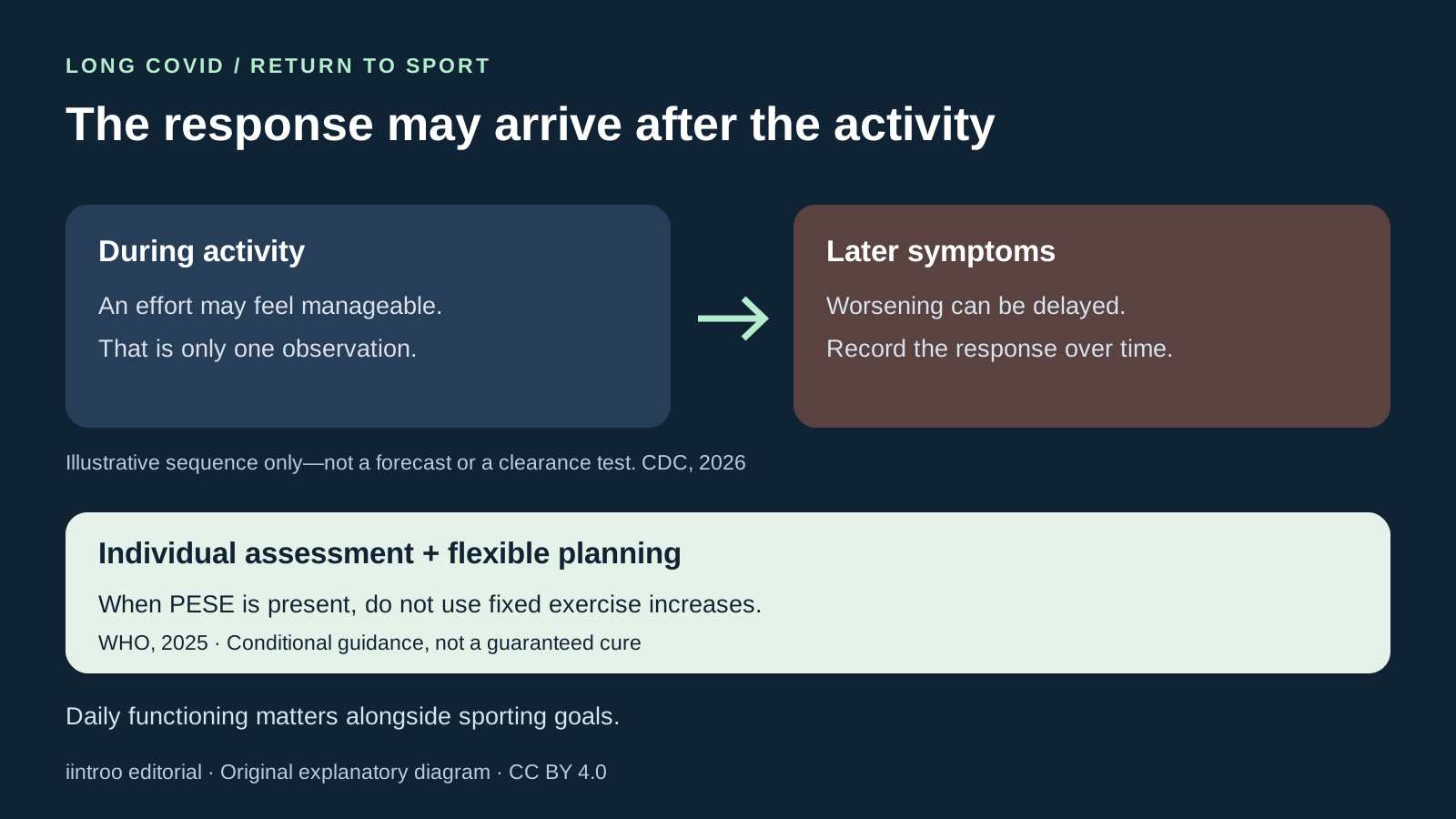
- A session that feels manageable can still be followed by delayed symptom worsening.
- Fixed exercise increases are not appropriate for people experiencing post-exertional symptom exacerbation.
- Recovery planning should protect daily functioning, not only sporting performance.
When the usual comeback plan does not fit
This guide is for athletes whose symptoms persist or recur after COVID-19, particularly runners, cyclists and other endurance participants tempted to interpret every difficult session as lost fitness. It is not a diagnosis, a training prescription or clearance for competition. Long COVID can affect several body systems, and routine tests alone cannot definitively confirm or exclude it.
CDC guidance describes post-exertional malaise, also called post-exertional symptom exacerbation, as worsening after physical or mental effort. Symptoms commonly intensify 12–48 hours later and can last much longer than the activity itself. Feeling reasonably comfortable during a session therefore does not establish that the effort was tolerated. Persistent exercise intolerance should not automatically be attributed to deconditioning.
Sources: 1
Delayed worsening changes rehabilitation
WHO's June 2025 guideline distinguishes rehabilitation adapted to the person's symptoms from a fixed exercise progression. Clinicians should identify and manage cardiac impairment and exertional oxygen desaturation before exercise training; orthostatic intolerance and post-exertional symptom exacerbation require modifications. For people experiencing these delayed flares, programmes with fixed incremental increases in activity should not be offered.
WHO conditionally recommends education and energy-conservation approaches, including pacing: balancing activity and rest around symptoms rather than meeting a predetermined weekly increase. This is not a proven cure. The recommendation draws on expert evidence, patient preferences and evidence from related conditions, with no direct effectiveness evidence establishing the best intervention for this symptom pattern.
Sources: 2
What an athlete study can—and cannot—answer
The ORCCA observational study followed 3,597 US collegiate athletes after SARS-CoV-2 infection, using data collected in 2020–2021. Among athletes reporting exertional cardiopulmonary symptoms, clinicians identified conditions including cardiac involvement, pneumonia and tachycardia syndromes. The findings support taking new chest symptoms during a return seriously rather than assuming that sporting fitness excludes illness.
However, the participants were young competitive athletes, testing was not uniform, and the study occurred early in the pandemic. It was not a trial of Long COVID rehabilitation. Its symptom frequencies cannot be treated as today's population-wide risk, nor does it establish that every athlete needs cardiac MRI. Assessment remains directed by symptoms and clinical findings.
Sources: 4
Plan around life as well as sport
NICE recommends a personalised rehabilitation plan that considers physical and psychological needs, goals, changing symptoms and what to do if symptoms relapse. A useful clinical conversation includes the demands of work, study, travel and everyday tasks alongside training. An apparently small sporting session may sit within a demanding day; the plan should not consider sport in isolation.
The NHS advises discussing exercise resumption with a GP or specialist and recording possible triggers. Bring a diary that captures activity and later symptoms, not just pace or heart rate. Agree how to contact the care team if things worsen, and discuss adjustments with coaches without making a race date the measure of recovery. Progress may be uneven.
Symptoms that need assessment, not a harder test
Cardiac-type chest pain, low oxygen levels or signs of severe lung disease require urgent clinical assessment under NICE guidance. Do not attempt a maximal workout to prove that these symptoms are harmless. Clinicians may also need to investigate diagnoses unrelated to COVID-19; attributing every new problem to a previous infection can miss another treatable condition.
Support can include symptom management and help with daily functioning even when no single treatment resolves everything. Recovery varies, and there is no universal return-to-sport date in these sources. The appropriate question is not simply whether fitness has returned, but whether the proposed activity fits the person's current symptoms, medical assessment and broader life.