
Blood after a long run: gastrointestinal bleeding is not a fuelling experiment
Occult blood is reported after endurance running, but visible blood, black stool or persistent symptoms need assessment—not self-treatment or more NSAIDs.
Key points
- Studies report both microscopic and visible gastrointestinal bleeding after long-distance running, but methods, distances and samples vary and do not predict an individual's cause.
- Reduced gut blood flow, repeated mechanical stress and medicine exposure are plausible contributors; blood can also signal unrelated gastrointestinal disease.
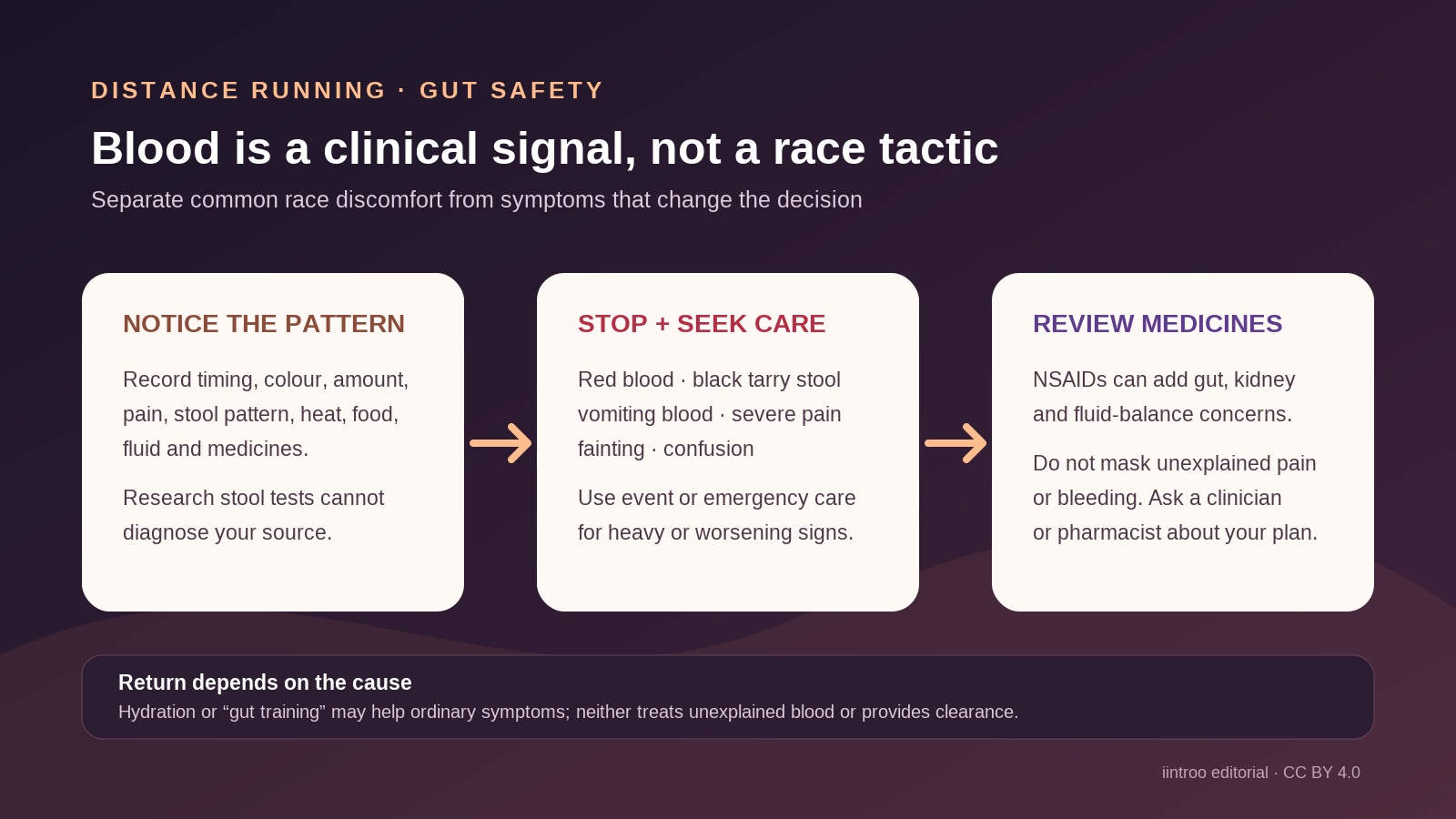
- Visible red blood, black tarry stool, vomiting blood, fainting, severe pain or ongoing bleeding should stop exercise and prompt timely or urgent medical care.
Separate a research finding from a personal diagnosis
This guide is for distance runners, coaches and race medical teams. A 2025 systematic review found 22 publications describing 36 cases of overt bleeding in long-distance runners and additional studies of occult blood or survey-reported symptoms. An older prospective study found stool-test conversion after a 100-mile race in a small group. A positive research stool test is not equivalent to visible bleeding, and neither establishes the source without clinical evaluation.
The evidence spans case reports, small cohorts, different race lengths and older testing methods. It may overrepresent unusual severe cases while missing runners who never seek care. Running-related gut stress is plausible, but haemorrhoids, fissures, infection, inflammatory bowel disease, ulcers, polyps, cancer and other conditions can also cause blood. Do not assume that fitness, age or a recent race makes another cause impossible.
Know the signals that change the decision
Stop the session and seek urgent help for heavy or continuing bleeding, black tarry stool, vomiting blood, collapse or fainting, severe or increasing abdominal pain, confusion, marked weakness, chest symptoms or signs of shock. Repeated vomiting with inability to drink, fever or rapidly worsening illness also needs prompt assessment. Follow local emergency services and event medical procedures rather than travelling alone or finishing the course.
A small streak of bright blood can have a minor cause, but recurrent blood, a change in bowel habit, unexplained weight loss, night symptoms, anaemia, persistent pain or symptoms outside exercise still warrants clinical review. Record colour, approximate amount, timing, pain, stool pattern, food, fluid, heat exposure and medicines. A photograph may be useful if a clinician requests it, but social-media diagnosis is not.
Review NSAIDs without turning uncertainty into reassurance
Non-steroidal anti-inflammatory drugs can irritate the gastrointestinal tract and may add kidney and fluid-balance risk during prolonged exercise. The 2024 scoping review included 30 studies across several designs and found potential concerns in gastrointestinal, kidney, electrolyte and other domains, while noting that no category produced a clear, consistent statistically significant link across the heterogeneous ultraendurance literature. That uncertainty is not evidence that race-day NSAID use is harmless.
Do not take an NSAID to hide unexplained abdominal pain or bleeding, and do not combine products without checking their ingredients. Runners with ulcers, kidney disease, anticoagulant use, asthma sensitive to NSAIDs, pregnancy or other medical factors need individual advice. Do not stop a prescribed medicine on the basis of this page; ask the prescribing clinician or pharmacist how the drug and event conditions change the plan.
Return through cause, recovery and event context
Medical assessment may consider examination, blood count, iron status, stool testing, endoscopy or other investigations according to the pattern and severity. The runner should restore hydration, ordinary eating and symptom-free daily function while following the care plan. A normal easy jog does not prove that bleeding has resolved or that an ulcer, anaemia or inflammatory condition is safe for a remote event.
Coaches and organisers can provide toilets, confidential reporting, trained medical cover and a clear withdrawal route without shaming an athlete. Fuelling and hydration practice may reduce ordinary gastrointestinal distress for some runners, but they are not a treatment for unexplained blood. This guide does not prescribe a diet, acid-suppressing medicine, NSAID strategy, investigation or return date.