
Mastocytosis in sport: map personal triggers and rehearse the anaphylaxis plan
Mastocytosis can raise anaphylaxis risk, but triggers vary. Athletes need specialist care, accessible epinephrine and a rehearsed venue response.
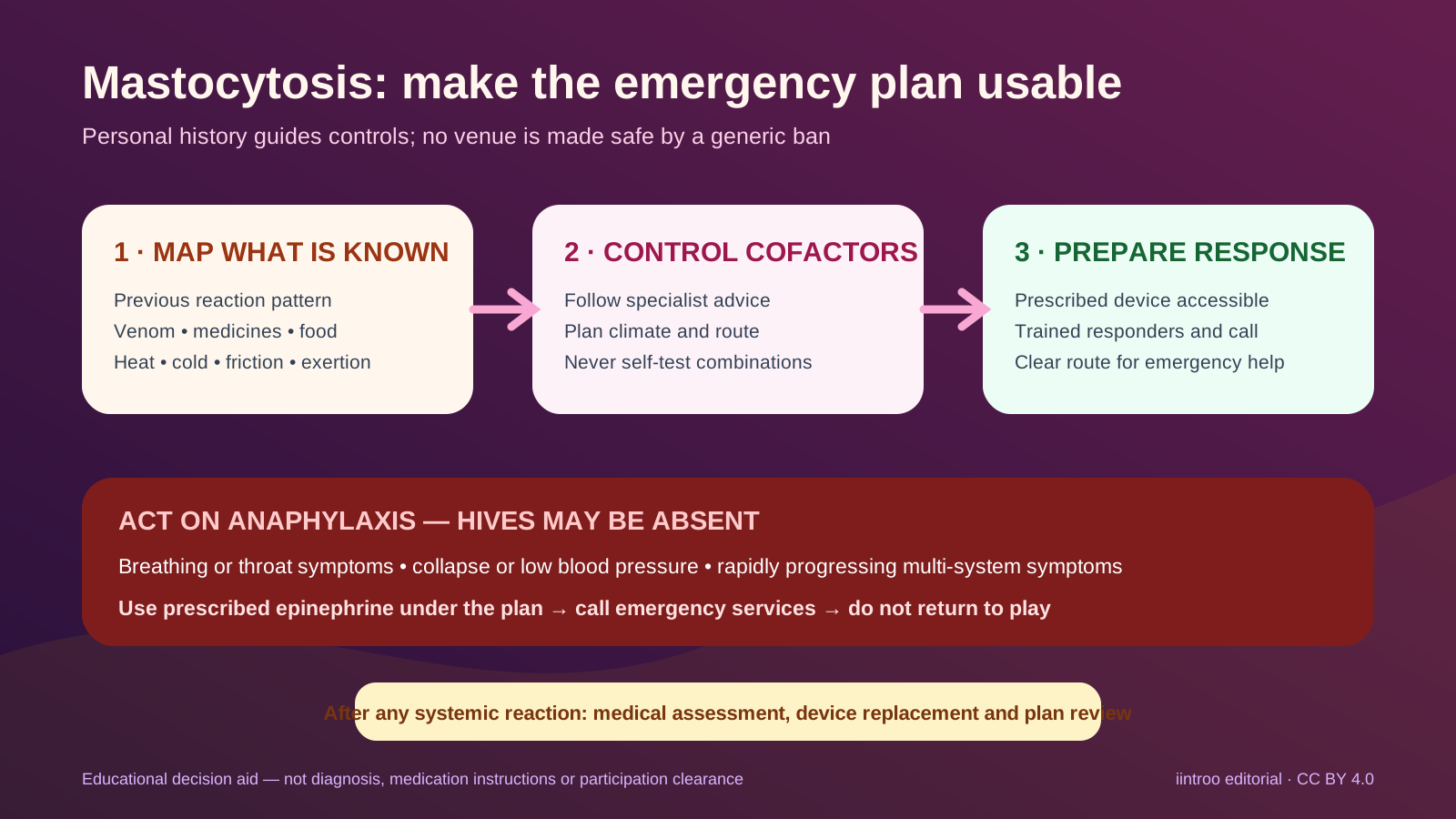
Key points
- Mastocytosis is a clonal mast-cell disease; individual reactions may involve venom, medicines, foods, temperature, friction, exertion or no identified trigger.
- Exercise is not automatically forbidden, but combining previously relevant cofactors can increase risk and requires an individualized specialist plan.
- Breathing difficulty, throat symptoms, circulatory collapse or rapidly progressing multi-system symptoms need immediate emergency action.
Separate the diagnosis from the athlete's trigger history
This guide is for athletes with diagnosed mastocytosis, families, coaches and event teams. Mastocytosis involves abnormal accumulation of clonal mast cells and ranges from cutaneous disease to systemic forms with different burdens and treatment. Mediator symptoms can include flushing, itching, abdominal symptoms, wheeze, dizziness and anaphylaxis. The pattern is individual: venom, medicines, foods, alcohol, heat, cold, friction, stress or exercise may matter for one person and not another. Some episodes have no clear trigger.
Diagnosis, subtype and risk assessment belong to clinicians with relevant expertise. The 2024 NCCN guidance recommends specialist and multidisciplinary care, while anaphylaxis practice parameters identify severe sting or recurrent unexplained reactions as reasons to consider a mast-cell disorder evaluation. A coach should not infer mastocytosis from flushing or a high tryptase result, challenge a suspected trigger at training, or advise an athlete to stop prescribed prophylaxis so that performance feels more natural.
Control known cofactors without inventing a universal ban
The 2025 French guideline advises precautions tailored case by case and particular care with combinations of factors that have previously caused degranulation, including intense exercise and sudden thermal change. This is not evidence that every athlete with mastocytosis must avoid intensity, heat or all outdoor sport. Review the person's actual reaction history with their allergy or mastocytosis team, then plan acclimation, breaks, clothing, hydration and venue access within that documented advice.
Venom deserves special attention in outdoor sport because mast-cell disorders can increase the severity of sting reactions. The athlete's specialist may address avoidance, venom immunotherapy and emergency medication. Staff can reduce exposure by checking nests, food waste and footwear, but cannot make an outdoor venue sting-free. Do not add blanket food exclusions, antihistamines, analgesics or supplements. Medicines, alcohol, infection and meals can act as cofactors in some people, yet self-testing combinations around competition is unsafe.
Make the emergency plan usable at the venue
The athlete's written plan should state their recognizable symptoms, prescribed emergency medicines, where the epinephrine auto-injectors are, who calls emergency services and who meets responders. Devices must remain immediately accessible rather than locked in a distant office or left in a hot car. Trained people should know the specific device and follow the person's prescription and local emergency guidance. Event staff should also identify access routes, mobile coverage and the limits of remote-course rescue.
Anaphylaxis may occur without hives. Breathing difficulty, throat tightness or swelling, wheeze, collapse, low blood pressure, or rapidly progressing symptoms affecting more than one body system require immediate action under the plan. Epinephrine is first-line treatment; antihistamines do not treat airway obstruction or shock. Call emergency services after use, position the person according to the emergency plan and monitor until help arrives. Do not make them walk, return to play or wait for a wearable reading to normalize.
Review every event before returning
After a systemic reaction, the athlete needs medical assessment and specialist follow-up even if symptoms settle. Record the timeline, exercise, foods, medicines, temperature, sting exposure and treatment without claiming a cause. Replacement of used or expired devices and rehearsal of the revised plan should occur before return to an environment with similar hazards. A previous mild reaction does not guarantee that the next one will be mild, while one reaction during exercise does not by itself prove exercise was the trigger.
Return decisions should reflect recovery, investigation, treatment and the specific sport setting. A controlled indoor session near trained support is different from a remote endurance event. There is no universal waiting period, tryptase value or symptom-free test that clears every athlete. This article cannot diagnose mastocytosis or anaphylaxis, identify a trigger, prescribe epinephrine or other medicine, recommend venom immunotherapy, or clear participation. It supports a specialist-authored plan that can actually be used when seconds matter.