
Melatonin for athlete sleep: useful signal, uncertain shortcut
Melatonin may shift sleep timing for some athletes, but it is not a proven performance aid. Start with the sleep problem and check safety and supplement risk.
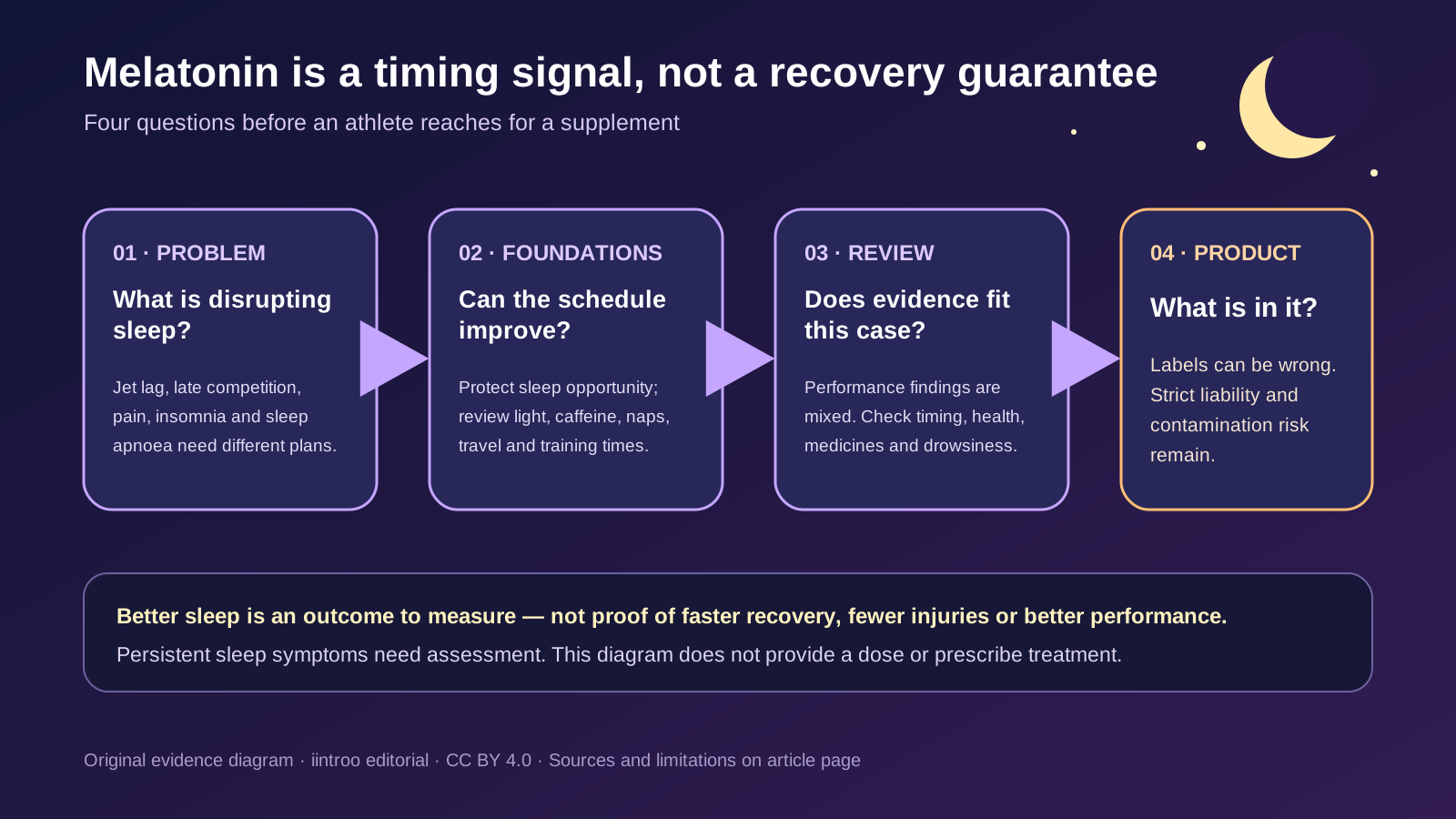
Key points
- Melatonin can influence circadian timing and may help selected sleep problems, but studies do not establish it as a reliable way to improve athletic performance.
- Product content may differ from the label and long-term safety is less certain; next-day sleepiness and medicine interactions make professional advice important.
- Melatonin itself is not a standard prohibited substance, but anti-doping strict liability and contamination risk still apply to the product an athlete chooses.
Name the sleep problem before reaching for a bottle
This guide is for athletes considering melatonin for jet lag, late competition, schedule shifts or persistent sleep difficulty. Melatonin is a hormone that helps signal biological night; taking it at the wrong circadian time can be unhelpful or shift timing in an unwanted direction. Trouble falling asleep after a night match, waking repeatedly with pain, and crossing several time zones are different problems. A product sold under one name is not a diagnosis or a universal sleep plan.
Athlete sleep consensus recommends first examining schedule, light exposure, caffeine, naps, training, travel, stress and the sleep environment. Persistent insomnia, loud snoring, breathing pauses, restless legs, severe daytime sleepiness or a mental-health problem deserves assessment rather than indefinite self-treatment. Sleep opportunity also matters: no supplement can replace hours removed by travel logistics, media duties, study, work or an avoidably late training timetable.
The performance evidence is mixed and indirect
Systematic reviews of melatonin and physical performance find small, varied studies using different doses, timing, exercise tests and participant groups. Some report changes in sleep or selected physiological measures, while direct performance findings are inconsistent. Reviews focused on highly trained athletes reach a similarly cautious conclusion. A possible effect after travel or sleep disruption should not be converted into a claim that melatonin is ergogenic for a rested athlete.
Sleep-intervention research in athletes supports behavioural and scheduling approaches, but study quality and sport coverage remain uneven. Keep the claim matched to the outcome: falling asleep slightly sooner is not the same as better recovery, fewer injuries or faster race performance. Marketing phrases such as ‘natural recovery’ do not show clinical benefit. Teams should avoid routine group distribution, because the relevant timing, health history, medication interactions and competition schedule differ between athletes.
Short-term use is better studied than long-term routine use
NCCIH notes that short-term melatonin use appears safe for most people, while evidence about long-term safety is limited. Reported effects can include headache, dizziness, nausea and sleepiness. Melatonin may interact with medicines and may be inappropriate in some health situations. Pregnancy, breastfeeding, childhood or adolescence, chronic illness, surgery planning and use of sedating or other interacting medicines all strengthen the case for advice from a qualified clinician or pharmacist.
Do not borrow another athlete’s dose or copy a travel protocol from social media. More is not automatically better, and this guide does not provide a dose. If a clinician supports a time-limited trial, agree on the specific target, timing, review point and signs to stop. Avoid first use before driving, technical training, water activity or competition, because next-day or unexpected drowsiness can turn a sleep experiment into a safety problem.
A permitted ingredient does not make every product low risk
For athletes under anti-doping rules, checking only whether the word melatonin appears on the Prohibited List is incomplete. WADA applies strict liability, and supplement labels may be inaccurate or products contaminated with prohibited substances. USADA and the International Testing Agency advise a food-first, risk-reduction approach and independent batch testing where a supplement is genuinely considered necessary. No certification can guarantee zero risk, and online marketplaces add uncertainty about provenance and storage.
Keep the packaging, batch number, receipt and record of professional advice if a product is used, while understanding that documentation does not erase responsibility for a positive test. Recheck the current rules and product for each season and country rather than relying on an old screenshot. Melatonin may have a role in an individual circadian plan, but it is not a substitute for diagnosis, schedule design or recovery time. This article does not prescribe melatonin or guarantee sleep, recovery, safety or performance.