
Melatonin for athletes: sleep support is not a performance guarantee
Melatonin is not a shortcut to sporting recovery. Examine the latest exercise evidence, daytime sleepiness, product-label uncertainty and safety questions.
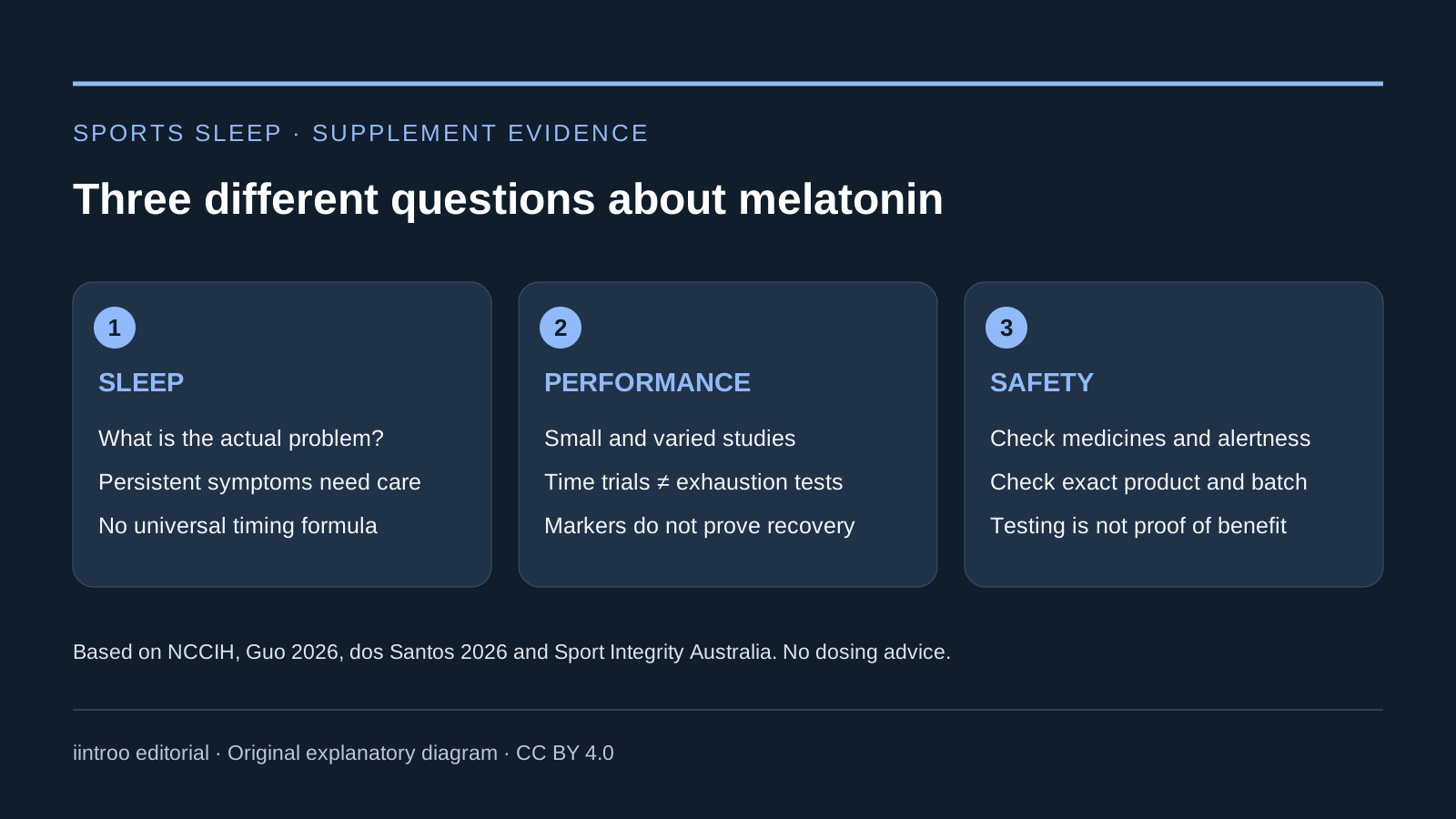
Key points
- Sleep treatment and performance enhancement are different questions.
- Small exercise studies do not establish a universal dose or timing rule.
- Product testing reduces some risks; it does not prove benefit or individual safety.
Start with the sleep problem, not the product
This guide is for athletes considering melatonin for sleep, recovery or competition performance. Melatonin is a hormone involved in sleep timing. Its role in the body does not mean a supplement reliably improves every sleep problem, and a sleep-related use should not be confused with evidence of faster racing or better recovery.
Persistent insomnia, difficulty staying awake or repeated disruption deserves assessment. Consider the pattern, training and travel schedule and other possible contributors with a healthcare professional rather than repeatedly increasing an unsupervised supplement. This guide gives no dose, bedtime formula or recommendation to take melatonin before exercise.
Sources: 3
What the 2026 review can and cannot establish
A February 2026 systematic review combined 19 randomized trials involving 266 participants. Some pooled exercise results favoured melatonin, but the distinction between test types matters: a signal in time-to-exhaustion testing is not the same as an improvement in a time trial. The time-trial subgroup did not show a statistically significant benefit.
Small samples, short interventions, predominantly male participants and differing protocols limit generalization. Sleep outcomes were not consistently measured, so better sleep cannot be presented as the demonstrated explanation for any performance finding. Changes in creatine kinase or another laboratory marker also do not establish healed tissue, prevented injury or readiness for competition. Exploratory timing subgroups are not a prescription.
Sources: 1
A newer runner trial adds caution, not a universal answer
A July 2026 crossover trial compared melatonin, caffeine and placebo in experienced male runners. Twenty-four were recruited, but only 19 completed the study. There was no statistically significant difference in one-mile performance, while subjective sleepiness increased during follow-up after melatonin.
The study was small, tested an acute morning intervention and covered one distance in men. Prior sleep was not objectively measured, and habitual caffeine use complicates interpretation. It cannot predict every athlete's response or prove that all evening use impairs next-day sport. It does, however, challenge the idea that melatonin is an uncomplicated pre-performance aid.
Sources: 2
The label is not always the exposure
A 2023 laboratory study tested 25 US melatonin gummy products; 22 failed the study's label-accuracy criterion. Among products containing melatonin, measured amounts ranged from 74% to 347% of the label quantity. One had no detectable melatonin. A familiar-looking gummy therefore should not be assumed to deliver a precise exposure.
This was a historical sample of US gummies, with one sample per brand—not an assessment of every country, formulation or current batch. It measured contents, not clinical harm or sporting outcomes. Product regulation differs between countries, including Türkiye; do not assume a product bought abroad has the same oversight as a locally supplied medicine.
Sources: 4
Separate anti-doping checks from clinical suitability
Tested athletes should discuss supplements with qualified support staff and check the exact product and batch through an appropriate independent testing programme. Sport Integrity Australia emphasizes that such checks can reduce prohibited-substance risk, but cannot eliminate it. A logo on a different batch is not equivalent to verifying the product being used.
Batch testing does not establish that melatonin improves performance, treats a particular sleep disorder or is safe alongside someone's medicines. These are separate questions. Keep the product packaging and discuss any uncertainty before use; do not interpret this guide as a statement about the current prohibited status of a particular ingredient or product.
Sources: 5
Safety deserves its own conversation
NCCIH describes sleepiness, dizziness, headache and nausea as possible effects and notes uncertainty about long-term safety. Medication interactions matter, especially with anticoagulants or epilepsy treatment. Pregnancy and breastfeeding are additional reasons to seek professional advice. If drowsy, do not drive or undertake activities where reduced alertness could cause injury.
For young athletes, the American Academy of Sleep Medicine advises parents to consult a pediatric professional before starting melatonin. Sleep schedules and behaviours may need attention instead. Store supplements like medicines and out of children's reach; gummies are not ordinary sweets. A team's supplement habit should never replace an individual assessment.