
Menstrual tracking in sport: follow symptoms, not a universal phase script
Menstrual tracking can support symptom care, but phase-based training claims outrun the evidence. Prioritise consent, privacy and individual patterns.
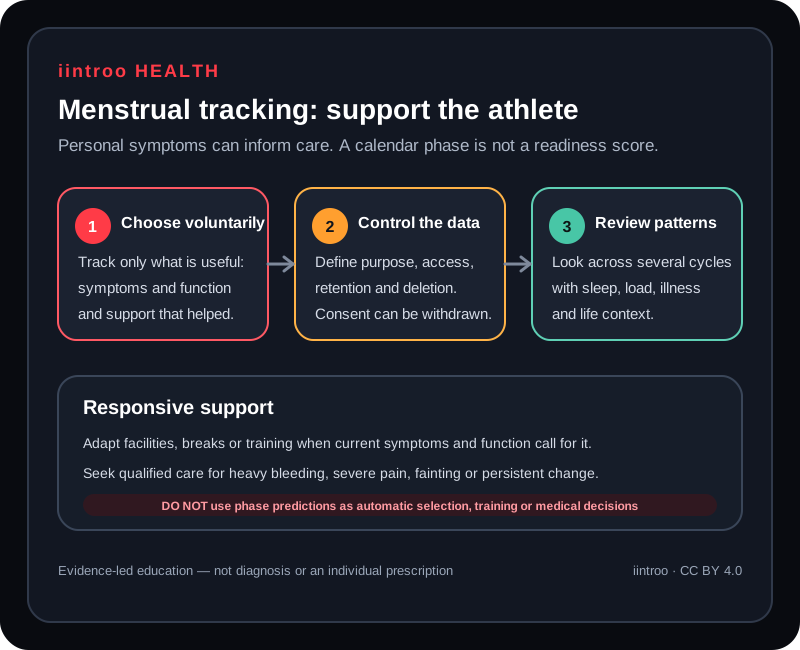
Key points
- Current evidence does not justify giving every athlete the same phase-based training or nutrition plan.
- Tracking can be useful when it identifies an athlete's own symptoms, cycle changes and support needs over time.
- Participation should be voluntary, purpose-limited and private, with clear control over who can see or use the data.
Use tracking to listen, not to predict a standard athlete
This guide is for athletes who menstruate, coaches, families and health teams. Cycle and symptom tracking can help an athlete notice recurring pain, heavy bleeding, fatigue, mood change, gastrointestinal symptoms or disruption to sleep and training. It cannot determine from a calendar alone how that athlete will perform tomorrow.
The 2025 UEFA consensus states that evidence linking cycle phases with performance or injury risk remains inconclusive. A systematic review restricted to studies with hormone measurements still found heterogeneous results, small samples and medium-to-high risk of bias. A phase label should therefore not become a readiness score, selection decision or automatic reason to reduce training.
Put symptoms and function before phase-based rules
Ask what the athlete experiences: symptom type, severity, timing, effect on daily life and training, and what support helped. The 2026 scoping review linked symptom burden with perceived performance impairment, but objective outcomes were inconsistent and study quality was generally low. Perception matters for care even when it does not prove a physiological phase effect.
A coach can offer flexible access to breaks, toilets, period products, clothing options and adjusted tasks when requested. Training changes should respond to the athlete's current symptoms and function, not a template that assumes all athletes feel or perform the same way in a named phase.
Make consent and privacy part of the programme
Before collecting data, define the purpose, which fields are truly needed, who can access them, how long they are kept and how they can be deleted. Consent should be freely given and reversible. Declining to track should not affect team selection, medical support or an athlete's standing with staff.
A pilot concept-mapping study involved only 26 participants and cannot set universal policy, but it ranked ethics as the most important and feasible implementation cluster. Menstrual information is sensitive health data. A shared team spreadsheet or a commercial app is not automatically appropriate simply because it is convenient.
Treat cycle change as a health conversation, not a diagnosis
Cycles can vary with age, contraception, pregnancy, postpartum change, perimenopause, health conditions, energy availability and many other factors. Tracking bleeding alone does not confirm ovulation, hormone concentrations, fertility, low energy availability or a gynaecological diagnosis. Hormonal contraception also changes what cycle markers mean.
Persistent or concerning change deserves a confidential discussion with a qualified clinician. Examples include very heavy bleeding, severe or worsening pain, fainting, symptoms of anaemia, bleeding between periods, pregnancy concerns or repeated absence of expected periods. Urgent or severe symptoms need prompt medical care rather than a training workaround.
Review patterns without promising performance optimisation
If an athlete chooses to track, review several cycles and look for repeatable personal patterns alongside training load, sleep, travel, illness and life stress. Record what was changed and whether it helped. A single difficult session during menstruation does not prove a rule for the next cycle, while one symptom-free cycle does not clear a health concern.
This article does not prescribe a tracking app, contraceptive method, supplement, medication or phase-based training plan. Medical decisions belong with the athlete and an appropriate clinician. Teams should use current safeguarding, privacy and data-protection requirements in their country and keep performance staff within their professional scope.