
Myotonic dystrophy in sport: coordinate strength, fatigue, heart and breathing care
Myotonic dystrophy type 1 can affect strength, rhythm, breathing, sleep and fatigue. Exercise works best when current multisystem findings guide progression.
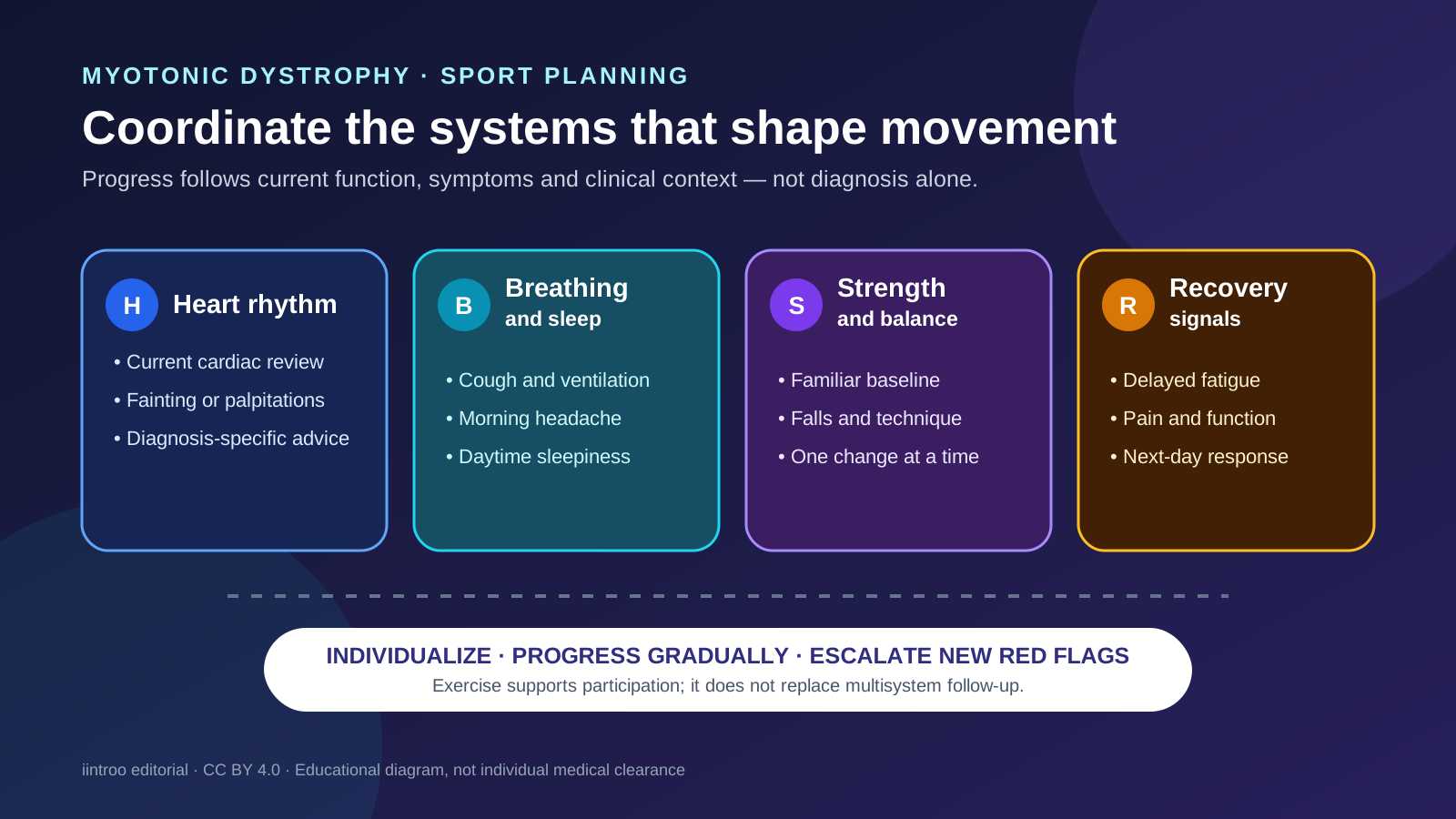
Key points
- Moderate aerobic and resistance activity can be feasible in myotonic dystrophy type 1, but the evidence base is small and does not provide one universal programme.
- Cardiac conduction disease, arrhythmia, respiratory weakness, sleep-disordered breathing, falls and daytime sleepiness can all alter sport risk and recovery.
- Fainting, chest pain, new sustained palpitations, severe breathlessness, confusion, unusual morning headache or sudden functional loss needs prompt assessment.
Start with the whole condition, not a strength score
This guide is for people with myotonic dystrophy type 1, families, coaches and clinical teams. DM1 is a genetic multisystem disorder caused by a CTG repeat expansion in DMPK. Muscle weakness and myotonia are important, but participation can also be shaped by cardiac conduction disease or arrhythmia, respiratory muscle weakness, sleep-disordered breathing, daytime sleepiness, cataracts, gastrointestinal problems, endocrine conditions, pain and cognitive or behavioural changes. Severity and rate of change vary widely, so diagnosis, age or repeat length alone cannot define today's exercise capacity.
Consensus care recommendations support regular review of strength, mobility and daily function alongside cardiac, respiratory and sleep surveillance. Before changing training, establish the athlete's usual walking, transfers, falls, fatigue, breathing, sleepiness, swallowing, pain and recovery. Confirm when the last relevant clinical reviews occurred and whether any activity advice is already documented. A coach can make sessions accessible and report change, but cannot interpret an electrocardiogram, exclude nocturnal hypoventilation, adjust ventilatory support or decide that a new collapse was simply deconditioning.
Use the exercise evidence without turning it into a promise
Adult DM1 recommendations encourage moderate-intensity aerobic and resistance exercise when appropriate. A 2025 neuromuscular exercise workshop likewise emphasized personalization, gradual progression and monitoring rather than a single prescription across muscle diseases. The 2026 DM1 systematic review and meta-analysis included only 14 studies. It found a moderate pooled benefit for muscle strength, while the endurance estimate was not statistically significant and conclusions about fatigue and sleep remained uncertain. Different protocols, small samples and variable disease severity limit confidence in any exact dose.
Individual studies are useful but narrow. A small nine-month randomized respiratory-muscle training study reported improvements in some respiratory measures among 26 participants who completed follow-up. Earlier exercise pilots screened for cardiac involvement and often enrolled relatively able adults, which limits transfer to people with advanced weakness or multisystem complications. The large OPTIMISTIC trial tested a complex behavioural programme rather than exercise alone and documented falls and other adverse events. Taken together, the evidence supports supervised experimentation and outcome tracking, not claims that training reverses DM1, prevents arrhythmia or guarantees independence.
Build sessions around strength, balance and recovery signals
Choose activities that match current function: supported walking or cycling, water-based movement, balance practice, task-specific work or resistance that preserves technique. Start with a familiar, repeatable baseline and change duration, resistance or complexity one variable at a time. Longer warm-ups can help people who need time to settle movement, but a coach should not force repeated maximal contractions to overcome myotonia. Avoid assuming that soreness proves benefit. Record falls, near-falls, delayed fatigue, pain, breathlessness, palpitations, dizziness and next-day function as well as repetitions or distance.
Plan rest and communication deliberately because apathy, executive difficulty, sleepiness or fatigue can look like poor motivation. Check whether an athlete uses non-invasive ventilation, cough assistance, mobility aids or orthoses and follow the responsible team's instructions for transport, storage and use. A wearable may describe heart rate or steps, but it cannot rule out conduction disease, hypoventilation or aspiration. New morning headache, unrefreshing sleep, daytime sleepiness, weak cough, recurrent chest infections or declining voice and swallowing should be returned to the neuromuscular or respiratory team rather than trained through.
Escalate red flags and return by current function
Stop activity and seek urgent assessment for fainting, chest pain, sustained palpitations with symptoms, severe or rapidly worsening breathlessness, blue or grey colour, confusion, collapse or a new focal neurological deficit. Marked weakness after illness, inability to clear secretions, choking, repeated falls with injury or a sudden loss of walking or transfers also needs timely clinical review. An apparently normal smartwatch trace or quick recovery does not exclude arrhythmia or respiratory compromise, and a coach should not provide oxygen, change ventilation settings or recommend stimulants without a clinical plan.
After an acute illness, fall, rhythm event, respiratory change or material loss of function, return through comfortable daily movement, controlled conditioning and then sport-specific tasks, with clinical input when baseline has changed. There is no universal heart-rate zone, vital-capacity value, strength grade or symptom-free interval that clears every person. This article cannot diagnose DM1, interpret genetic, cardiac, sleep or respiratory tests, prescribe exercise or equipment, alter treatment, or clear competition. It offers a way to keep meaningful activity connected to longitudinal multisystem care.