
Nasal strips in sport: easier airflow is not a performance guarantee
External nasal strips can change nasal valve airflow for some athletes, but pooled exercise evidence does not show reliable gains in oxygen uptake or effort.
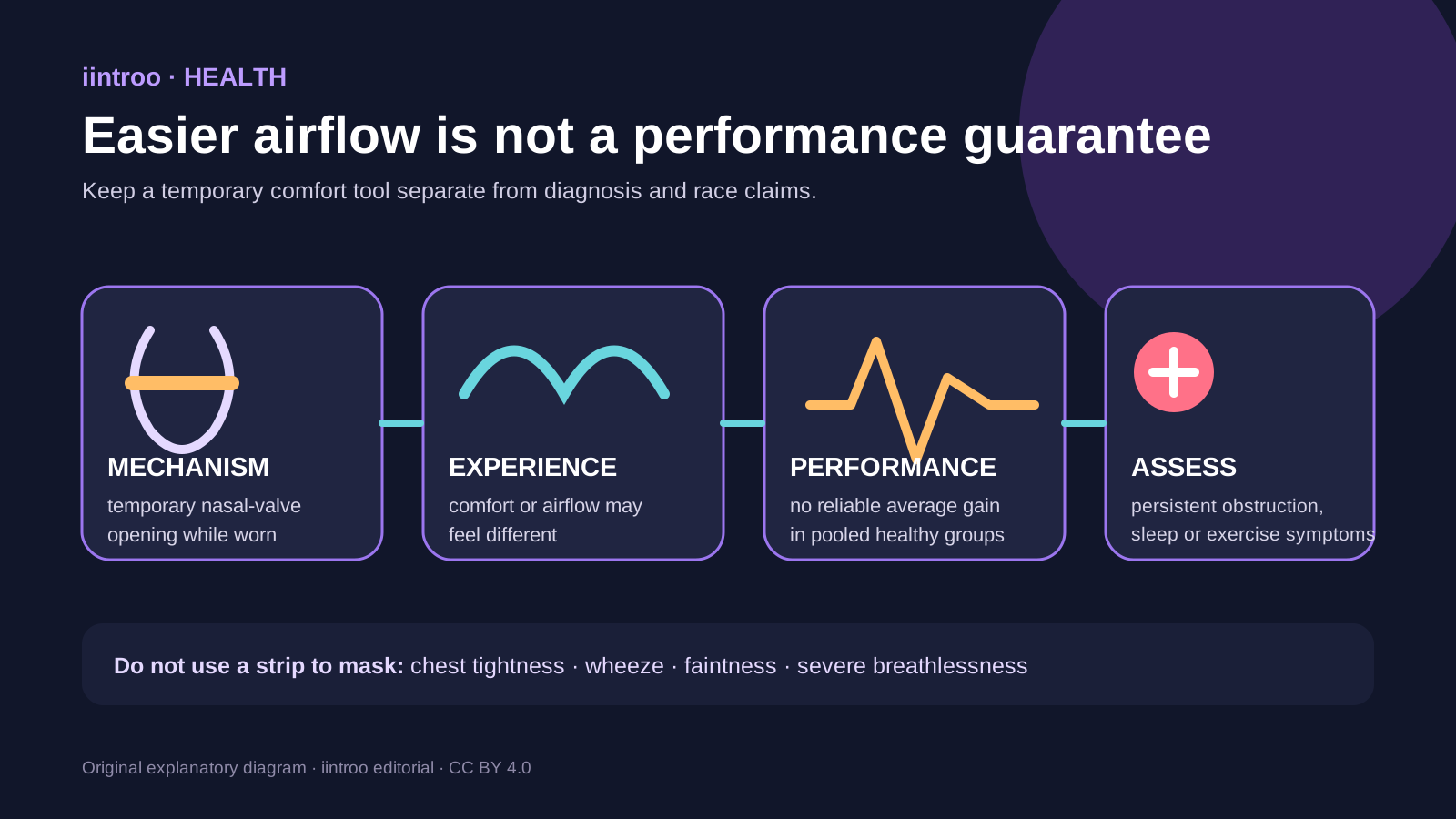
Key points
- A nasal strip may mechanically widen the nasal valve, but that physiological change does not prove faster racing or greater aerobic capacity.
- A meta-analysis of 19 eligible studies found no clear improvement in maximal oxygen uptake, heart rate or perceived exertion in healthy exercisers.
- Persistent blockage, snoring, sleep disruption or exercise intolerance needs assessment for structural, allergic, inflammatory and other causes.
Ask whether the goal is comfort, diagnosis or performance
This guide is for athletes, parents and coaches considering an adhesive external nasal strip for training, racing, recovery or sleep. The strip lifts the side wall around the nasal valve and can reduce resistance in selected people while it is worn. Feeling that air moves more freely can be a valid comfort outcome. It does not establish that more oxygen reaches working muscle, that an airway disorder has been treated or that performance will improve.
At higher exercise intensities, ventilation usually shifts toward combined nasal and oral breathing. The IOC respiratory consensus notes that there is little evidence that altered nasal airflow reduces sports performance. It also distinguishes structural obstruction from allergic rhinitis, non-allergic rhinitis, infection and trauma. A device trial cannot identify which of those problems is present.
Read the pooled evidence and the small trials together
A systematic review found 19 eligible exercise studies. In the available meta-analyses, external nasal strips did not produce statistically clear improvements in maximal oxygen uptake, heart rate or perceived exertion among healthy participants. The pooled VO2max analysis included 168 people, the heart-rate analysis 138 and the perceived-exertion analysis 92. Those totals are modest and the studies varied, so the result is better read as no dependable average benefit than proof that no person can notice any effect.
A randomized crossover trial in 15 trained cyclists compared an external strip, an internal dilator and no device during a 20-km time trial. Mean power was virtually identical and neither device improved the time-trial outcome. An earlier randomized study of 48 healthy adolescents reported differences in estimated VO2max, nasal inspiratory flow and breathlessness. The broader meta-analysis did not confirm a reliable exercise benefit across studies. Different tests, ages and outcomes explain why one small positive trial should not become a universal claim.
Use persistent symptoms to trigger assessment
Repeated nasal blockage, one-sided obstruction, bleeding, loss of smell, snoring, poor sleep, persistent mouth breathing or exercise intolerance deserves qualified assessment. An ear, nose and throat clinician may evaluate the history and nose for nasal-valve collapse, septal problems, turbinate enlargement, allergy, infection, trauma or another cause. Photographs, an app and a teammate's observation do not provide a complete examination.
The 2026 AAO-HNS statement recognises external strips or nasal cones as temporary conservative options for selected nasal-valve dysfunction, not an around-the-clock or definitive treatment. Anti-inflammatory medicine addresses certain inflammatory causes and does not mechanically repair most valve problems. Do not start, stop or share a medicine based on whether a strip helped during one workout.
Keep a low-risk comfort tool inside honest limits
If a strip is used for comfort, follow the product instructions, check the skin and stop if adhesive causes pain, blistering or a rash. Test it in ordinary training before a major event. Do not use it to conceal worsening breathing symptoms, delay assessment or push through chest tightness, wheeze, faintness or severe breathlessness. Acute breathing difficulty, blue or grey lips, collapse or chest pain needs urgent medical help.
Record the conditions in which symptoms occur—cold air, chlorine, pollen, pollution, sleep or only maximal efforts—and whether wheeze, cough, throat noise or congestion accompanies them. That history is more useful than treating a strip as a diagnostic test. This page does not diagnose nasal-valve collapse, prescribe treatment or promise a performance gain.