
Netball concussion: recognise, remove and return step by step
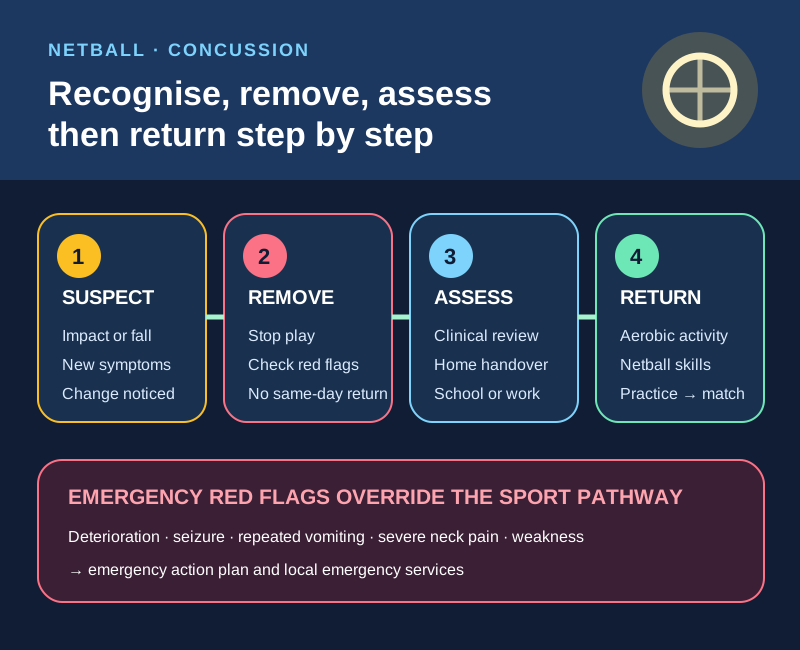
A player does not need to be knocked out to have concussion. Stop play after a suspected injury, arrange assessment and use a graduated return.
Key points
- Loss of consciousness is not required for concussion; symptoms and signs can appear immediately or evolve over hours.
- World Netball policy says a player with suspected concussion must be removed and must not return on the same day unless a suitably qualified medical doctor excludes concussion.
- Return is a graduated clinical process that includes ordinary life, school or work and non-contact training before unrestricted netball.
Treat suspicion as enough to stop
This guide is for netball players, coaches, officials, parents and event health teams. A collision, fall, ball strike or whiplash-like force can transmit energy to the brain. Concussion may involve headache, dizziness, nausea, balance trouble, slowed thinking, confusion, memory difficulty, visual symptoms, unusual emotion or a change noticed by someone else. A player can be concussed without losing consciousness.
World Netball's policy follows the Amsterdam consensus: when concussion is suspected, remove the player from the court and arrange appropriate assessment. Do not use a quick sideline question, a normal-looking video replay or the player's wish to continue as clearance. Symptoms may evolve, so responsible observation and clear handover matter after the match as well as during it.
Check for an emergency before anything else
Call local emergency services for deteriorating consciousness, a seizure, repeated vomiting, severe or increasing headache, neck pain or tenderness, double vision, weakness or tingling, increasing agitation, unusual behaviour, suspected skull fracture or any other serious concern. Keep the player still when a neck injury is possible and follow the venue's emergency action plan.
A conscious player should not be left alone, drive, drink alcohol or take sedating medication without medical advice. Give a parent, caregiver or responsible adult written and verbal information about monitoring and escalation. A digital symptom checklist can support communication, but it cannot rule out structural brain or neck injury.
No same-day return after suspected concussion
World Netball states that a player with suspected concussion must not return on the same day unless a suitably qualified medical doctor examines the player and excludes concussion. In most community settings that exception will not be available. Substitution rules, score pressure and finals selection do not change the health decision.
Arrange assessment by a healthcare professional experienced in concussion. Brain imaging is not routinely used to diagnose concussion, although a clinician may order imaging when the mechanism, examination or red flags suggest a more serious injury. One normal scan does not by itself provide return-to-play clearance.
Recover activity, learning and netball progressively
After a short period of relative rest, current consensus supports gradual return to ordinary activity below the level that substantially worsens symptoms. School, study or work support may be needed before full sport. The sport progression then moves from symptom-limited activity to aerobic exercise, individual netball skills, more complex non-contact training, full-contact practice when medically authorised, and finally competition.
Each stage should be supervised according to local guidance, and symptoms that recur require stepping back and reassessment rather than hiding them. Children and adolescents need age-appropriate management and coordination with family and school. A calendar date alone cannot show that balance, cognition, confidence and netball-specific function have recovered.
Build a system that makes reporting possible
Netball injury studies use varied definitions and surveillance methods. A recent cohort reported concussion among important injury concerns, but one programme's incidence cannot predict another team's risk. The stronger operational lesson is to rehearse roles: who stops play, who assesses, who contacts family, where the emergency equipment is and who tracks follow-up.
Teach players that reporting symptoms protects teammates as well as themselves. Remove incentives to conceal injury, provide private routes to medical help and document the handover. Rules and national timelines can change, so teams should use the current World Netball and local federation policy. This page cannot diagnose concussion or clear an individual player.