
Water polo concussion: safe pool exit and staged return
Water polo concussion may follow ball or player contact. Recognition, a supported water exit, medical assessment and staged return protect the athlete.
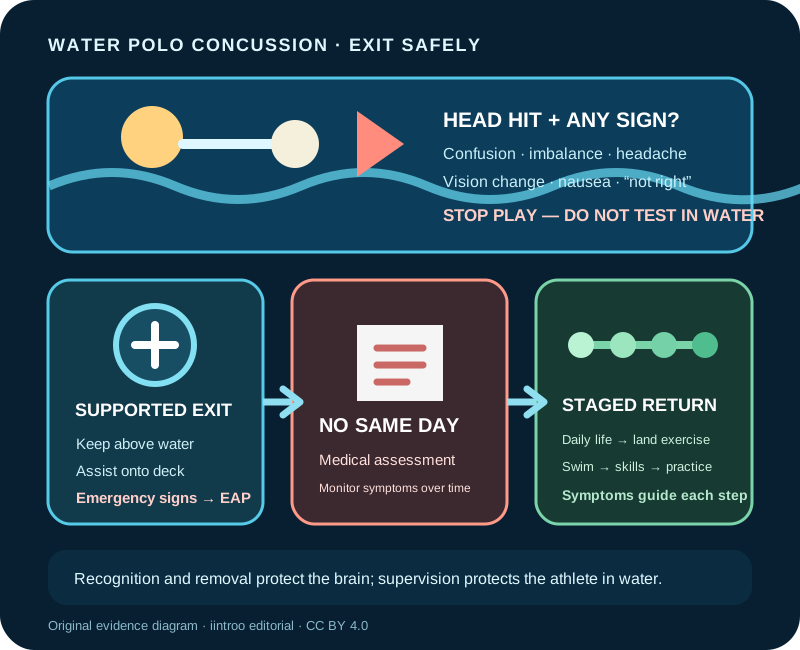
Key points
- Water polo concussion can follow ball-to-head or player contact and does not require loss of consciousness; symptoms may evolve after the athlete leaves the water.
- A suspected concussion requires immediate removal, a supported pool exit and observation on land. The athlete does not return that day and needs qualified medical assessment.
- Return progresses from ordinary activity and land-based exercise to swimming, non-contact water-polo skills and full practice before competition, guided by symptoms and local policy.
The injury can be hidden by the water
This guide is for players, coaches, officials, parents and medical teams. Ball-to-head contact, an opponent's arm or body, and collisions around the centre-forward position can all transmit force to the brain. In collegiate surveillance, concussion was the most common diagnosis and most recorded concussions occurred outside competition. A 10-year elite female cohort and a newer collegiate analysis also identify a meaningful burden, while the latter found a higher proportion among goalkeepers. These studies describe particular teams and cannot provide one universal individual risk estimate.
Water creates an extra operational problem: a dazed athlete may need help staying above the surface and exiting without another fall or impact. Loss of consciousness is not required. Headache, dizziness, visual change, confusion, unusual behaviour, slowed responses, imbalance, nausea or simply feeling wrong after a hit should trigger removal. Do not ask the player to swim another length, face another shot or prove that they are fine.
Remove, support and assess on land
Stop play and make the immediate area safe. Support the athlete in the water and use the venue's planned exit method; avoid an unassisted climb if balance, vision or awareness is impaired. Once on land, a trained responder checks airway, breathing, circulation, neck symptoms and emergency warning signs. Suspected spinal injury, deteriorating consciousness, seizure, repeated vomiting, worsening severe headache, weakness, neck pain or another acute concern requires emergency services and the venue emergency action plan.
Water Polo Canada and USA Water Polo require removal after suspected concussion and medical clearance before return under their systems. Local federation, school and national law may set additional steps and always take priority. The player does not return on the same day. Record the mechanism, time, observed signs, symptoms, any loss of consciousness, rescue details and change over time for the clinical handover and notify the appropriate guardian or team contact.
A sideline tool is not a clearance test
Concussion is a clinical diagnosis. The Concussion Recognition Tool is designed to help non-clinicians recognise and remove; SCAT6 and office tools are for appropriately trained healthcare professionals and have defined time windows and limits. A normal memory question, balance attempt or phone app cannot rule concussion out, and routine CT or MRI is often normal because imaging serves different clinical questions.
The clinician should consider cervical injury, facial or eye trauma, dental injury and other causes of collapse or confusion. Symptoms may emerge later, so the athlete needs clear monitoring and escalation instructions. Alcohol, sedating medication and driving may be unsafe depending on symptoms and clinical advice. This article cannot diagnose concussion or substitute for examination by a qualified professional.
Return must rebuild both exercise and water-polo demand
After an initial period of relative rest and tolerable daily activity, the medical plan progresses stepwise. Land-based aerobic activity can precede pool work. Subsequent stages should add controlled swimming, head movement, passing and shooting without contact, then more complex non-contact team drills, full practice and competition. Pool re-entry needs supervision because dizziness, visual symptoms or delayed reactions create a drowning and collision risk that does not exist on a stationary bike.
Each stage is guided by the athlete's symptoms, examination, school or work function and the applicable protocol. If symptoms more than mildly and briefly worsen, stop and return to the previous tolerated level under clinical guidance. There is no responsible universal number of days. Children, adolescents, athletes with repeated concussion, migraine, mental-health concerns or prolonged symptoms may need additional multidisciplinary support.
Prevention is more than padded headgear
Teams can reduce avoidable exposure by enforcing rules on striking and dangerous contact, teaching safe goalkeeper and blocking technique, controlling repeated close-range shooting in practice and ensuring that balls and drills match age and skill. Goalkeeper practice deserves its own exposure review because a large share of ball-to-head contacts may occur outside matches. Medical cover, a clear rescue route and preseason concussion education should be rehearsed, not kept in a policy folder.
Laboratory work suggests that some water-polo headgear may reduce impact kinematics, but this does not establish that a product prevents clinical concussion. Equipment must comply with current competition rules, fit correctly and never justify more head contact. The strongest immediate protections remain recognition, removal, qualified assessment, staged return and a culture in which athletes report symptoms without losing status.