
Water polo shoulder pain: count throwing load, not just pool distance
Swimming metres do not capture every overhead demand in water polo. Track passing and shooting exposure, respond to symptoms early and use assessment—not imaging alone—to guide the next step.
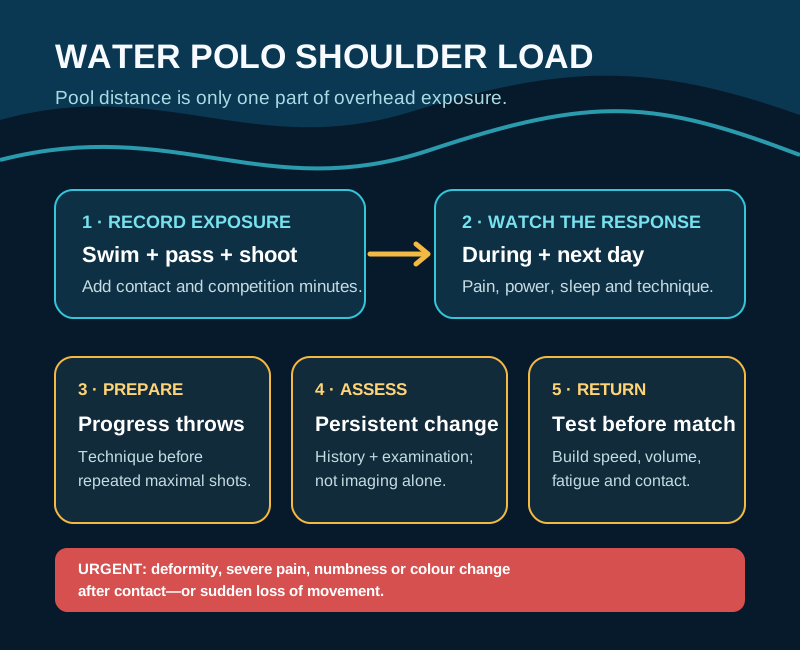
Key points
- Water polo combines repeated swimming with passing and shooting, so pool distance alone can miss meaningful shoulder exposure.
- Reviews link shoulder problems with several possible factors, but most evidence is observational and does not define one safe throwing limit.
- Sudden weakness, deformity, loss of movement or severe pain after contact needs prompt medical assessment.
Measure the sport that the shoulder actually performs
This guide is for water-polo players, coaches, parents and medical teams. A session can combine front-crawl swimming, repeated elevation of the arm, passing, maximal shots, contact and eggbeater work. Recording only total swimming distance can therefore miss an important part of the upper-limb demand. A useful workload record separates swim volume from technical throws, high-intensity shots, contact exposure and competition minutes.
Systematic reviews identify the shoulder among the common overuse sites in water polo, while acute injuries more often involve contact with the ball or another player. The available studies vary in population, injury definition and design. They support paying attention to shoulder load, not a universal number of throws that is safe for every athlete.
Change in exposure matters more than an isolated total
A tournament block, return from illness, new shooting drill, position change or rapid increase in strength work can alter demand even when weekly pool distance appears stable. Record what changed and how the shoulder responded during the session and over the following day. Previous injury also deserves attention; a small cohort of 39 international players found that injury history and selected movement measures were associated with subsequent injury, but the sample cannot create a predictive screening rule.
Coaches can progress passing distance, shot speed, repetition and defensive contact separately. The purpose is not to create a rigid traffic-light score from one variable. It is to make the workload visible enough to discuss technique, recovery and modification before persistent pain becomes accepted as normal.
Build preparation around swimming and throwing
Preparation should reflect both propulsion through water and overhead ball skills. A qualified practitioner may assess shoulder and trunk strength, range of motion, scapular control and throwing mechanics, then select exercises for the athlete and phase of training. Reviews report associations involving strength, flexibility, scapular position and throwing volume, but the evidence is mainly observational and does not prove that correcting one test value prevents injury.
Warm-up can move from general swimming and mobility to progressively faster ball work. After a break, reintroduce technical throwing before repeated maximal shooting. Youth athletes need age-appropriate equipment, coaching and gradual exposure; copying an adult national-team session is not a development plan.
Use symptoms to trigger assessment, not self-diagnosis
Pain that changes throwing, swimming or sleep; repeated loss of power; a feeling of instability; or symptoms that persist despite reduced exposure warrant assessment by a sports-medicine clinician or physiotherapist. Sudden severe pain, visible deformity, inability to lift the arm, major swelling, numbness, colour change or weakness after contact needs prompt medical evaluation through the local care pathway.
Imaging findings must be interpreted with the history and examination. Structural changes can appear in trained shoulders without explaining the athlete's current symptoms, while significant pain can exist without a dramatic scan. Do not use an image report, online exercise or painkiller to clear a player for full throwing.
Return to full shooting is a shared decision
Return is not a fixed number of rest days. The clinician, athlete and coach can review daily function, swimming, progressively demanding passes, shooting speed and volume, contact tolerance and the response over time. Match availability should not be the first occasion on which the shoulder is tested under fatigue.
Teams can also prepare for acute incidents. World Aquatics event requirements emphasise trained trauma recognition and deep-water extraction arrangements in water polo. That emergency plan sits alongside—not inside—an overuse programme. A shoulder-load record supports communication; it does not diagnose tissue injury or guarantee prevention.