
Handball shoulder warm-ups: useful routine, not a proven shield
Shoulder-focused warm-ups can structure preparation, but recent pooled evidence does not support promising that one programme prevents every overuse problem.
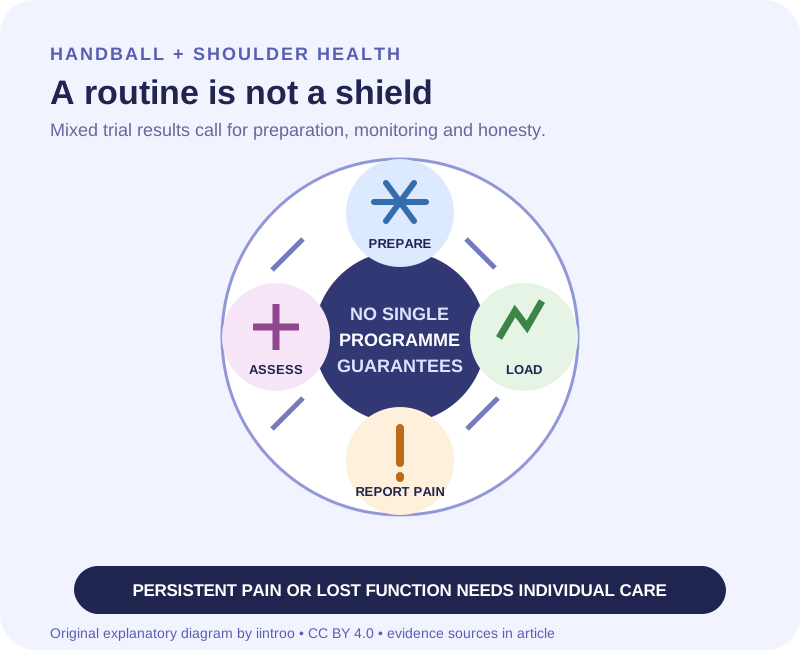
Key points
- A warm-up programme is one part of shoulder-load management, not a guarantee.
- Randomised handball studies have produced mixed results.
- Persistent pain, weakness or loss of throwing function needs assessment.
Who this guide is for
This guide is for handball players, coaches, parents and support staff planning shoulder preparation. The EHF’s 2025 manual integrates strength, technique, balance, workload and motor learning, and shows how prevention activities can fit within practice and season planning. That broader structure matters because repeated high-speed throwing is only one part of the athlete’s total load.
A warm-up can organise useful work and improve readiness, but it cannot screen out every injury. Previous injury, playing position, training and match load, strength, mobility, recovery and symptoms may all matter. A generic programme should be adapted by qualified staff rather than copied as treatment for an already painful shoulder.
Sources: 1
Why one positive trial is not the whole answer
A cluster-randomised trial in 660 elite players reported a lower average prevalence of shoulder problems with an OSTRC programme delivered three times weekly, although the reduction in substantial shoulder problems was not statistically significant. That trial helped make structured shoulder work popular in handball.
A 2025 systematic review identified five randomised trials involving 1,872 players. The pooled analysis of three studies did not find a statistically significant reduction in shoulder injury incidence compared with usual warm-up. Programmes, populations and outcomes differed, so the review does not prove that every exercise is useless; it does rule out presenting one package as settled protection.
A second large trial found no reduction
A cluster-randomised study of 579 adult and under-19 players tested a multicomponent programme using rubber bands, stretching and partner exercises. It did not significantly reduce the prevalence or symptoms of overuse throwing-shoulder injury. Questionnaire response was 61%, which limits certainty, and the authors questioned whether the training stimulus was sufficient.
The contrast between trials is clinically important. It may reflect different athletes, delivery, compliance, programme content or outcome definitions. Selective use of the most favourable result would overstate certainty; teams should monitor whether their chosen routine is delivered and whether symptoms and availability actually change.
Sources: 4
Put the routine inside a wider load plan
Use progressive whole-body and shoulder preparation that matches the day’s throwing demands. Record unusually dense match schedules, extra individual throwing, strength sessions and returns after time away. Avoid sudden, unexplained jumps in volume or intensity, and give players a clear route to report pain without losing status.
Testing range of motion or strength can inform a qualified assessment, but a single screen does not predict who will be injured. Coaches can watch availability, perceived load, throwing tolerance and technique; medical and rehabilitation staff should interpret persistent symptoms and decide whether specific testing or treatment is needed.
Pain is not a warm-up problem to solve alone
Seek assessment for shoulder pain that persists, recurs, disrupts sleep, reduces range or strength, alters throwing or follows a traumatic event. Sudden deformity, inability to move the arm, numbness or severe pain needs prompt medical attention. Continuing to throw after warming up the pain is not evidence that the shoulder is safe.
Return to unrestricted throwing depends on the diagnosis, function, rehabilitation response and sport demands; there is no universal date. A sensible prevention culture combines a repeatable preparation routine with load awareness, early reporting and individual care—while being honest that injury risk cannot be reduced to zero.