
Neurofibromatosis type 1 in youth sport: assess function and complications, not the label
NF1 does not create one sport restriction. Blood pressure, vision, bone health, pain, motor skills and individual complications should shape support.
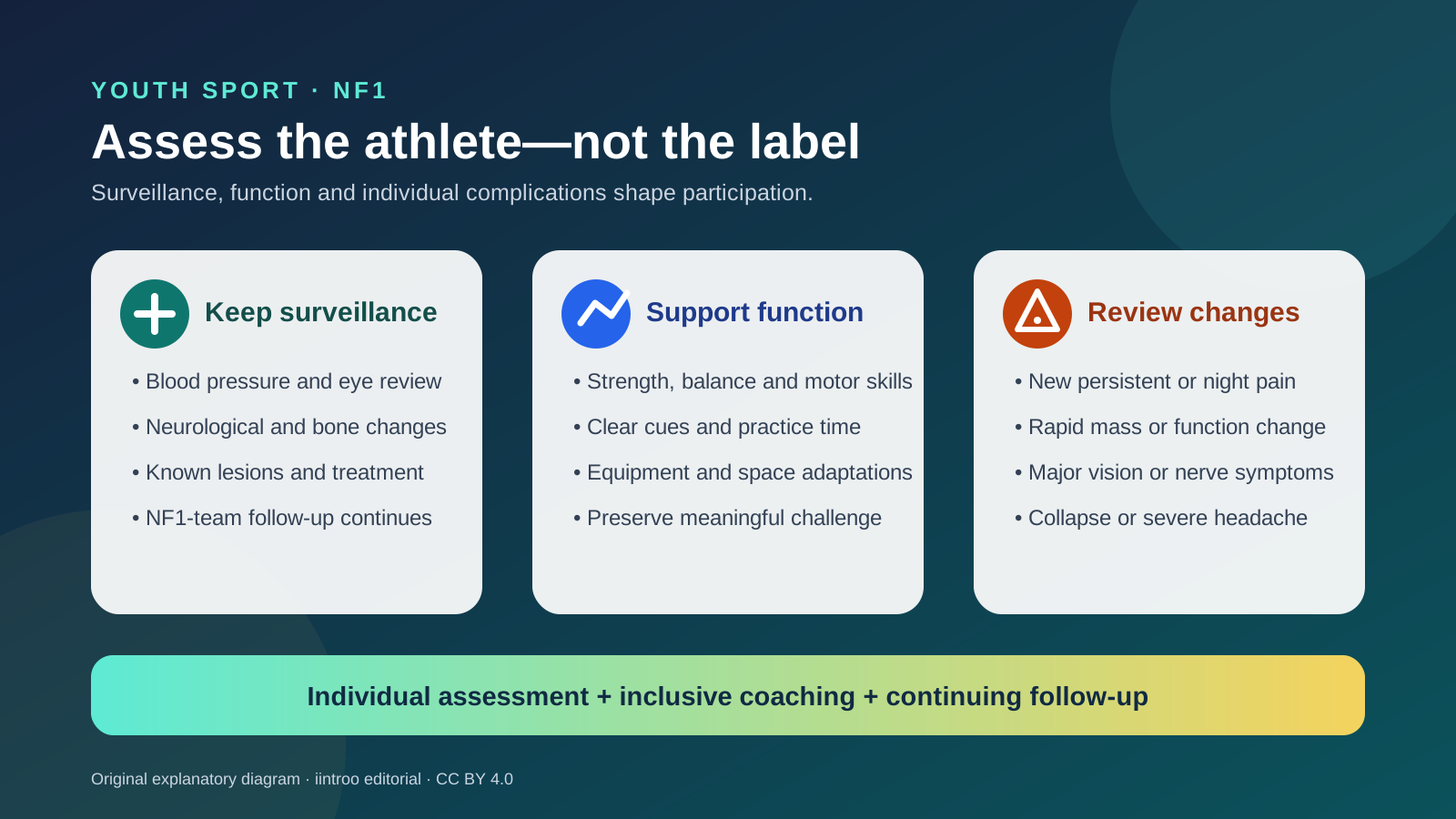
Key points
- NF1 varies widely; a diagnosis alone cannot define a child's strength, balance, vision, learning needs or eligibility for sport.
- Regular NF1 surveillance—including blood pressure and age-appropriate eye, neurological, skeletal and tumour review—continues even when the athlete feels well.
- New persistent or night pain, rapid change in a known mass, neurological loss, major visual change or unexplained hypertension needs clinical assessment rather than a training workaround.
Start with the athlete's current function
This guide is for children and adolescents with neurofibromatosis type 1, their families and sport staff working with permission. NF1 is a genetic condition with highly variable effects. Some young people have few day-to-day limitations; others have vision, bone, nerve, pain, learning, attention, balance or motor difficulties. The diagnosis does not supply one list of safe and unsafe sports. A useful conversation starts with the athlete's current abilities, symptoms, known complications, treatment and the actual demands of the activity rather than assuming fragility from skin findings or the name of the condition.
Routine clinical surveillance remains important even when sport is going well. GeneReviews and the American Academy of Pediatrics include regular blood-pressure assessment, age-appropriate eye review, developmental and school monitoring, and examination for neurological, skeletal and tumour-related changes. ERN GENTURIS guidance adds individualized tumour surveillance and specialist review where symptoms or known lesions require it. A coach does not conduct this surveillance, request scans or inspect neurofibromas. The family's NF1 team decides what information affects participation, while sport staff provide an accessible route to report changes.
Recognise changes that need assessment
New persistent pain, pain that wakes the athlete, rapid growth or hardening of a known lump, a new neurological deficit, altered walking, unexplained weakness or a major change in function warrants prompt contact with the NF1 team. Sudden severe headache, seizure, collapse, acute visual loss, one-sided weakness or other emergency neurological symptoms require urgent care. These signs have many possible explanations and do not prove a tumour, but they should not be managed by stretching, massage, extra conditioning or playing through the problem.
Blood pressure deserves proper measurement because hypertension in NF1 can have several causes. Chest pain, fainting with exercise, severe breathlessness or a dramatic unexplained rise in blood pressure needs medical assessment, not a wearable-based self-diagnosis. Focal bone pain, deformity or a suspected fracture also requires review; NF1 can include skeletal dysplasia and reduced bone health in some people, but neither is universal. Contact, jumping or resistance decisions therefore depend on the individual's bones, lesions, neurological status and treatment—not a blanket rule for everyone with NF1.
Support motor learning without lowering expectations
Small observational studies report that some children with NF1 have lower average balance, coordination, speed, motor proficiency, muscle force or power than comparison groups. A 2023 study included only 21 young people with NF1, and earlier motor cohorts were also modest. These group findings cannot predict one child's performance and do not show that sport is harmful. They support asking what makes a skill difficult, considering physiotherapy or occupational-therapy assessment when function is affected, and teaching movement with clear demonstrations, manageable steps and enough practice time.
Learning, attention, sensory or communication needs may influence how instructions are understood. Use concise cues, show the task, reduce avoidable distraction and check comprehension privately rather than interpreting a slower response as poor motivation. Adapt the drill, equipment, space or pace while preserving meaningful challenge. A three-child plyometric case series reported feasible training and some motor gains, but it is far too small to prescribe a programme. No exercise product, supplement or generic strengthening plan should be presented as treatment for NF1-related weakness or tumour prevention.
Build an individual participation and follow-up plan
A practical plan records the athlete's preferred adjustments, any clinically identified sport consequences, who may receive health information and what changes trigger review. It may include footwear or equipment fit, rest opportunities, extra skill rehearsal, an individual vision or balance adaptation and a route to leave a session without public explanation. Visible café-au-lait macules or neurofibromas are not contagious and are not a reason for exclusion. The athlete should control non-essential disclosure, photographs and discussion of appearance.
Return after surgery, fracture, neurological change or treatment is individualized by healing, pain, function, complication-specific advice and sport risk. There is no evidence-based universal NF1 return date or one imaging threshold for all activities. This page cannot diagnose NF1, assess a mass, interpret blood pressure or scans, recommend contact sport, or clear an athlete. The evidence base for competitive sport is sparse; the strongest approach combines continuing specialist surveillance, proportionate adaptation and the child's goals so that safety does not become unnecessary restriction.