
OCD in athletes: distinguish a performance ritual from distress and lost control
Athlete rituals are not automatically OCD. Intrusive thoughts, distress, time loss and impaired function need confidential assessment and evidence-based care.
Key points
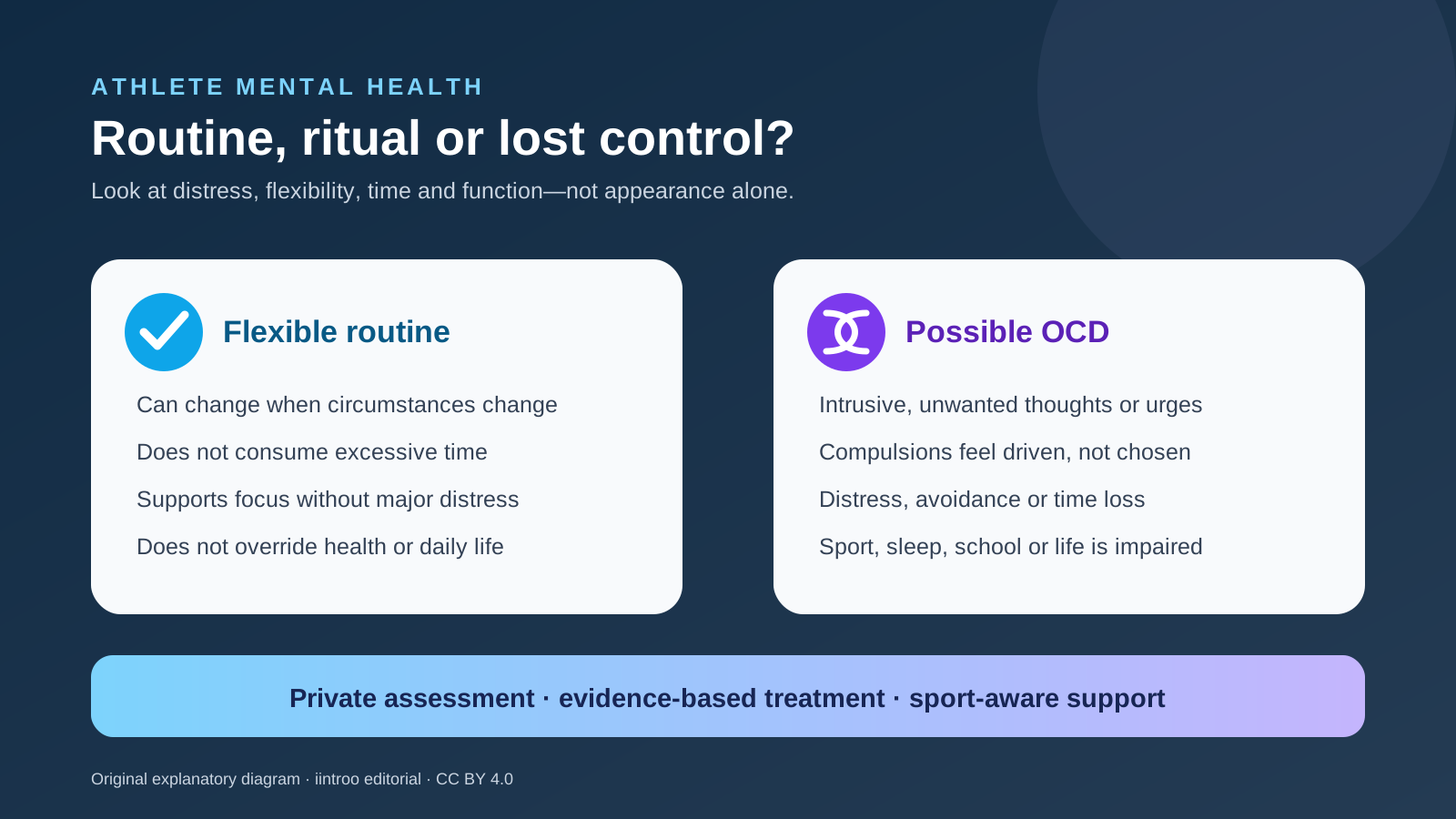
- A repeated pre-performance routine is not OCD by itself; diagnosis concerns intrusive obsessions and/or compulsions that cause distress, consume time or impair life.
- OCD, compulsive exercise, an eating disorder, body dysmorphic disorder and perfectionism can overlap but are not interchangeable labels.
- CBT including exposure and response prevention and, when indicated, medication are established treatments; coaches should not improvise exposure exercises or control medication.
Routines and OCD are not the same thing
This guide is for athletes, families and sport organizations responding to possible obsessive-compulsive disorder. Many athletes repeat warm-ups, arrange equipment or use a familiar cue before performance. A flexible routine that can change without major distress is not automatically a disorder. OCD involves intrusive, unwanted thoughts, images or urges and/or repetitive behaviours or mental acts performed to reduce distress or prevent a feared outcome. Assessment considers distress, time, loss of control, avoidance and impairment across sport, school, work, relationships and recovery—not whether a ritual looks unusual to a coach.
The 2026 IOC consensus says athlete superstitions and magical thinking must be distinguished from OCD symptoms through comprehensive assessment. Reported prevalence varies widely because studies use different instruments and sometimes group OCD with related disorders. A Norwegian two-phase study found that questionnaire risk scores did not reliably mirror diagnoses from interviews. These findings argue against diagnosing from a checklist, social media or a teammate's observation. They also argue against dismissing severe symptoms as commitment, perfectionism or a normal part of elite culture.
Do not collapse different problems into one label
Compulsive exercise describes a driven, rigid pattern in which a person feels unable to reduce or miss training despite injury, illness, exhaustion or important life consequences. It can occur with eating disorders, body-image concerns, anxiety, obsessive-compulsive traits or other difficulties, but it is not synonymous with OCD. Body dysmorphic disorder and muscle dysmorphia are also distinct diagnoses. A 2025 athlete survey and recent systematic reviews report associations among exercise-addiction risk, distress, body image, eating-disorder symptoms and obsessive-compulsive tendencies; cross-sectional associations do not establish which problem caused another.
Sport environments can reinforce symptoms when extra training is praised regardless of harm, weight or appearance is policed, or athletes fear losing selection if they seek care. Warning signs include rapidly expanding rituals, repeated reassurance seeking, severe distress after an interrupted routine, contamination or harm fears, checking that delays the team, training through medical restriction, or loss of sleep and nutrition to complete compulsions. These signs need a private conversation and professional assessment. They should not trigger public confrontation, punishment, ridicule or a demand to stop the behaviour on command.
Keep treatment evidence-based and sport-aware
NICE recommends cognitive behavioural therapy that includes exposure and response prevention, with treatment intensity and medication decisions based on age, impairment, previous response and clinical review. Exposure and response prevention is a structured psychological treatment, not a coach deliberately hiding equipment, blocking a ritual or forcing an athlete into a feared situation. Medication can be appropriate for some people, but selection, dose, response, side effects and anti-doping documentation belong with qualified clinicians and the athlete. Treatment should address sport demands without turning performance into the only outcome.
Exercise may support general health, but it is not a substitute for OCD treatment. A 2026 systematic review and meta-analysis combined small, varied exercise studies in OCD and bipolar disorder; differences in diagnosis, interventions and study design limit firm prescriptions. Training can also become part of a compulsion. The clinical team should distinguish chosen movement from a rigid act performed to neutralize fear, then coordinate any temporary load change with the athlete. Coaches can provide predictable communication and flexibility while preserving the therapeutic plan and normal team belonging.
Protect privacy, safety and a sustainable return
Agree who needs to know what. A coach may need an adjustment or emergency contact without receiving the content of intrusive thoughts, therapy notes or a medication history. Avoid reassurance loops in which staff repeatedly certify that feared harm cannot occur; the therapist can advise how supporters respond without feeding compulsions. For young athletes, involve parents or carers in ways appropriate to age and treatment while respecting privacy. Harassment, appearance commentary and training punishment should be addressed as environment problems, not individual weakness.
Urgent help is needed for immediate danger, suicidal intent, inability to maintain essential food or fluid, severe self-neglect or another acute mental-health crisis; follow local emergency pathways. Routine removal from sport is not required for every OCD diagnosis, and there is no universal return test. Participation decisions consider safety, function, treatment, sleep, nutrition, medication effects, the athlete's wishes and the consequences of the sport. This page cannot diagnose OCD, conduct exposure therapy, advise medication or clear return. Early, confidential care can protect both health and sustainable participation.