
Athlete mental health screening: privacy and referral must come before the form
IOC SMHAT2 can identify symptoms that need follow-up; it cannot diagnose or select a team. Plan consent, privacy, referral and crisis care first in sport.
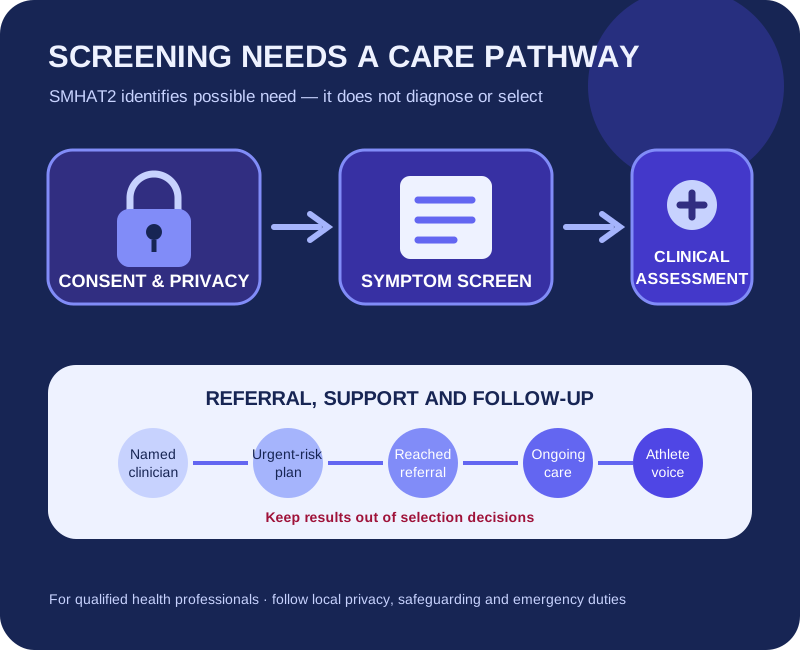
Key points
- IOC SMHAT2 is designed for elite athletes aged 16 and older and for use by sports-medicine physicians or other licensed or registered health professionals.
- Its screening steps identify symptoms that may need assessment; they do not establish a diagnosis, fitness to compete or selection status.
- A screening programme needs confidential data handling, informed participation, referral capacity, urgent-risk procedures and follow-up before the first questionnaire is issued.
Start with the pathway, not the questionnaire
This guide is for elite-sport organisations, team doctors, licensed mental-health professionals and athlete representatives. The 2026 IOC consensus recommends routine screening and monitoring, while SMHAT2 offers a structured three-step process for professional, Olympic, Paralympic and collegiate athletes aged 16 and older. A form only has value when an athlete can reach appropriate care after a concerning result.
Before screening, name the clinical lead, eligible population, timing, secure data system, referral partners, payment route and follow-up owner. Write a separate urgent-risk procedure and explain its limits to confidentiality. If the organisation cannot protect the data or respond to results, collecting sensitive answers can create risk and undermine trust.
Keep screening separate from diagnosis and selection
SMHAT2 begins with universal symptom screening, adds conditional screening when indicated and then supports clinical assessment and management. The first two steps are screeners, not diagnostic tests. The clinical step belongs to a sports-medicine physician or licensed or registered mental-health professional. Coaches, selectors and unqualified support staff should not interpret scores or label an athlete.
A positive screen means further assessment may be appropriate; a negative screen does not prove that no problem exists or that future monitoring is unnecessary. Screening must not become a fitness test, character judgement or automatic reason for deselection. Competition readiness and any temporary sport modification require individual clinical assessment, athlete involvement and the safety principles described by the IOC consensus.
Design privacy that athletes can understand
Tell athletes before participation who will see raw answers, where records are stored, how long they are retained and what—if anything—may be shared with coaches or management. Obtain consent for ordinary information sharing and explain the limited circumstances in which immediate safety or safeguarding duties can override confidentiality. Do not promise absolute secrecy that the service cannot legally or clinically provide.
The SMHAT2 material says results should not be shared without consent or used for selection processes. This is also practical: a 2024 systematic review found that fear of deselection, stigma and confidentiality concerns were among sport-specific barriers to help-seeking. The pooled formal help-seeking estimate was 22.4%, but study heterogeneity was very high, so it should not be treated as a target for every sport or country.
Choose timing without turning life events into suspicion
The IOC suggests scheduled screening in pre-season and potentially mid- and end-season, as well as after significant events such as injury, surgery, unexplained performance concern, major competition, suspected harassment or abuse, deselection and transition out of sport. Offering screening after an event should be framed as access to support, not evidence that the athlete is unstable.
Para athletes, adolescents and people from different cultural or linguistic groups may face specific accessibility, trust and interpretation issues. Use validated versions appropriate to the population and provide accessible, independent ways to ask questions or decline. A translated or modified form should not be presented as validated merely because the original instrument was studied.
Close the loop after every result
A programme needs same-day action for immediate safety concerns, timely clinical appointments for indicated follow-up and a way to confirm that referrals were reached. It should also offer support to athletes whose distress or functional difficulty matters even when a screening threshold is not crossed. Screening is one contact point within ongoing care, not an annual administrative task.
Review de-identified programme information to improve access and follow-up without exposing individuals. Ask athletes whether the process felt voluntary, private and useful. The SMHAT2 development paper reports content-validity and feasibility work, but further validation across sports, languages and populations remains important. This article does not reproduce the tool, interpret scores, diagnose a disorder or replace local clinical and emergency services.