
Offshore sailing fatigue: build sleep into the watch plan
Offshore racing fragments sleep and can slow decisions. A crew-specific watch plan, protected rest and reassessment are safety controls, not luxuries.
Key points
- Offshore-sailing sleep is fragmented by watch systems, weather, noise, motion and operational demands; one schedule does not fit every crew or race.
- A 2026 systematic review linked partial sleep loss with slower cognition, reaction and more technical errors, but its schedule recommendations rely on small heterogeneous studies.
- Fatigue planning should protect handovers, navigation, deck work and emergency readiness, while persistent sleep symptoms need clinical assessment off the boat.
Plan fatigue before leaving the dock
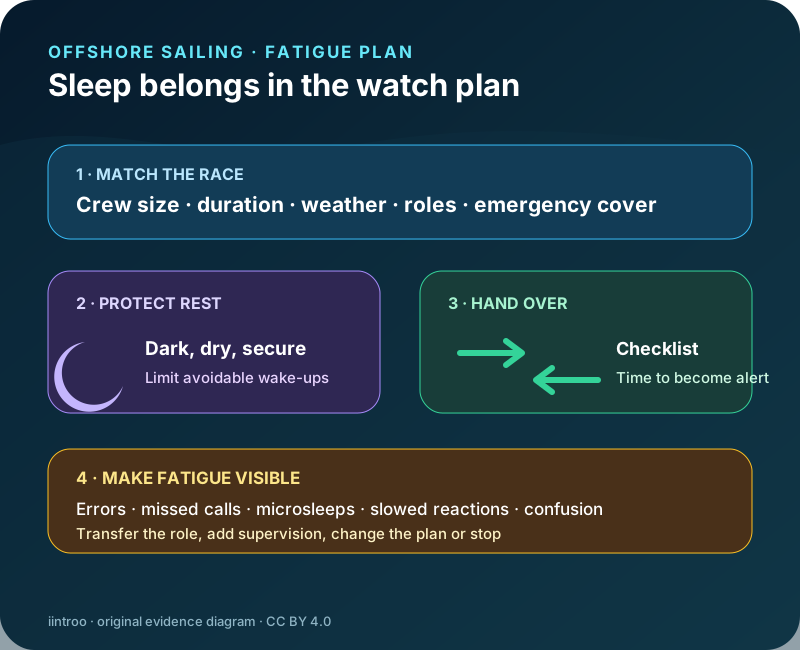
This guide is for offshore sailors, skippers, coaches, race organisers and medical teams. The 2026–2027 World Sailing Offshore Special Regulations set equipment, training and safety requirements, but they do not turn one watch pattern into a medical prescription. Crew number, role, race length, sea state, temperature, route and emergency demands all change the sleep problem.
The IMO requires commercial watch systems to protect fitness for duty and prevent fatigue; racing yachts operate under different legal frameworks, yet the safety principle is useful. Define watches, protected rest spaces, wake-up responsibility and backup roles before departure. Record who can navigate, helm, manage communications and provide first aid if a primary crew member is impaired.
Read the sailing evidence without copying a stopwatch
A 2026 systematic review included 16 articles across solo, double-handed and crewed offshore racing. It concluded that partial sleep deprivation can impair cognition and reaction and increase technical errors. The review proposed different patterns by race length and crew size, but the underlying studies were small, used different monitoring methods and often involved highly experienced sailors.
A study of solo Mini Transat sailors described pre-race sleep strategies and chronotype, yet it was observational and could not identify one optimal preparation. Published nap lengths or daily totals are not a safe template for an unfamiliar crew. Weather, seasickness, medication, illness and the ability to fall asleep in motion can defeat a mathematically tidy plan.
Protect sleep opportunities and handovers
Create a dark, dry and secure rest area where possible; limit avoidable noise and non-urgent wake-ups; cluster tasks; and complete navigation, weather and equipment handovers with a standard checklist. Avoid assigning a newly awakened sailor straight to the highest-risk deck task without enough time to become alert, especially in darkness or heavy weather.
Caffeine can temporarily improve alertness but cannot replace sleep and may make the next rest opportunity harder. Sedating medicines, including some seasickness products, can impair performance and should be discussed with a clinician and tested away from competition. Alcohol has no place in a fatigue-management plan at sea.
Make fatigue visible to the crew
Agree observable triggers: repeated navigation errors, missed radio calls, microsleeps, slowed reactions, poor balance, unusual irritability, confused speech or inability to follow a familiar sequence. Self-rating alone can miss impairment, so the watch leader should compare behaviour with the sailor's usual baseline and invite early reporting without ridicule or selection pressure.
When fatigue compromises a safety-critical role, transfer the task, add supervision, shorten exposure or change the race plan. Severe confusion, collapse, chest symptoms, a major fall or a head injury requires the emergency and medical communication plan rather than an extra coffee or a brief nap.
Recovery continues after landfall
After the finish, protect recovery before driving, operating machinery or making high-stakes travel decisions. Sleep debt, dehydration, seasickness and emotional strain can persist after the boat docks. Teams should arrange transport and post-race supervision rather than assuming celebration means everyone is fit to leave alone.
Persistent insomnia, excessive daytime sleepiness, loud snoring with breathing pauses, recurrent panic, depression or reliance on substances needs confidential professional assessment. A watch log or wearable can start a conversation but cannot diagnose a sleep disorder or clear a sailor for solo offshore racing.