
Seasickness in sailing: protect decision-making before choosing medicine
Nausea and vomiting can undermine hydration, watch duties and judgement at sea. Plan behavioural controls, test equipment and duties in training, and discuss medication effects before race day.
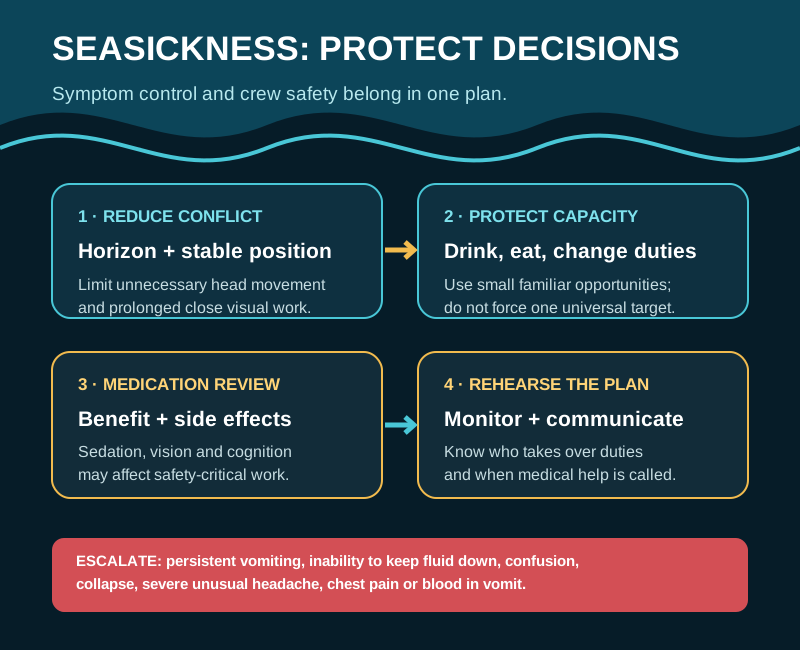
Key points
- A horizon view, reducing unnecessary head movement and avoiding prolonged close visual work can reduce sensory conflict for some sailors.
- Many effective motion-sickness medicines can cause sedation, blurred vision or impaired cognition, which may matter for safety-critical duties.
- Persistent vomiting, confusion, collapse, severe headache or inability to keep fluid down requires medical assessment rather than simply another dose.
Plan for sensory conflict before leaving shore
This guide is for dinghy and offshore sailors, coaches, parents and race medical teams. Motion sickness commonly begins with nausea, sweating, pallor, dizziness or headache and can progress to vomiting. The CDC explains it through conflict between visual, vestibular and movement signals. Susceptibility varies, and the same sailor may respond differently as sea state, sleep and task demands change.
Before a race, identify who is prone to symptoms, when they usually begin and which duties require close visual work below deck. Build the onboard response into the watch and safety plan. Offshore crews should follow the current World Sailing requirements for medical training, communications and emergency equipment that apply to their race category.
Use behavioural controls without promising a cure
A stable horizon reference, lying down when safe, reducing unnecessary head movement, avoiding reading or prolonged screen use and obtaining fresh air may reduce symptoms for some people. Habituation can be effective but develops gradually and can be specific to the motion exposure. It is not a quick race-day intervention.
Sleep loss can worsen motion sickness. Practise navigation displays, clothing changes, food access and below-deck tasks during training rather than discovering every trigger in competition. Acupressure bands, ginger and other supplements have inconsistent or weak evidence; a sailor's personal preference should not be presented as proven treatment.
Sources: 1
Protect fluid intake and the ability to perform duties
Repeated vomiting can reduce fluid and electrolyte intake, while fatigue and poor concentration can compromise safe decisions. Offer small, familiar opportunities to drink and eat when tolerated, and reassign safety-critical tasks if the sailor cannot perform them reliably. A universal fluid target is inappropriate because conditions, body size, sweat loss and vomiting differ.
Persistent vomiting, inability to keep fluid down, fainting, confusion, severe or unusual headache, chest pain, blood in vomit or rapidly worsening illness needs medical assessment through the onboard plan. Not every episode of nausea at sea is motion sickness; infection, migraine, heat illness and other causes may need different care.
Medication can reduce symptoms and still create risk
The Cochrane review included nine randomised trials with 658 participants and found that first-generation antihistamines probably reduce the risk of motion-sickness symptoms in susceptible adults under natural conditions. It also found possible increased sedation and limited evidence for children and many comparisons. A 2024 scopolamine review included 20 trials with 753 participants and reported reduced nausea versus placebo, while objective head-movement evidence remained insufficient.
Many effective medicines act on the brain and can cause drowsiness, blurred vision, dry mouth or impaired cognition. Contraindications and availability differ by country. Medication selection, timing and suitability should be discussed with a qualified clinician before competition; this article does not prescribe a product or dose.
Check rules and rehearse the safety plan
Athletes under anti-doping rules remain responsible for what they use. Check the exact medicine through the appropriate national or international service and discuss any Therapeutic Use Exemption question with the treating clinician and World Sailing or the responsible anti-doping organisation. A brand name or over-the-counter label does not replace a substance check.
Record the agreed plan: who carries medication, who monitors the sailor, which duties will change, when shore or race medical support is contacted and how hydration will be maintained. Test tolerability in an appropriate supervised setting before a safety-critical event. The goal is not to suppress every symptom at any cost; it is to keep the sailor and crew safe.