
Weightlifting pain: review exposure before blaming one lift
Weightlifting pain has many possible causes. Map technical, training and recovery changes, seek help when function is lost, and rebuild exposure by criteria.
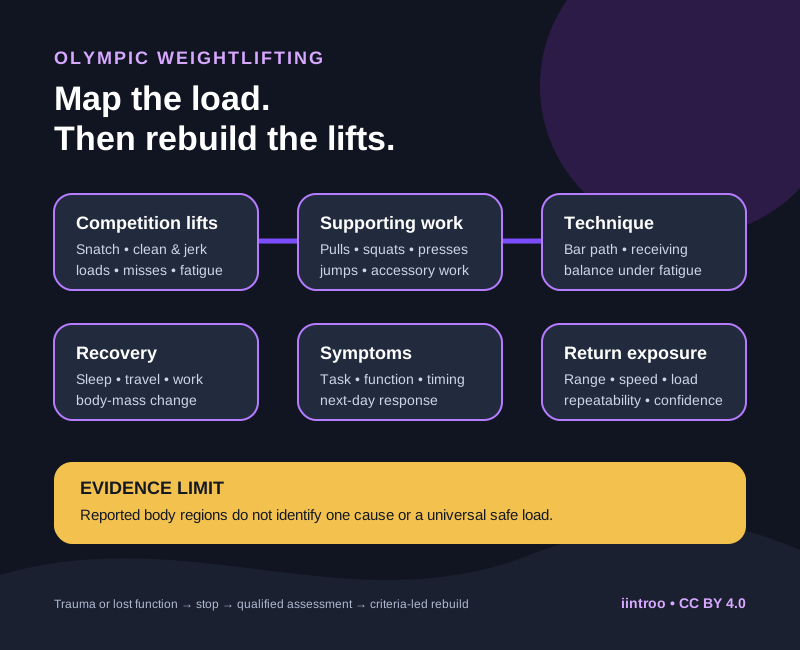
Key points
- An updated systematic review found the knee, lower back, shoulder and hands or fingers among commonly reported weightlifting injury sites, but studies used different definitions and designs.
- A useful exposure review separates competition lifts, derivatives, squats, pulls, accessory work, technical misses and rapid changes in volume or intensity.
- Pain, a normal-looking video or one strength test cannot diagnose tissue or guarantee readiness for maximal attempts.
Describe the problem before naming the tissue
This guide is for Olympic-style weightlifters, coaches and support teams. Pain during the snatch, clean and jerk, pulls or squats can reflect different tissues and combinations of previous injury, technique, fatigue, training change and recovery. The body region and the lift that provokes a symptom do not provide a diagnosis on their own.
The 2024 systematic review combined 17 reports across weightlifting and powerlifting. Weightlifting studies reported the knee, lower back, shoulder and hands or fingers frequently, but competition prevalence ranged widely and injury definitions differed. Most evidence was observational. It describes where problems have been reported; it does not prove that one technique error or exercise caused an individual's pain.
Audit the whole programme, not only the heaviest attempt
Record snatch and clean-and-jerk volume, intensity and misses, together with pulls, squats, presses, jumps and accessory work. Add recent changes in frequency, exercise variation, body-mass management, travel, sleep, work and other sport. A planned increase in one lift may sit inside a much larger total change.
Track what the athlete can do, when symptoms appear and the response later that day and the next morning. Separate acute events from pain that developed gradually. A workload diary can improve communication, but there is no validated universal set count, percentage or acute-to-chronic ratio that makes Olympic weightlifting safe for every athlete.
Use video and coaching as context, not diagnosis
Review bar path, receiving positions, speed, balance and technical consistency across warm-up, working sets and fatigue. Also check platform, shoes, straps and equipment changes. A missed lift may show where performance broke down, but one camera angle cannot identify an injured structure or establish that movement variability is harmful.
At the Tokyo Olympic weightlifting venue, fingers and knees were among areas receiving treatment, while only a small number of athletes required physician care. This event report reflects one elite competition and records service use rather than injury risk. Its practical lesson is to plan qualified medical coverage and accurate reporting, not to tape or ice every similar symptom without assessment.
Rebuild the competition lifts in stages
When training is modified, maintain suitable conditioning and progressively restore the demands that matter: range, speed, catch or receiving tolerance, load, fatigue and repeatability. A lifter may tolerate pulls before receiving a clean, or submaximal singles before repeated competition attempts. The order depends on the diagnosis and response.
Return to unrestricted training and competition should combine symptoms, examination, relevant strength and movement capacity, technical confidence and exposure to the athlete's actual lifts. Symmetry, a pain-free warm-up or one successful heavy lift is only part of the picture. Youth and Masters athletes, Para athletes and athletes changing weight category may need additional individual planning.
Escalate trauma and loss of function
Stop lifting and seek prompt assessment after a deformity, suspected dislocation or fracture, sudden loss of strength, inability to bear weight, major swelling, numbness, tingling, or severe pain after a failed lift. New bladder or bowel dysfunction, saddle-area sensory loss, progressive limb weakness or severe unremitting back pain needs urgent medical care.
Persistent pain, repeated programme modification or loss of normal lifting function also deserves qualified review. This article does not prescribe technique, exercises, medication, taping or a return date. The current IWF rules, event medical arrangements and the athlete's own clinical team take priority.