
Cold urticaria in open-water swimming: a skin reaction can become systemic
Cold-triggered hives during open-water swimming can progress beyond the skin. Get a diagnosis, follow a personal emergency plan and never test it alone.
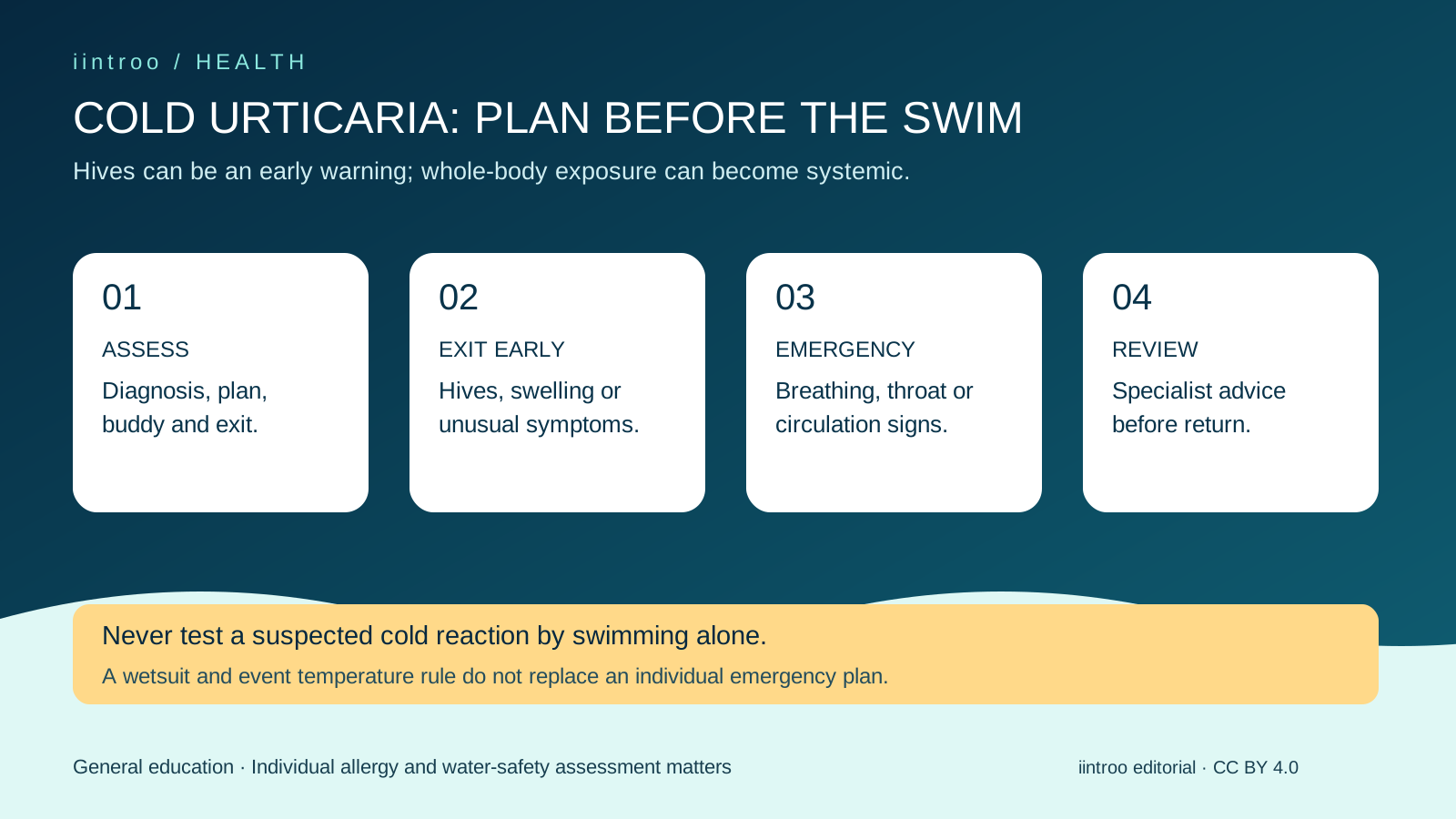
Key points
- Cold urticaria can cause hives or swelling and, in some people, a systemic reaction.
- Whole-body cold-water exposure can be more hazardous than a small local exposure.
- Diagnosis, medicine and water-safety decisions require an allergy clinician and an individual plan.
Cold hives are not simply an uncomfortable swim
This guide is for open-water swimmers, triathletes, coaches, parents and safety crews. Cold urticaria is a chronic inducible urticaria in which cold exposure can trigger itchy wheals, swelling or both. Symptoms may appear while the skin cools or during rewarming. Water temperature, exposed area, duration and the person's threshold can interact, so another swimmer's uneventful session is not a clearance test.
Whole-body immersion deserves particular caution because a large skin area cools at once and a systemic reaction can include throat symptoms, breathing difficulty, light-headedness, low blood pressure or collapse. Cold shock, asthma, panic, hypothermia and other emergencies can overlap with some sensations. A photograph of a rash may help the history, but it cannot establish the diagnosis or exclude a more dangerous reaction.
Get the diagnosis and threshold assessed safely
The international urticaria guideline recommends a history and, where appropriate, validated provocation testing for chronic inducible urticaria. That testing belongs in a controlled clinical setting. Rubbing ice on the skin, stepping into progressively colder water or swimming until symptoms appear can provoke a larger reaction and does not create a safe personal temperature. Some people also have atypical patterns that require specialist interpretation.
Tell the clinician about hives, swelling, breathing or circulation symptoms, the cold source, timing, rewarming, medicines, infections and any previous emergency treatment. The 2020 review emphasises that cold urticaria is heterogeneous and that evidence for many management questions remains limited. A diagnosis should therefore lead to a written plan, not a generic promise that one wetsuit, warm-up or antihistamine makes immersion safe.
Plan the venue around the individual risk
World Triathlon rules use water and air conditions to modify swim distance or equipment requirements, but event cut-offs are population safety controls, not an allergy threshold. A swimmer with confirmed or suspected cold urticaria should discuss whether open-water participation is appropriate, which conditions to avoid, what prescribed medicine or rescue device must be available, and who is trained to use the plan. Do not make these choices from a race briefing alone.
If participation is medically supported, the event plan should include a named buddy or escort, a visible identification method, rapid water exit, immediate access to the swimmer's prescribed emergency treatment, reliable communication and a handover point for emergency services. Safety staff need to recognise that hives can be an early warning rather than a cosmetic problem. A neoprene suit reduces some exposure but leaves skin uncovered and cannot prevent every reaction.
Exit early and treat systemic signs as an emergency
At the first unexpected hives, swelling, throat change, wheeze, unusual breathlessness, dizziness or weakness, stop the swim and signal for help. A symptomatic swimmer should not continue toward the finish or attempt an unassisted return. Rescue must also manage ordinary cold-water hazards: keep the airway clear, use trained extraction, prevent a fall after exit and avoid leaving the person alone during rewarming.
Breathing difficulty, throat or tongue swelling, faintness, collapse, confusion or rapidly progressing symptoms require the local emergency response and the person's prescribed anaphylaxis plan. Adrenaline is the first-line emergency treatment for anaphylaxis; antihistamines do not replace it. This article does not prescribe a device or dose. Even when symptoms improve, follow the emergency plan because reactions can recur and other causes may need assessment.
Return is a clinical and water-safety decision
After any systemic reaction, pause cold-water swimming until a qualified clinician has reviewed the episode and updated the plan. Record water conditions, clothing, duration, food, exercise, medicines, illness and the sequence of symptoms without trying to recreate the exposure. The clinician may reassess diagnosis, triggers and treatment. A symptom-free pool session or warm shower does not prove that open-water immersion is safe.
Clubs can support athletes by offering confidential disclosure, rehearsing rescue and avoiding pressure to demonstrate toughness. Youth and Para swimmers may need communication, transfer or rescue adaptations, but the emergency threshold remains the same. Evidence describes variable thresholds and risk factors rather than a universal safe temperature or waiting period. This guide supplies education and planning prompts, not individual permission to enter cold water.